
On this page
Sponsored guest contribution.
It was a Thursday roadmap review for a freight audit software client. An editor read Gemini’s answer to their core buying question aloud. Three competitors named. A YouTube walkthrough and a review site cited. None of the 14 posts we’d shipped last quarter. Our roadmap came from keyword volume; the gap was plain to anyone who asked the engine, just not to the plan. Catching that before planning is what AI visibility tools are for.
That citation wasn’t a fluke. In SE Ranking’s August 2026 study of French AI Overviews, YouTube appeared in 51.31% of answers and took 14.33% of all citations. On the roadmap, the brief names the format the engine trusts, not a default blog post.
This is for agency content strategists juggling several client brands, and in-house content leads at mid-market and enterprise companies that report AI visibility to leadership. Teams wanting one more SEO-suite tab will find little here.
Five tests, run against one agency workflow:
- Topic and prompt gaps against named competitors
- Sources and content types cited instead
- Something writers can use: recommendations, drafts, clean exports
- Proof of movement after publishing
- Data into reporting: exports, Looker Studio, an API
The six AI visibility tools below were each checked against their own vendor pages on October 15, 2026.
Which AI Visibility Tools Feed Which Step Of A Content Roadmap?
A content roadmap built on AI answers runs in five steps: build the prompt set, read the gaps, write the brief, publish, and recheck. No single product owns all five. Measurement platforms find the gap and confirm the move; content-side tools draft and optimize in between. The table pairs each of the six with the step it serves best.
| Product | Roadmap step | What it hands the team | Engines (vendor-stated, Oct 2026) | Entry price |
|---|---|---|---|---|
| SE Visible by SE Ranking | Gap read, recheck | Topic gaps, cited sources, before/after periods | ChatGPT, Gemini, AI Mode, AI Overviews | Free trial; plans on site |
| Peec AI | Gap read | Source breakdown, recommended actions | 3 models you choose | $95/mo |
| AthenaHQ | Brief | Content recommendations, optimization agent | 5 free; 11 on Starter | Free tier; $295/mo |
| Goodie | Publish | Content-writer agents, page scorecard | 5 on Core; 8 on Pro | $295/mo |
| Writesonic | Publish | Article writer, site audits | 3 self-serve; 8 on Enterprise | $79/mo, annual |
| Profound | Recheck | AI-sourced traffic, full history | Up to 9 (Enterprise) | Custom |
Where The Roadmap Starts: The Questions Buyers Put To ChatGPT
A roadmap for AI answers starts from questions, not keywords: the long, specific prompts a buyer types when a decision is close, grouped by topic and tagged by intent. Commercial and local prompts come first, because they sit nearest a purchase. Informational prompts can wait.
AI Overviews appeared more often on longer queries in August 2026 French data: 49.48% for one-word queries, 71.32% for nine-word ones. So we build the set before AI visibility tools come in: sales-call notes, support tickets, and the client’s “how do we rank in ChatGPT?” Prompt research ends with one cut: does it touch a buying decision?
Reading The Content Gap: Prompts Where A Competitor Is Named And Your Client Isn’t
An AI-answer content gap is a prompt or topic where engines name a competitor and skip your brand, plus the sources they lean on. Read it by topic, then prompt, then source. The sources tell the brief which page could earn a place.
With the cut set in hand, our team runs it on the engines and reads what comes back. Pay attention to the shape of the gap: a topic-wide gap is a roadmap theme; a single-prompt gap is a page. That’s content gap analysis, read through AI visibility tools.
1. SE Visible
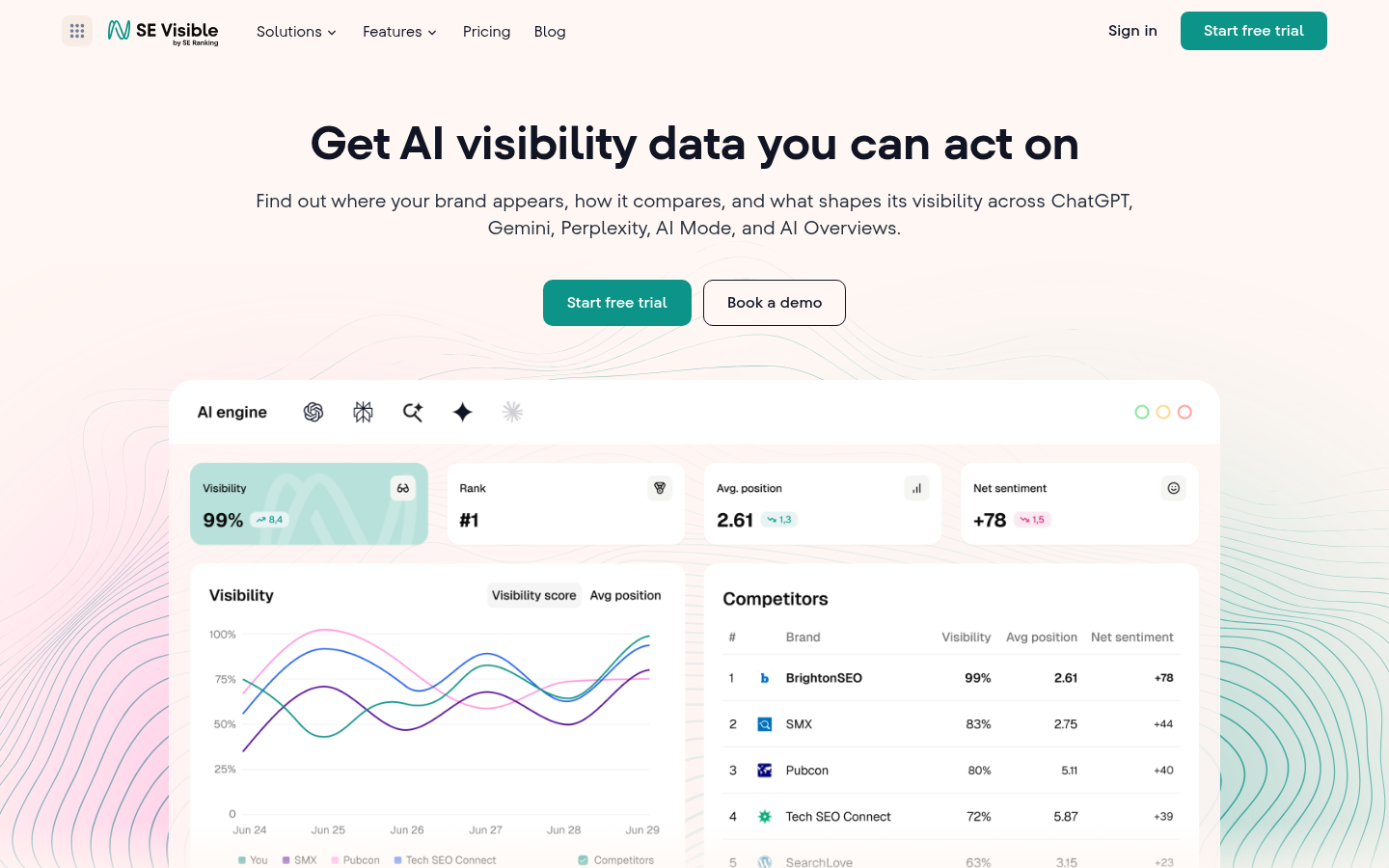
A rival named in an AI answer where your brand is missing is a content gap you can act on, if you can find it. As an AI visibility platform, SE Visible by SE Ranking records how Gemini, ChatGPT, Google AI Mode, and Google AI Overviews talk about a brand.
In the loop: the gap read, then the recheck. Best for agency content teams reading gaps across a client book, and in-house content leads who answer for the AI visibility number.
Standout: Competitor benchmarking lists the prompts and topics where a rival is named and you aren’t. In Sources, the “not mentioned” brand filter plus the content-type filter shows which pages, and which formats, the engines cite instead. Together, that’s the raw material of a content gap brief.
Pros:
- Compares topics, including brands that lead a topic beyond the ones you track
- Tags each prompt by intent, so commercial and local questions get briefed first
- Shows which of your own pages AI cites, and for which prompts
- Opens each metric into the unedited answer, with engine, market, and date
Cons:
- Built for AI answers alone; SEO audits and keyword research live in SE Ranking
- No built-in prompt generation yet (it’s planned), so most of the set comes from your own research
- Claude support is planned; the platform is still growing
Pricing: See visible.seranking.com for the current lineup. Each plan includes the whole engine set, with nothing sold per engine; API access is included on all plans, and there’s a free trial.
The roadmap call: If you need the gap read and the recheck in one place, with each metric’s source answer, start a client’s loop here; the writing stays in your editorial stack. Open a client’s content gaps in SE Visible and run one gap read before the next roadmap review. Add SE Ranking for the Google rankings side, and the client readout covers classic results and AI answers together.
2. Peec AI
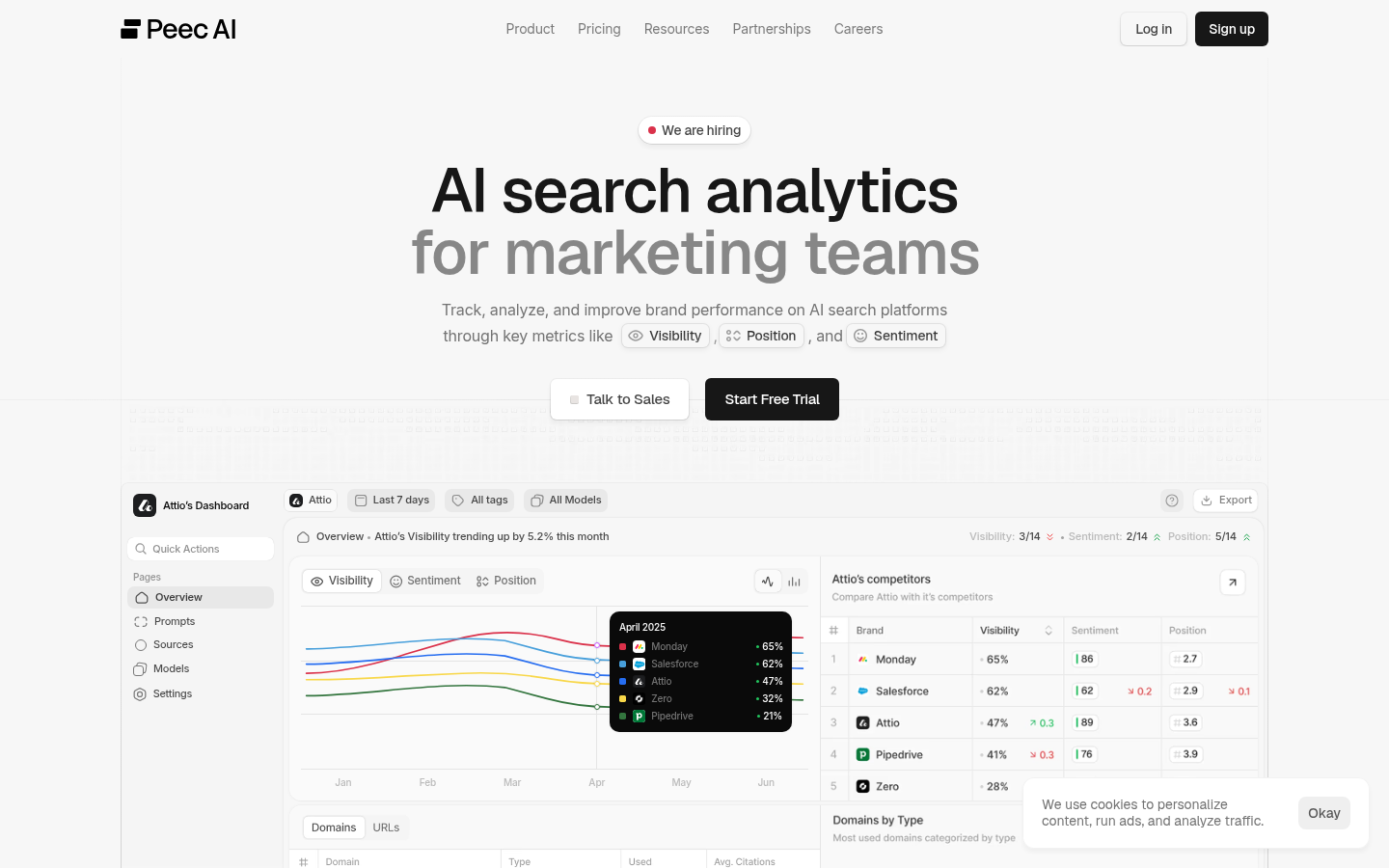
Peec AI tracks prompts daily on three models you pick and breaks down the sources behind each answer.
In the loop: the gap read, third-party side. Best for teams earning a place on editorial, review, and community sites, not just owned pages.
Standout: Source analytics come on every plan: domain and URL detail, source classification, and retrievals. With the recommended actions, the gap read ends in a shortlist of sources worth pitching or writing for.
Pros:
- Runs daily tracking with unlimited users on all tiers
- Adds recommended actions from Starter up
- Connects to Looker Studio from the Advanced plan
Cons:
- Stays at three models below Enterprise
- Reserves SSO and models such as Claude for Enterprise
Pricing: Starter costs $95/mo for 50 prompts; Pro runs $245/mo and Advanced $495/mo, with Enterprise quoted separately.
The roadmap call: Choose it when earned media and review sites belong on the roadmap. Among AI visibility tools, it shows plainly how to get cited by AI from pages you don’t own.
How Do You Write A Content Brief From What The Engines Already Cite?
An AI content brief built from a gap names five things: the prompt, the competitor the engine prefers, the sources it cites and their format, the facts to state plainly, and the structure, with answer-sized sections and an on-page FAQ an engine can lift.
That’s the template our writers get the morning after a gap read, and the structure has numbers behind it. SE Ranking’s AI Mode study of 2.33M pages associated 100-150-word sections with about 4.7 citations versus 4.3 for 35 words or fewer, and on-page FAQs with 4.9 versus 4.4. FAQ schema showed no meaningful impact.
3. AthenaHQ
AthenaHQ is an AEO and GEO platform pairing tracking with content recommendations and an optimization agent, on credits.
In the loop: the brief. Best for content leads who want a recommendation drafted beside the visibility data, on usage-based budgets.
Standout: Content recommendations start on the free Essential tier. Starter adds a content optimization agent with self-learning content improvement; Enterprise brings the Athena Recommendation Engine.
Pros:
- Names 11 models on Starter, including AI Mode and Claude
- Shows sources and competitor insights on the free tier
- Exports CSV on Starter for planning work
Cons:
- Each AI response costs a credit, so prompts times engines times runs drains Starter’s 3,600 monthly credits
- API access costs extra on Starter
Pricing: Essential free (300 credits); Starter $295/mo (3,600 credits); Enterprise custom.
The roadmap call: If your team wants AI visibility tools that suggest a first pass at GEO content beside the gap data, AthenaHQ fits. Run the numbers on credits before the prompt set grows.
How Do You Publish Pages An AI Overview Can Quote?
Publishing GEO content means shipping the page the brief described, in the format the engine already cites, with each section’s claim up front. The page also has to say something the cited competitors don’t. Engines have plenty of commodity pages; they need a reason to pick yours.
Google’s John Mueller advises site owners to “focus on making unique, non-commodity content that visitors from Search and your own readers will find helpful and satisfying.” Most AI Overview optimization is that sentence, done well.
4. Goodie
Goodie is an AEO platform that adds content agents to its tracking, metered by monthly action credits.
In the loop: publishing. Best for teams that want drafting and page optimization inside the tracker.
Standout: AEO Content Writer, Content Optimization, and Blog Generation agents do the writing; a Page Visibility Scorecard tracks up to 10 pages on Core (30 on Pro) after launch.
Pros:
- Collects data daily on every tier
- Connects Google Analytics, Search Console, and Bing Webmaster Tools
- Gives Core unlimited seats and MCP server access
Cons:
- Gemini is missing from Core’s models until Pro
- Core’s 50 monthly actions cap how much the agents can ship
Pricing: Core $295/mo with a 7-day free trial; Pro $999/mo; Enterprise custom.
The roadmap call: Goodie fits when a brief should become a first draft without leaving the tracker. I’d keep editors between agent and publish: AI Overview optimization wants a point of view, not templates.
5. Writesonic
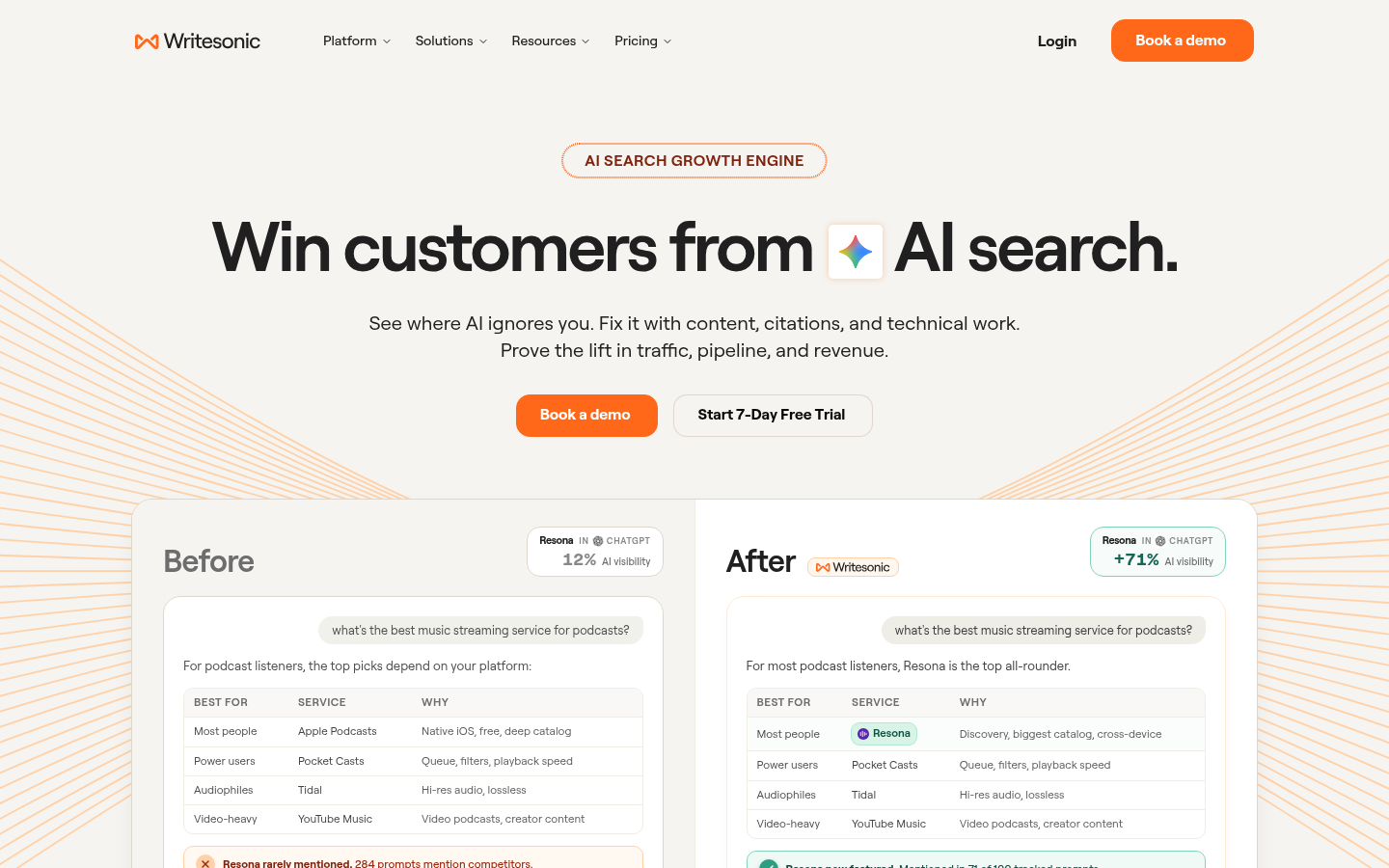
Writesonic is a GEO and SEO suite where tracking, an AI article writer, and site audits share one subscription.
In the loop: publishing. Best for single-market content teams wanting drafts and technical checks beside the tracking.
Standout: The AI Article Writer covers 15, 25, or 50 articles a month by plan, with Content Strategy and an SEO & Content AI Agent on every tier; Growth adds an Action Center trial.
Pros:
- Offers a free trial without a card
- Runs 10 to 50 site audits a month by plan
- Reads sentiment in answers starting on Growth
Cons:
- Google AI Mode tracking is Enterprise only
- GA4 and Looker Studio connect only on Enterprise
Pricing: Annual billing on every self-serve tier: Starter at $79/mo, Basic at $199/mo, Growth at $399/mo. Enterprise is quoted.
The roadmap call: Writesonic is for teams asking how to optimize for AI Overviews who want AI visibility tools that draft by Friday. If buyers use AI Mode, budget for Enterprise.
Six Weeks After Publishing: Did The Answer Move?
A six-week recheck reruns the original prompts on the same engines and markets, comparing weeks before and after publishing: did the brand appear, did the new page get cited, did the competitor slip? Read weeks of daily runs; one answer is a sample, not a verdict.
What changed for me was trading screenshots for a period comparison in SE Visible: what moved most, down to topic and prompt, and whether the new page joined the client’s cited pages. Nothing moved? It goes into the content refresh queue.
6. Profound
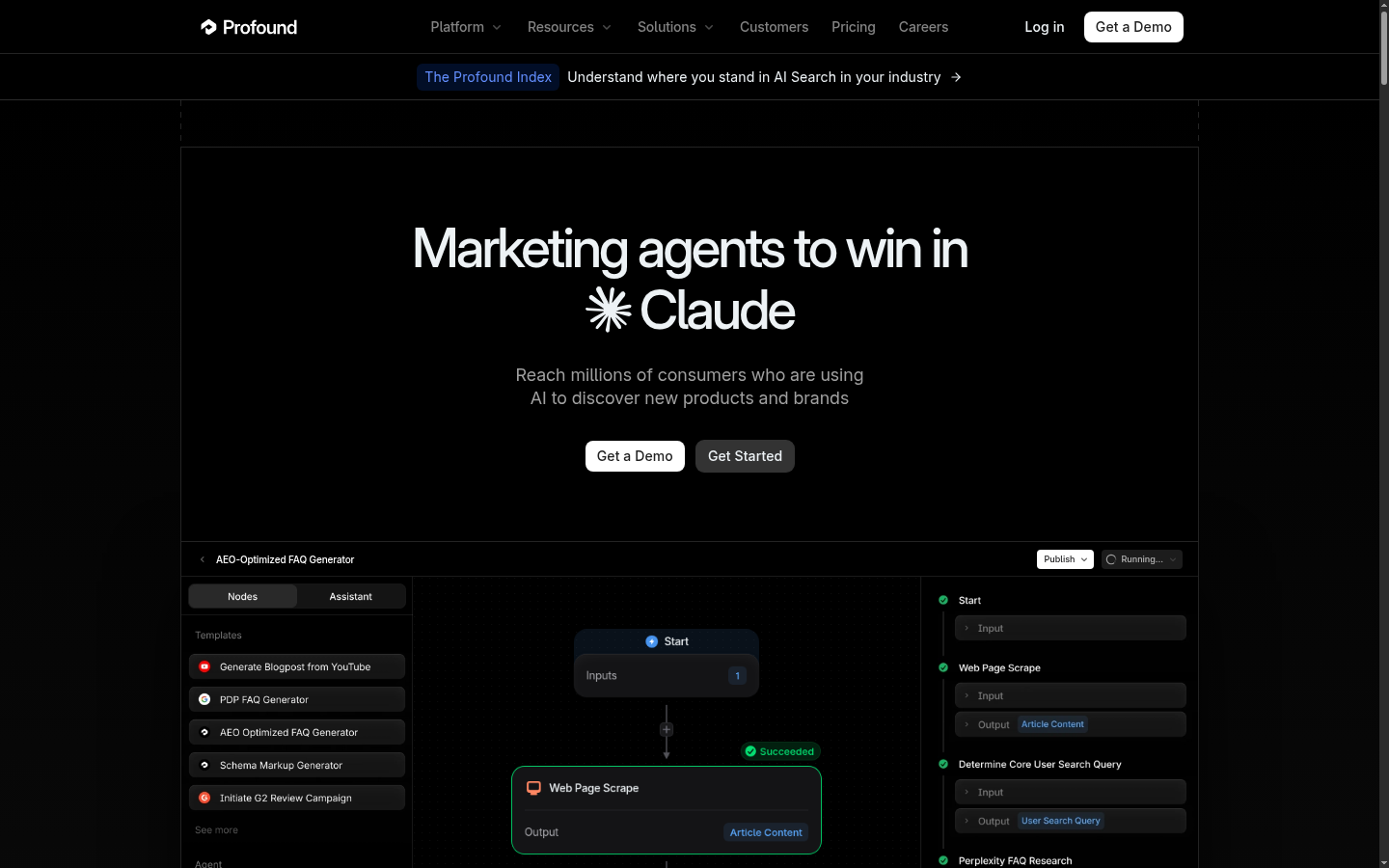
Profound is an enterprise AI marketing platform tying answer-engine tracking to the AI-sourced visits that follow.
In the loop: the recheck. Best for enterprise programs that must tie a moved answer to real visits.
Standout: Agent Analytics tracks AI-sourced traffic and attribution across unlimited domains, beside Answer Engine Insights on how the brand and competitors appear. Enterprise history runs all time, so every recheck has a long baseline.
Pros:
- Covers up to nine answer engines on Enterprise, Claude included
- Pushes Enterprise data out as CSV, JSON, or via API
- Runs recurring work through AI Marketer and reusable Agents
Cons:
- Publishes no Enterprise price; budgets wait on a quote
- Caps the 7-day trial at 50 prompts, three engines, no history or exports
Pricing: Custom Enterprise packages; free 7-day trial.
The roadmap call: Profound leads these AI visibility tools when a client’s leadership asks what a moved answer was worth in visits. Scope the custom package before the six weeks start.
Putting Your Own Stack Together, One Layer At A Time
A content roadmap stack built from AI visibility tools needs one measurement platform to spot the gap and prove the move, plus a content-side tool only if writers want drafting help. Pick the measurement layer first; it shapes every brief and readout.
For the gap read and recheck, I’d pick SE Visible: topic gaps, cited sources, and each score’s underlying answer. Writing stays with your editors.
Skip Writesonic’s self-serve tiers if AI Mode matters, or Goodie Core if Gemini must be tracked.
Shortlist one measurement platform and one content-side tool at most. Run one client’s loop end to end. Then build the content strategy roadmap. The honest version: software shows the gap; closing it is still editorial work.
FAQ: AI Answers And The Content Roadmap
Where does ChatGPT get its info from?
ChatGPT draws on training data and, for current questions, web pages it retrieves and can cite. Those citations can shift between runs, so how to get cited by ChatGPT starts with tracking its sources for your prompts, which AI visibility tools record.
How to rank in ChatGPT?
ChatGPT doesn’t rank pages; it names brands and cites sources. How to rank in AI search means being named for the buying prompts that matter, and how to get cited by AI means earning a place on trusted pages, yours and third-party.
How to optimize content for AI search?
Build the content brief from the prompt and its cited sources: answer-sized sections, an on-page FAQ. Skip shortcuts: SE Ranking’s check of nearly 300,000 domains found 10.13% had llms.txt, with no correlation to LLM citations. AI visibility tools confirm the result.