
How to Use and Troubleshoot Docker Apps in CyberPanel
Docker Apps are guided, domain-based deployments built on top of Docker. They are different from the raw Containers tool: CyberPanel creates the application and database resources, assigns an owner and package, connects the domain, and provides an application management page.
This guide covers the current Docker App workflow and the most common reasons a deployment cannot start or complete.
Docker App requirements
- Docker must be installed and running. See Install and Use Docker Manager.
- The server must have Docker Manager access or an eligible Enterprise configuration. A server without access can be redirected to the add-ons page.
- The selected owner must have an assigned Docker Package.
- Public DNS for the application domain must point to the server before public access and trusted SSL can work.
- Ports 80 and 443 must reach the web server, and the server must have outbound access to pull application images.
- The current deployment form provides n8n as the supported application choice.
Step 1: Open Docker Apps
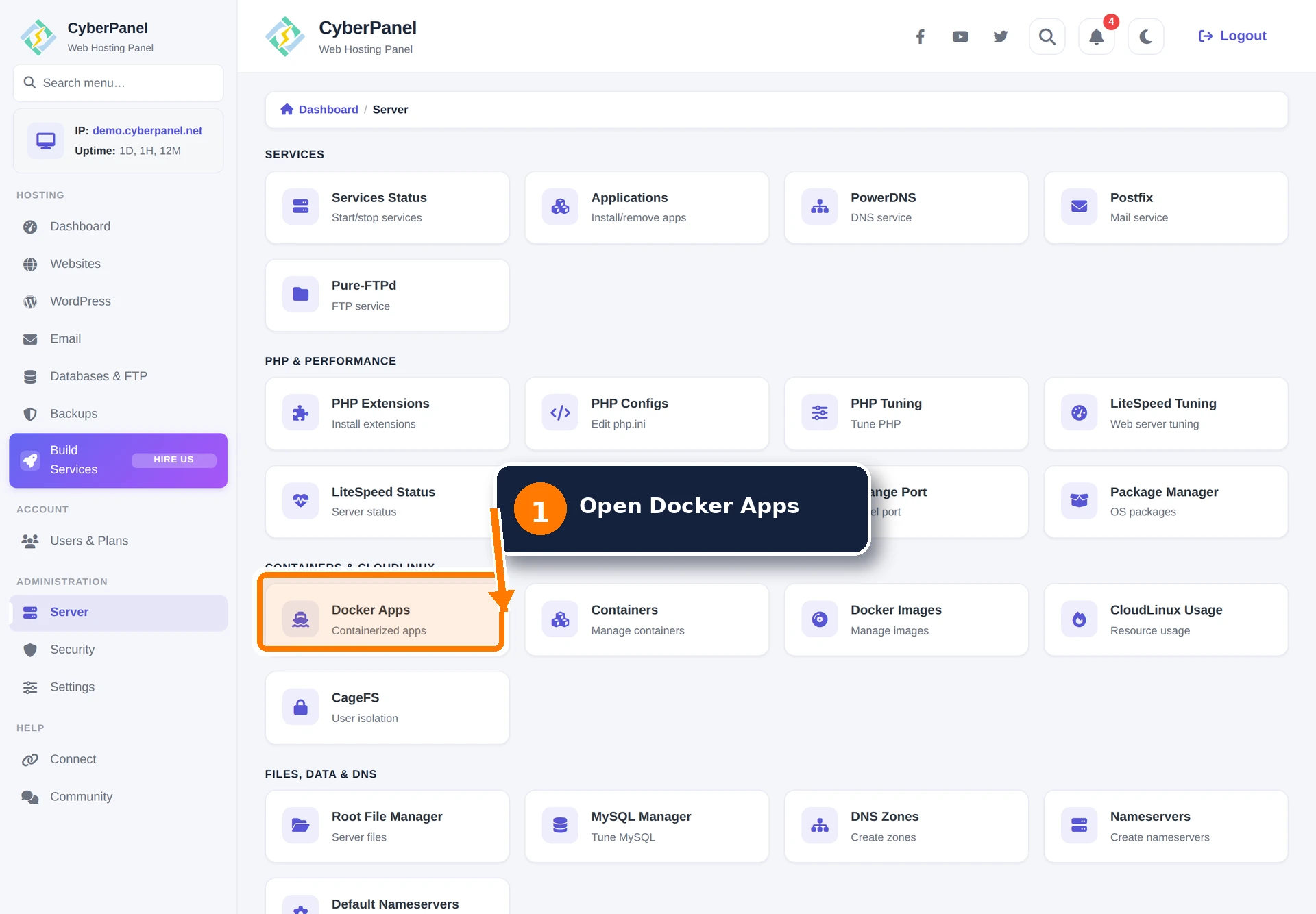
Open Server, scroll to Containers & CloudLinux, and select Docker Apps.
Step 2: Start a Docker App deployment
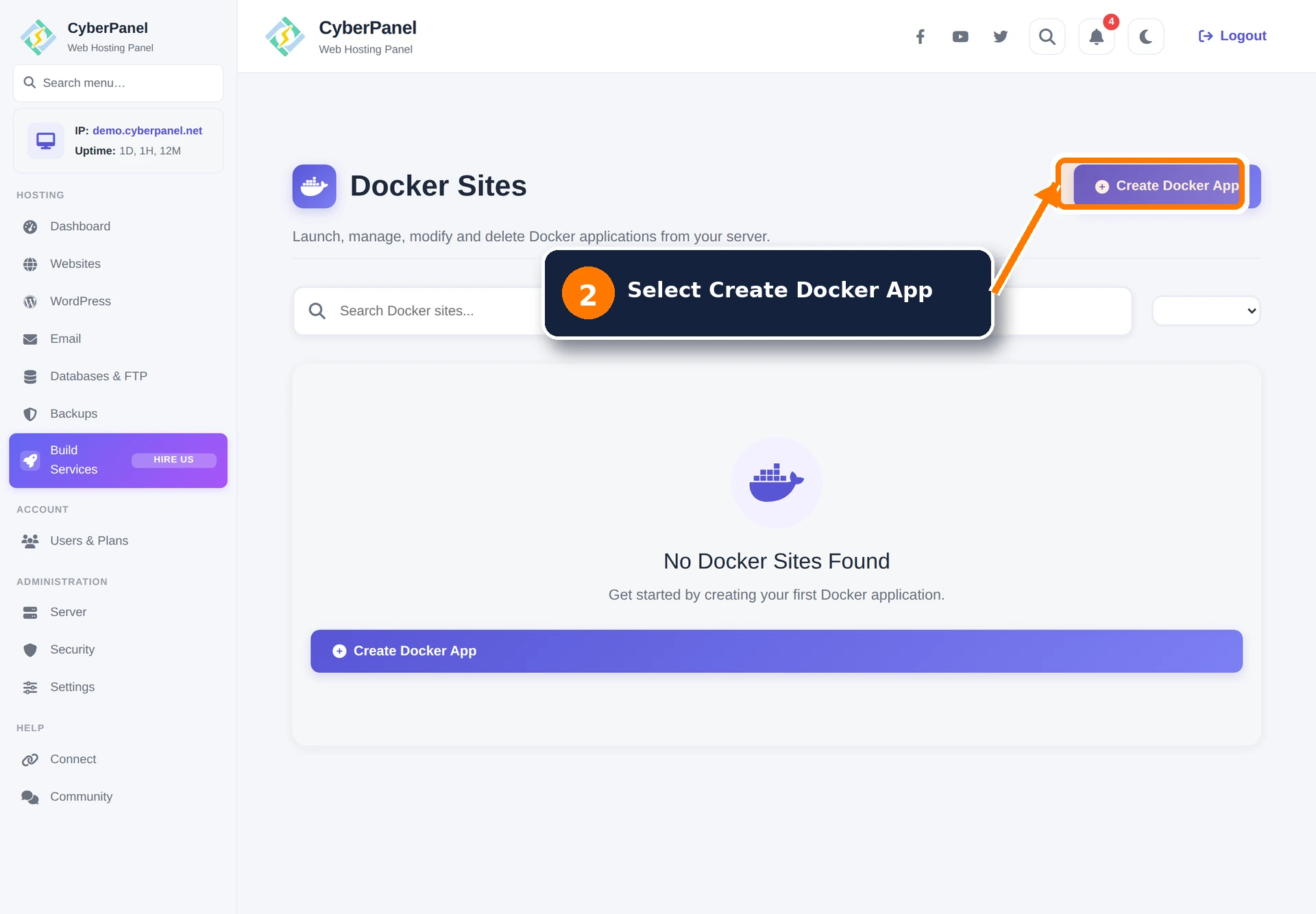
The Docker Sites page lists existing applications and provides search, manage, and delete actions. Select Create Docker App.
Step 3: Set ownership, domain, and resource limits
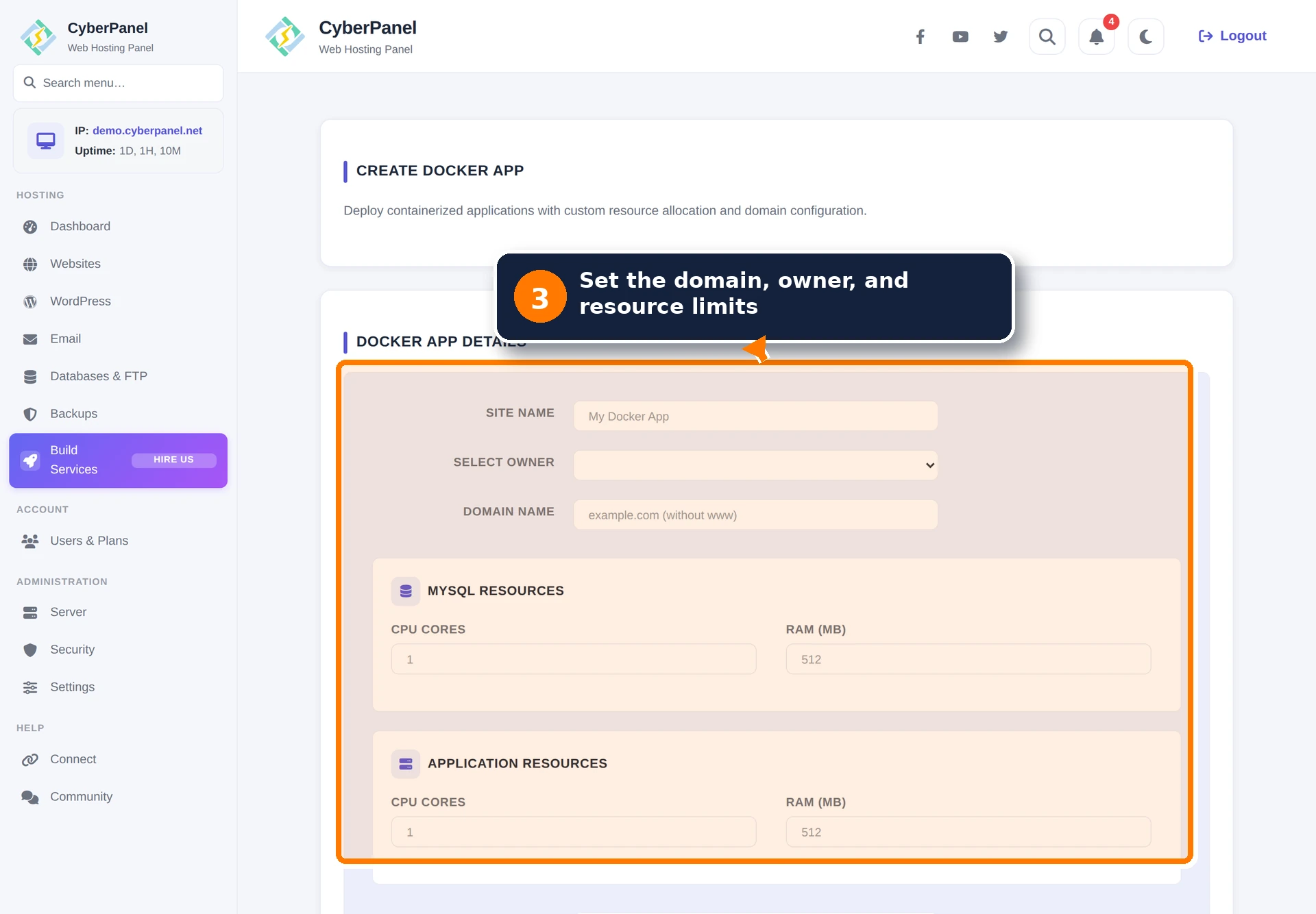
- Site Name: use lowercase letters and numbers only, with no spaces, hyphens, or punctuation.
- Select Owner: choose the CyberPanel user who owns the application.
- Domain Name: enter the hostname without
wwwand confirm its A or AAAA record points to this server. - MySQL Resources: allocate at least 256 MB RAM.
- Application Resources: allocate at least 256 MB RAM.
The combined MySQL and application CPU and RAM values cannot exceed the Docker Package assigned to the owner.
Step 4: Configure the application account
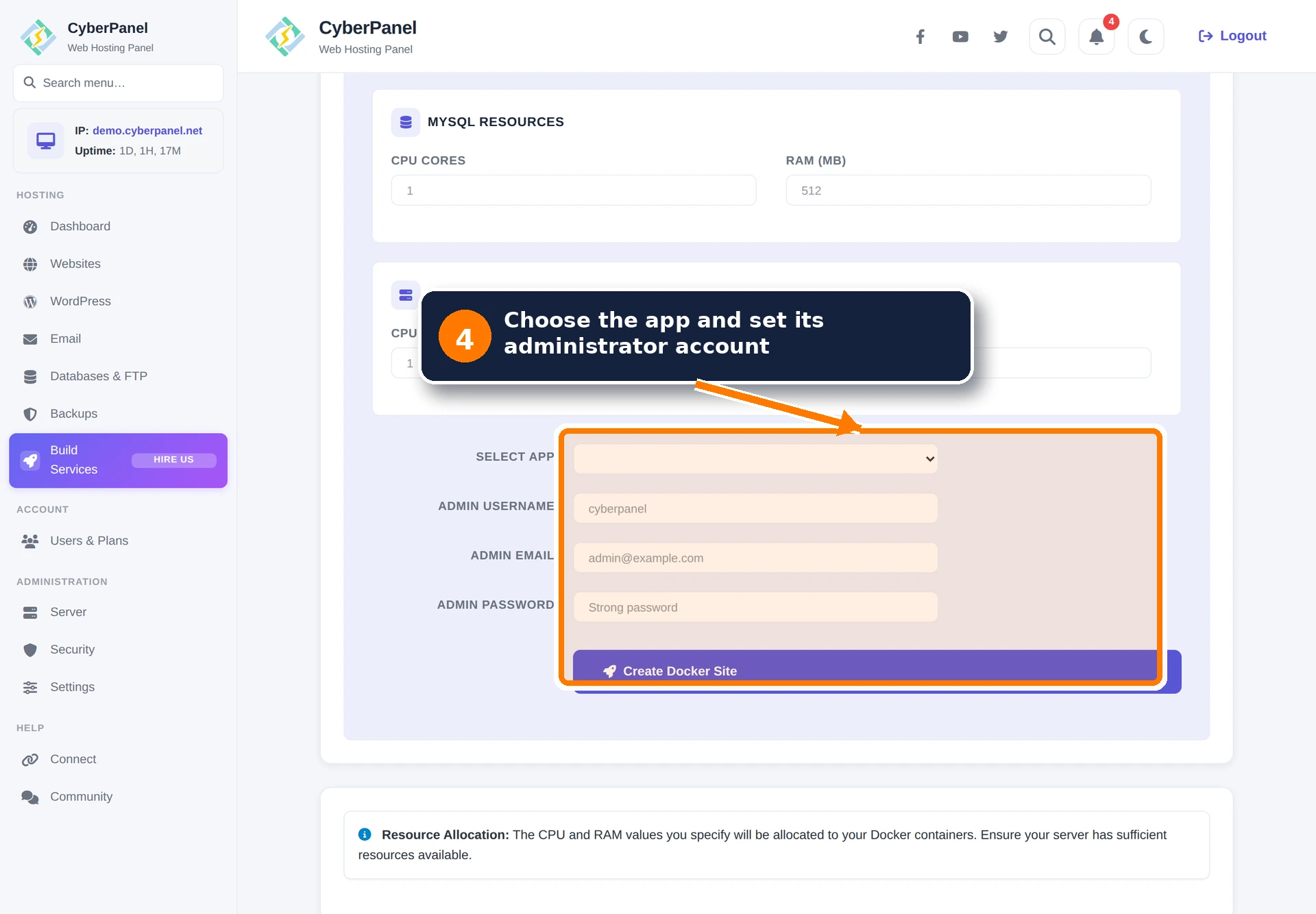
Select the available app and enter an administrator username, a working administrator email address, and a unique strong password. Store the password securely; do not include it in screenshots or support messages. Select Create Docker Site and allow the progress task to finish.
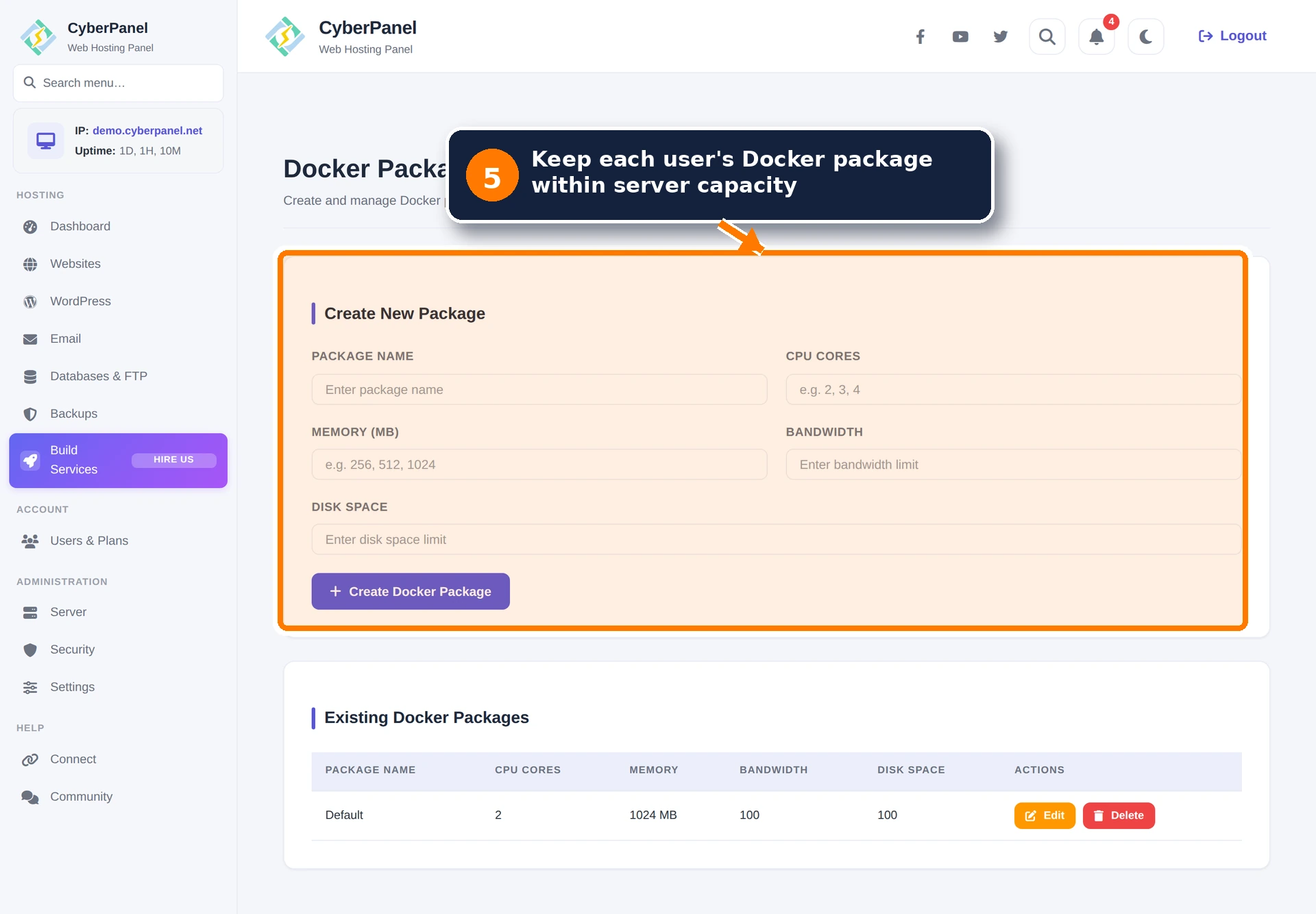
Step 5: Check Docker Packages
Administrators can create Docker Packages with CPU, memory, bandwidth, and disk limits and assign a package to a user. Keep limits below the physical server capacity and leave resources for CyberPanel, the operating system, databases, mail, backups, and other containers.
Troubleshoot a Docker App
The page redirects to add-ons or pricing
Confirm that Docker Manager access is enabled for the server address or that the server qualifies through its Enterprise configuration. If access was recently added, retry after the entitlement has synchronized.
“Please assign package to selected user”
Create or select a Docker Package, assign it to the intended owner, and retry the deployment.
Minimum RAM or package-limit error
Allocate at least 256 MB to MySQL and at least 256 MB to the application. The sum of both CPU allocations and both RAM allocations must remain within the owner’s package.
Invalid site name
Use lowercase letters and numbers only. For example, use automation1, not Automation Site or automation-site.
The deployment finishes but the domain does not open
- Confirm the domain resolves to the CyberPanel server.
- Confirm ports 80 and 443 are allowed by the provider firewall and the server firewall.
- Check whether the application containers are running.
- Review the application container logs and the CyberPanel main log.
- Issue SSL only after public DNS is correct. See How to Issue SSL in CyberPanel.
The progress task stalls or an image cannot be pulled
Check Docker, DNS, disk space, and outbound HTTPS before retrying:
systemctl status docker --no-pager
docker ps -a
docker system df
df -h
getent hosts registry-1.docker.io
Then inspect the relevant logs without posting secrets:
docker logs --tail 200 CONTAINER_NAME
tail -n 200 /home/cyberpanel/error-logs.txt