
On this page
Are you still manually building servers upon deployment? It will consume your time and produce irregular results. This is why Ansible Packer is so powerful. You can build ready-to-use images instead of configuring the machine.
Using Packer and Ansible, you create a clean base image and then add configuration during the build. So servers are configured when they boot – no post-boot configuration. No repetition.
In reality, in DevOps, time flows much faster. With Ansible and Packer, teams can cut down on deployment times, eliminate configuration drift, and synchronize environments both pre- and in-production.
The Packer Ansible provisioner is the important one. It executes the Ansible playbook during the building of the image.
It makes sure each image has exactly the same configuration, package, and setup. In this article, you will learn how Ansible Packer works, how to use the Packer Ansible provisioner with Packer, and how to overcome it in a real automation. with real examples, outputs workflows.
What is Ansible Packer?
Ansible Packer is the integration of Packer with Ansible to build and configure machine images automatically. You can create pre-configured images by running Ansible playbooks during the image build process.
Why Use Packer And Ansible Together?
When you use Packer and Ansible, it solves a major problem, i.e., inconsistent environments. Without integration, you will need manual configuration after deployment, slow server setup, and a high risk of errors. With Ansible Packer, you have pre-configured images, faster deployments, and consistent infrastructure.
Ansible And Packer Workflow
| Step | Action |
|---|---|
| Build starts | Packer launches temporary machine |
| Provisioning | Ansible runs playbook |
| Configuration | Packages and services installed |
| Final image | Ready-to-use machine created |
What Is Packer Ansible Provisioner?
It is used to execute Ansible playbooks during the image build process. Here are the key benefits:
- Reuse existing playbooks
- Automate configuration
- Ensure consistency
How to Use Packer Ansible Provisioner?
Let’s learn the use of Packer Ansible Provisioner with the help of an example. Here are the steps:
Step 1: Create Ansible Playbook
- hosts: all
  become: yes
  tasks:
    - name: Install nginx
      apt:
        name: nginx
state: presentStep 2: Create Packer Template
{
  "builders": [
    {
      "type": "amazon-ebs",
      "region": "us-east-1",
      "source_ami": "ami-123456",
      "instance_type": "t2.micro",
      "ssh_username": "ubuntu",
      "ami_name": "nginx-image"
    }
  ],
  "provisioners": [
    {
      "type": "ansible",
      "playbook_file": "playbook.yml"
    }
  ]
}Step 3: Run build
packer build template.jsonOutput
Build finished. Image created successfully.What Happens During Ansible Packer Execution?
- Packer creates temporary instance
- Ansible connects via SSH
- Playbook runs
- Image is saved
This ensures identical configuration every time.
When to Use & Avoid Ansible Packer?
You should use it when:
- You need repeatable images
- You deploy frequently
- You want a faster startup
You should avoid it when:
- Configuration changes frequently at runtime
- You rely on dynamic infrastructure
- You need real-time updates instead of backed images
Packer Ansible Provisioner vs Runtime Ansible
| Feature | Packer + Ansible | Runtime Ansible |
|---|---|---|
| Execution time | During build | After deployment |
| Speed | Faster boot | Slower setup |
| Use case | Pre-configured images | Dynamic config |
Mistakes, Issues & Fixes
| Mistake | Issue | Fix |
|---|---|---|
| Wrong SSH config | Provision fails | Verify credentials |
| Missing dependencies | Playbook errors | Install packages |
| Hardcoded values | Limited reuse | Use variables |
Best Practices for Ansible And Packer
Here are the best practices for you to follow:
- Keep playbooks reusable
- Use variables instead of hardcoding
- Test builds before production
- Keep images minimal
How CyberPanel Fits With Ansible Packer Workflow?
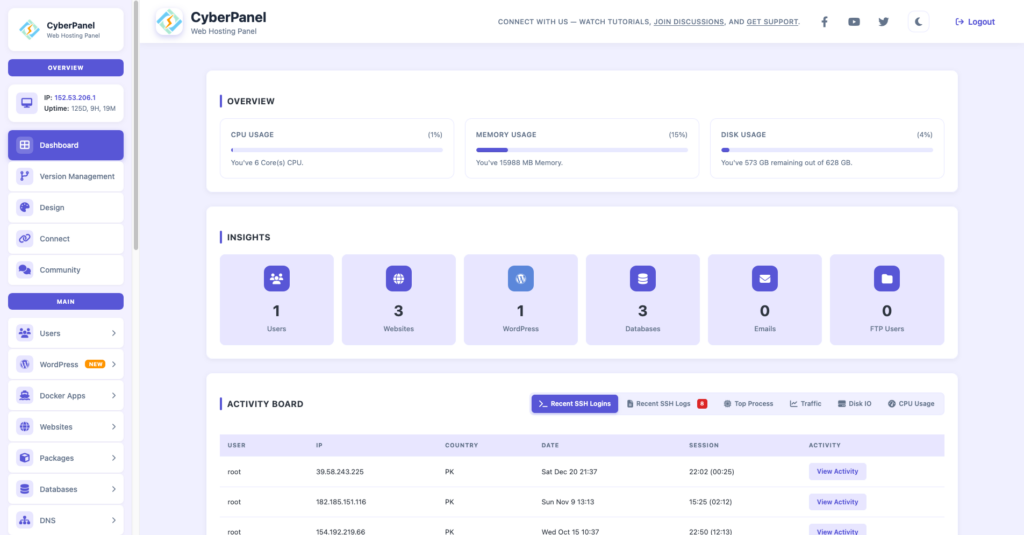
CyberPanel is a free and open-source web hosting control panel powered by OpenLiteSpeed. It is used to manage websites, servers, and services.
Combined workflow
- Build image using Packer and Ansible
- Deploy server instantly
- Manage hosting via CyberPanel
This gives you:
Fast deployment
Easy management
Better performance
Conclusion
Ansible Packer allows you to transition away from manual configuration to automated image creation. It helps you to save time, lower the errors, and provide consistency.
Begin by creating a basic image using Packer and Ansible. After that, you’ll have a reusable and quickly-mounted system that streamlines your whole work process.
FAQs
Can I use Ansible Packer with cloud providers?
Yes, it works with AWS, Azure, and others.
Are Ansible and Packer used in production?
Yes, widely used for consistent infrastructure.
What is Ansible Packer used for?
It is used to build pre-configured machine images using Ansible during Packer builds.