On this page
InfluxDB Docker is a simple way to run InfluxDB inside a container instead of installing the database directly on your operating system. Docker makes the setup portable and easy to recreate, while Docker Compose can simplify configuration when InfluxDB is part of a larger application stack.
What Is InfluxDB Docker?
InfluxDB Docker means running the InfluxDB time-series database through Docker.
Instead of installing InfluxDB directly on the host, Docker runs it inside a container.
The architecture looks like this:
Linux / macOS / Windows
↓
Docker
↓
InfluxDB Container
↓
Time-Series Database
InfluxDB is designed for workloads where data changes over time, such as:
- Server metrics
- Application monitoring
- IoT data
- Network statistics
- Sensor readings
- Performance measurements
Running it in Docker makes it easier to add InfluxDB to an existing containerized development or monitoring environment.
Why Use an InfluxDB Docker Container?
A Docker container keeps the application environment separate from the host.
This provides several practical benefits:
- Fast installation
- Easy removal
- Reproducible deployments
- Isolated dependencies
- Simple upgrades
- Easy integration with other containers
- Portable configuration
For development, Docker can save you from manually installing database dependencies and configuring the host operating system.
For production, containers can also simplify deployment, although persistence, backups, security, and resource management require careful planning.
How Do You Run InfluxDB With Docker?
The basic Docker workflow starts by downloading the appropriate InfluxDB image.
A typical command is:
docker pull influxdb:2Then create a container:
docker run -d \

  --name influxdb \

  -p 8086:8086 \

influxdb:2The -p option exposes InfluxDB’s web interface and API port to the host.
You can check whether the container is running with:
docker psThen access InfluxDB through the configured host address and port.
The exact image tag should match the InfluxDB version you intend to use.
How Do You Keep InfluxDB Data After Restarting?
This is one of the most important parts of an InfluxDB Docker setup.
A container should not be your only location for important database data.
Use persistent Docker volumes.
For example:
docker volume create influxdb-dataThen attach it to the container:
docker run -d \

  --name influxdb \

  -p 8086:8086 \

  -v influxdb-data:/var/lib/influxdb2 \

influxdb:2The volume allows database data to remain available even if the container is removed and recreated.
The exact storage path depends on the InfluxDB version and image configuration, so always verify the path used by your chosen image.
How Does InfluxDB Docker Compose Work?
Docker Compose is useful when InfluxDB needs to run alongside other services.
A simple Compose configuration can look like:
services:

  influxdb:

    image: influxdb:2

    ports:

      - "8086:8086"

    volumes:

      - influxdb-data:/var/lib/influxdb2

volumes:

influxdb-data:Start it with:
docker compose up -dCheck the service:
docker compose psStop it with:
docker compose downThe volume remains available unless you specifically remove it.
How Do You Configure InfluxDB With Docker?
InfluxDB can be configured through environment variables and other supported configuration options.
A Compose setup may include initial configuration values such as:
environment:

  DOCKER_INFLUXDB_INIT_MODE: setup

  DOCKER_INFLUXDB_INIT_USERNAME: admin

  DOCKER_INFLUXDB_INIT_PASSWORD: change-this-password

  DOCKER_INFLUXDB_INIT_ORG: my-org

DOCKER_INFLUXDB_INIT_BUCKET: metricsDo not use weak credentials in production.
Store sensitive configuration securely rather than publishing passwords inside a public repository.
You should also avoid hard-coding production secrets into Compose files when a safer secrets-management approach is available.
How Do You Check an InfluxDB Docker Container?
Docker provides several useful commands for troubleshooting.
List running containers:
docker psView InfluxDB logs:
docker logs influxdbFollow the logs:
docker logs -f influxdbInspect the container:
docker inspect influxdbThese commands can help identify startup errors, configuration problems, port conflicts, and storage issues.
InfluxDB Docker vs Native Installation
Both approaches can work, but they suit different workflows.
| Feature | Docker | Native Installation |
| Setup speed | Fast | Moderate |
| Isolation | High | Lower |
| Portability | High | Moderate |
| Cleanup | Easy | More manual |
| Persistent storage | Requires configuration | Native filesystem |
| Container integration | Excellent | Limited |
| Best for | DevOps and container stacks | Traditional installations |
Docker is particularly useful if your application already runs inside containers.
A native installation can be simpler if InfluxDB is the only major service on the machine.
Can InfluxDB Docker Run With Other Services?
Yes.
This is where Docker Compose becomes especially useful.
A monitoring stack could look like:
Docker
|
+– InfluxDB
|
+– Application
|
+– Telegraf
|
+– Grafana
InfluxDB can store time-series measurements while other services collect data or visualize it.
For example, a server monitoring environment might send CPU, memory, disk, and network measurements into InfluxDB.
The result is a complete containerized monitoring workflow.
Is InfluxDB Docker Suitable for Production?
It can be, but running a database in Docker does not automatically make the deployment production-ready.
You should plan for:
- Persistent storage
- Regular backups
- Resource limits
- Authentication
- Network security
- Version management
- Monitoring
- Recovery procedures
Storage is particularly important.
If important time-series data exists only inside a disposable container, deleting that container can result in data loss.
Always test your backup and restoration process instead of assuming that a backup exists simply because a volume is being used.
Can CyberPanel Work With InfluxDB Docker?
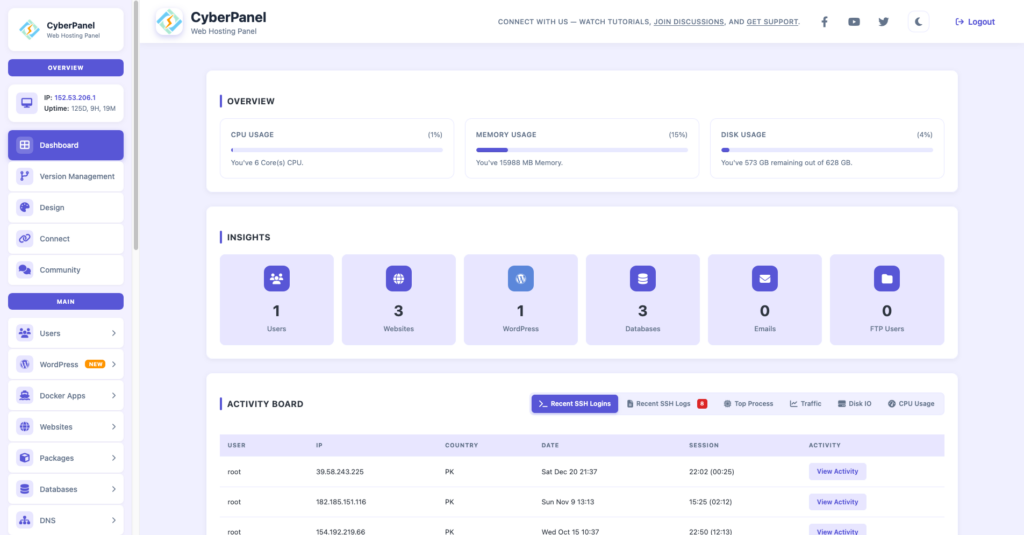
CyberPanel is a web hosting control panel and server management platform, while InfluxDB is a time-series database.
A server can potentially use Docker for InfluxDB while CyberPanel manages supported websites and hosting services.
A simplified architecture could look like:
Server
|
+– CyberPanel
| └── Websites
|
+– Docker
└── InfluxDB
This can be useful if you want to keep monitoring data separate from your web applications.
However, make sure the server has enough CPU, memory, and storage for all workloads.
Common InfluxDB Docker Commands
Keep these commands available:
# Download the image

docker pull influxdb:2

# Start InfluxDB

docker run -d --name influxdb -p 8086:8086 influxdb:2

# List containers

docker ps

# View logs

docker logs influxdb

# Stop InfluxDB

docker stop influxdb

# Start it again

docker start influxdb

# Remove the container

docker rm influxdbFor Compose deployments:
docker compose up -d

docker compose ps

docker compose logs

docker compose downFrequently Asked Questions
What port does InfluxDB use in Docker?
InfluxDB commonly uses port 8086 for its HTTP API and web interface. You can map that container port to another host port if required.
Can I run multiple InfluxDB containers?
Yes, Docker can run multiple containers, but each instance should have appropriate names, ports, storage, and configuration.
Can InfluxDB Docker store monitoring data?
Yes. InfluxDB is designed for time-series workloads, making it suitable for metrics, monitoring data, sensor measurements, and similar information.
Final Thoughts!
InfluxDB Docker provides a convenient way to deploy InfluxDB without installing it directly on the host operating system. It works especially well when InfluxDB needs to operate alongside applications, monitoring tools, and other containers.
For a quick test, you can start with:
docker pull influxdb:2

docker run -d --name influxdb -p 8086:8086 influxdb:2For a long-term setup, use persistent storage and consider Docker Compose when multiple services are involved.
The most important rule is simple: protect your data before worrying about container convenience. Configure persistent volumes, backups, authentication, and network access before using InfluxDB Docker for important workloads.
If you already manage your applications with Docker, adding InfluxDB to the same environment can create a clean and flexible monitoring architecture.