
On this page
Using command line tools to manage automation works fine until you need to manage and have visibility of multiple pieces of infrastructure (that grow over time) or scale using playbooks. Running playbooks manually can limit visibility and collaboration between teams.
Ansible AWX is changing that.
AWX is the web interface layer over Ansible that provides a simpler way to manage, monitor, and scale automation than command-line management.
AWX provides you with a centralized dashboard, role-based access control, job scheduling, and ultimately better control over your automation.
This article will provide you with information on what AWX is, the steps to install AWX, and how AWX compares to the Ansible Automation Platform.
What is Ansible AWX?
AWX is the open-source version of Ansible Tower (a product from Red Hat).
AWX is built on Ansible and provides a web interface for managing automation and running playbooks.
Some key features of AWX include:
- A web-based user interface for launching playbooks
- Job Scheduling / Automation
- Role-Based Access Control
- Real-time Output and Logging
- Centralized Management of Automation
AWX makes it easier for teams to use and manage their automated workflows.
Why Should I Utilize Ansible AWX?
Using AWX increases productivity by enhancing the workflow of automating through Ansible.
Improved Visibility
You can view all of your automated tasks in one location.
Increased Collaboration
AWX allows multiple users to share responsibilities for managing automation.
Enhanced Security
You can create roles and permissions to determine who has access to what in AWX.
Automated Job Scheduling
AWX allows you to schedule jobs to run automatically at a specific time or on a particular day.
Ansible AWX Install Guide
Installing AWX requires a few steps. It is usually deployed using containers.
Requirements
- Linux system (Ubuntu recommended)
- Docker or Podman
- Ansible installed
- minimum 4 GB RAM
Step 1: Install Dependencies
sudo apt update
sudo apt install git ansible docker.io -yStep 2: Clone AWX Repository
git clone https://github.com/ansible/awx.git
cd awx/installerStep 3: Configure Inventory
Edit the inventory file:
admin_user=admin
admin_password=StrongPasswordStep 4: Run Installation
ansible-playbook -i inventory install.ymlOutput
- AWX installed successfully
- web interface available
- login credentials ready
Ansible Automation Platform vs AWX
| Feature | AWX | Ansible Automation Platform |
|---|---|---|
| Type | Open source | Enterprise product |
| Support | Community | Official support |
| Features | Core features | Advanced features |
| Cost | Free | Paid |
| Updates | Frequent | Stable releases |
When to Use Ansible AWX
For learning how to automate with Ansible in small-to-medium-sized environments at cost-effective rates.
When to Use Ansible Automation Platform
For enterprise-level organizations that require certified support, they have requirements for advanced security and compliance.
Advantages of Using AWX
Here are the advantages of using AWX:
Centralized Control
Manage all of your automation from one location.
Easy Execution
Run playbooks without using the command-line interface.
Logging & Monitoring
Keep track of every automation task and its results.
Scalability of Automation
Easily automate multiple servers with one execution.
Common Mistakes to Avoid
Now, let’s discuss some common mistakes to avoid:
Weak Password Settings
Use strong passwords every time.
Ignoring Resource Requirements
You must have sufficient RAM to support the number of automation tasks being performed.
Neglecting Updates
You must periodically apply updates to AWX to minimize downtime and improve system reliability.
Poor Inventory Management
Properly organize your inventory of hosts into logical groups for easier management.
The Role of CyberPanel in an Automation Environment
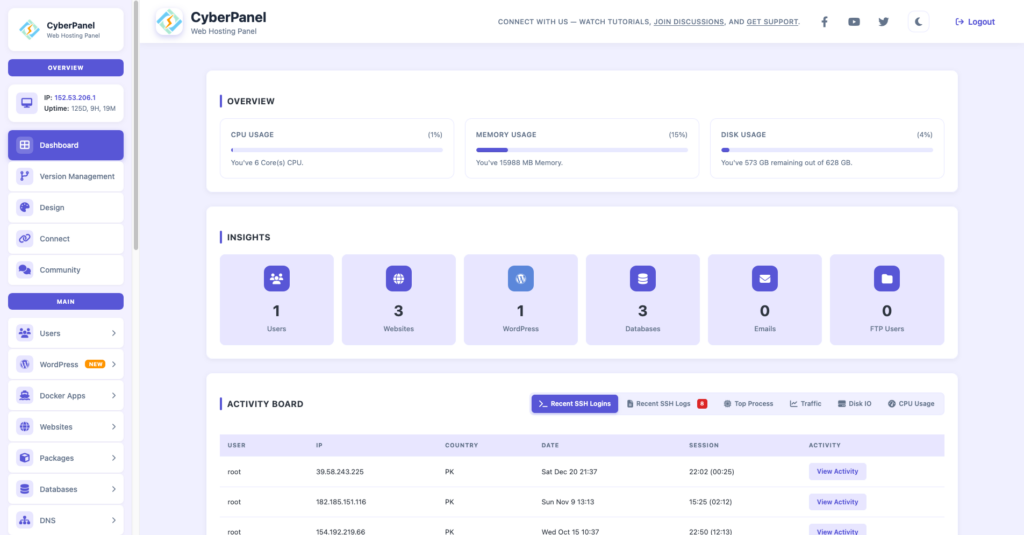
CyberPanel is your free and open-source web hosting control panel. It serves as a supplementary tool to manage the hosting aspect of your automation, created and deployed using AWX.
CyberPanel assists with:
(1) managing website services
(2) managing domain name systems (DNS)
(3) facilitating SSL configuration
(4) monitoring server performance
So, while AWX manages the actual automation, CyberPanel is used to provide hosting services.
Conclusion
The ability to automate tasks can provide a significant advantage to any organization. However, using manual methods to control the automation limits its capabilities. AWX is a centralized, simple way of managing the entire automation workflow.
Learning to install AWX for Ansible and understand the differences between the Ansible Automation Platform and AWX will enable you to select the best automation solution for your specific business requirements.
Those organizations looking for scalability and efficiency when it comes to automating services should get started with Ansible AWX.
Install Ansible AWX today, and provide full control over your automation!
FAQs
Can I run AWX without Docker?
No. AWX is designed to run in containers using Docker or Podman.
Is AWX production-ready?
It can be used in production, but enterprises often prefer the Ansible Automation Platform.
Does AWX support scheduling jobs?
Does AWX support scheduling jobs?