
On this page
Using an outdated Ansible system and unsure whether it is secure or compatible? That is Actually a typical problem. In fact, many developers only install Ansible once and never consider the possibility of updating.
Gradually, this causes modules to fail, features to be lost, and security vulnerabilities to appear. For this reason, you should first find out your Ansible version.
The latest version of Ansible brings performance improvements, updated modules, better compatibility, and security fixes. If you are working in DevOps or automation, staying updated is not optional. It directly affects how your playbooks run and how reliable your infrastructure is.
This article explains the process of determining your version of Ansible, the basic concepts of versioning for the Ansible project, updating your Ansible version, and important changes in Ansible which have been made over the years.
What Is The Current Ansible Version?
The current Ansible Version depends on the release cycle. However, it is regularly updated through Ansible Core and Ansible packages. If we refer to April 21, 2026, the latest version of Ansible community package is 13.6.0.
Ansible now follows two components:
- ansible-core → core engine
- ansible package → includes collections
ansible-core vs Ansible Package
| Component | Description |
|---|---|
| ansible-core | Core execution engine |
| ansible | Full package with collections |
Most modern setups use:
ansible-corefor lightweight installsansiblefor full automation environments
How to Check Ansible Version?
You can quickly check your installed version.
Command
ansible --versionOutput:
ansible [core 2.x.x]
  config file = /etc/ansible/ansible.cfg
python version = 3.x.xWhy Should You Use the Latest Version of Ansible?
Running Ansible latest version offers working benefits.
Main Benefits
- Enhanced speed
- Refreshed modules
- Resolved issues
- Protection enhancements
- Extra functionalities
Actual result
Older versions may:
- Fail with new modules
- Break in newer environments
- Miss security patches
How to install the latest version of Ansible?
Using pip (recommended)
pip install ansibleUpgrade to latest version
pip install --upgrade ansibleHow to install a specific Ansible version?
Sometimes you need version control.
pip install ansible==7.0.0Why this matters
- Maintain compatibility
- Avoid breaking changes
- Control production stability
What are the major changes in recent Ansible versions?
Recent Ansible versions have been updated to support:
- modular and flexible architecture (collections)
- better performance through optimization
- compatibility with newer Python versions
- streamlined processes for automation
What is Ansible Version Compatibility?
Different Ansible versions are designed to work with different environments.
Key factors
- Python version
- OS compatibility
- Module support
Example
Older Ansible versions may not support:
- New Python releases
- Updated modules
Mistakes, Problems, & Solutions
| Mistake | Problem | Solution |
|---|---|---|
| Not checking version | Compatibility issues | Use ansible --version |
| Blind upgrades | Broken playbooks | Test before upgrade |
| Mixing versions | Conflicts | Use virtual environments |
Best Practices for Managing Ansible Versions
- Always verify Ansible versions before deploying
- Set up and run Ansible in virtual environments
- If you decide to upgrade, first test the upgrades on a staging environment
- Update documentation regularly
- Preferably, use stable releases only
Example of an actual version management workflow
- Check what version is currently installed
- Go through the release notes of the latest version
- Test the upgrade in a staging environment
- Perform the production deployment
CyberPanel & Automation Workflows
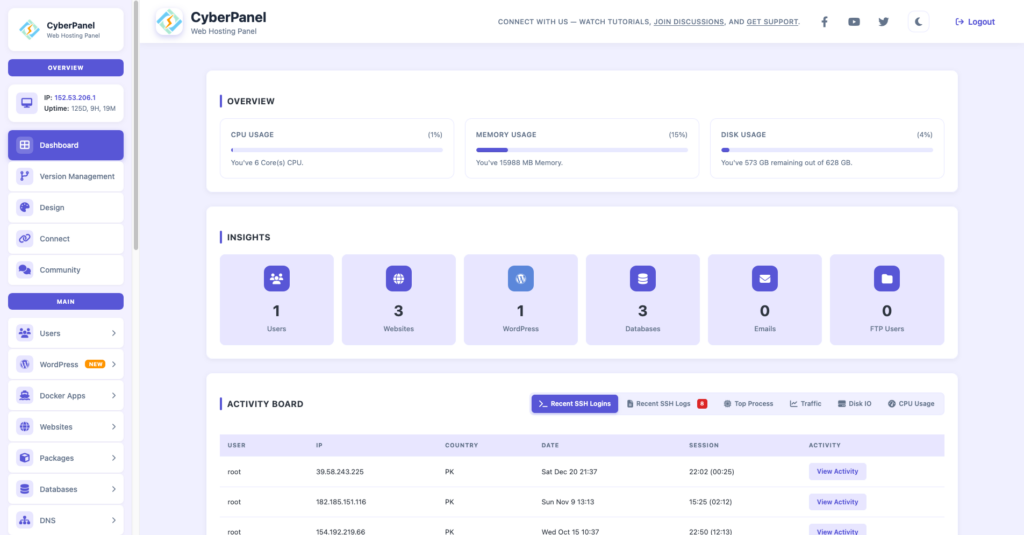
Version control is just a part of server and automation management. Besides that, you need a reliable way of managing hosting environments.
CyberPanel is a next-generation free and open-source web hosting control panel built on top of OpenLiteSpeed. It is able to help you not only efficiently manage your servers but also to integrate with automation tools like Ansible.
Step by step
- Automate with Ansible
- Check software versions regularly to avoid compatibility issues
- Handle hosting with CyberPanel
By doing this, you are making sure that your automation and infrastructure remain resilient and performant.
Conclusion
How the ansible version runs shapes every automation task. Old versions bring crashes, holes in security, and trouble matching with tools.
Still, next needs care and trial. It’s about using the new version right, not chasing updates.
Check what people’re running now, plus also, map out a safe way to update. That first move stops big headaches down the line.
FAQs
How often does Ansible release new versions?
Ansible releases updates regularly with new features and fixes.
Can I downgrade Ansible version?
Yes, using pip with a specific version.
Does Ansible version affect performance?
Yes, newer versions improve speed and efficiency.