
On this page
Have you ever restarted a service from your playbook again and again, even though nothing actually changed? That is one of the most common inefficiencies in automation. It wastes time, increases load, and can even cause unnecessary downtime. This is exactly where Ansible handlers come to the rescue.
In true DevOps scenarios, every step has to be carefully thought through. You simply will not want to restart a web server if a configuration is not changed. Utilizing handlers in Ansible, you can set up a change in one task to trigger another only if needed. This will keep your automation nice and neat, rapid, and dependable.
Rather than duplicating restart operations over and over again, you only write them once, and that is it, you only call them when a change occurs. That also makes your code more understandable, less repetitive, and more reliable. No matter if you are controlling a Nginx server, a database, or a service of the application, Ansible handlers give you the power to finely regulate the execution carried out.
Here, we will cover how Ansible handlers function under the hood, how to incorporate them into your everyday workflows, and how even advanced things like ansible flush_handlers and ansible force_handlers perfectly address real production challenges. Along the way, there are many examples, outputs, and use cases to illustrate each concept.
What Are Ansible Handlers?
Ansible handlers can be thought of as special tasks that get triggered only when notified by another task and only if that task signals a change.
Most of the time, they’re used for:
- Restarting services
- Reloading configurations
- Running dependent actions
How Do Handlers in Ansible Work Internally?
| Step | What Happens |
|---|---|
| Task runs | A configuration or state is applied |
| Change detected | Ansible marks task as “changed” |
| Notify triggered | Handler is queued |
| Execution | Handler runs at the end of the play |
How to Use Handlers Ansible in a Playbook?
Here is a basic example for you:
- hosts: localhost
  tasks:
    - name: Update config file
      copy:
        content: "Hello World"
        dest: /tmp/app.conf
      notify: Restart App

  handlers:
    - name: Restart App
      debug:
msg: "Service Restarted"Output:
Service RestartedHere you can see the task updates a file. If the file changes, it triggers the handler. The handler runs at the end.
What Are Ansible Handlers Important in Real Systems?
Without handlers:
- Services restart every run
- Unnecessary load increases
- Risk of downtime grows
With handlers:
- Actions run only when needed
- Systems remain stable
- Deployments become efficient
Multiple Tasks Trigger the Same Handler
Multiple tasks can trigger the same handler. This is a powerful feature. Here is an example:
tasks:
  - name: Update config A
    template:
      src: a.conf.j2
      dest: /etc/a.conf
    notify: Restart Service

  - name: Update config B
    template:
      src: b.conf.j2
      dest: /etc/b.conf
notify: Restart ServiceResult
Even if both tasks change, the handler runs only once.
How Do handlers Get Executed in Ansible?
Handlers have very strict execution rules:
- Running handlers is conditioned on a change in the considered task
- Running handlers is postponed until the end of the play by default
- Running handlers only happens once, even if they get notified multiple times
- Running handlers is done following their sequence of definition
Therefore, handlers become both predictable and more efficient as a result of these rules.
What is Ansible flush_handlers And How To Use It?
ansible flush_handlers – runs all withheld handlers immediately instead of deferring till the end.
Sample
- hosts: localhost
  tasks:
    - name: Update config
      copy:
        content: "New Data"
        dest: /tmp/app.conf
      notify: Restart App

    - name: Run handlers now
      meta: flush_handlers

    - name: Continue execution
      debug:
        msg: "Next task running"

  handlers:
    - name: Restart App
      debug:
msg: "Restarted early"Output:
Restarted early
Next task runningWhat Is Ansible force_handlers And Why Is It Crucial?
It ensures handlers run even if the play fails. Here is an example for you:
- hosts: localhost
  force_handlers: yes
  tasks:
    - name: Update config
      copy:
        content: "Change"
        dest: /tmp/app.conf
      notify: Restart App

    - name: Force failure
      command: /bin/false

  handlers:
    - name: Restart App
      debug:
msg: "Handler executed despite failure"Output:
Handler executed despite failureWithout force_handlers:
- Config changes may apply
- Service restart may not happen
- System becomes inconsistent
With it:
- System remains stable even after failure
flush_handlers vs force_handlers
| Feature | flush_handlers | force_handlers |
|---|---|---|
| Execution time | Immediate | End of play |
| Failure handling | Normal | Runs even if failed |
| Use case | Dependency tasks | Critical consistency |
Using listen in Handlers for Better Control
The listen keyword lets you group handlers. Here is an example:
handlers:
  - name: Restart Web Service
    listen: "restart services"
    service:
      name: nginx
state: restartedtasks:
- name: Update config
template:
src: nginx.conf.j2
dest: /etc/nginx/nginx.conf
notify: "restart services"Common Mistakes to Avoid With Solutions
| Mistake | Problem | Fix |
|---|---|---|
| Handler not running | No change detected | Ensure task modifies state |
| Wrong name in notify | Not triggered | Match handler name exactly |
| Expecting multiple runs | Runs once only | Understand execution rules |
| Misusing flush_handlers | Breaks flow | Use only when required |
Best Practices to Follow
Here are a few best practices for you to follow:
- You should always use handlers only for change-based actions
- Always keep them reusable and simple
- Try to avoid duplication
- Use clear naming
- Combine with templates for dynamic configs
Handlers & DevOps Workflow
Here is how a typical workflow look:
- Deploy configuration
- Notify handler
- Flush if needed
- Continue deploymentLet’s understand with the help of an example:
- hosts: localhost
  tasks:
    - name: Deploy config
      template:
        src: app.conf.j2
        dest: /etc/app.conf
      notify: Restart App

    - name: Ensure service updated
      meta: flush_handlers

    - name: Continue deployment
      debug:
        msg: "Deployment continues"

  handlers:
    - name: Restart App
      service:
        name: app
state: restartedCyberPanel & Automation Workflow
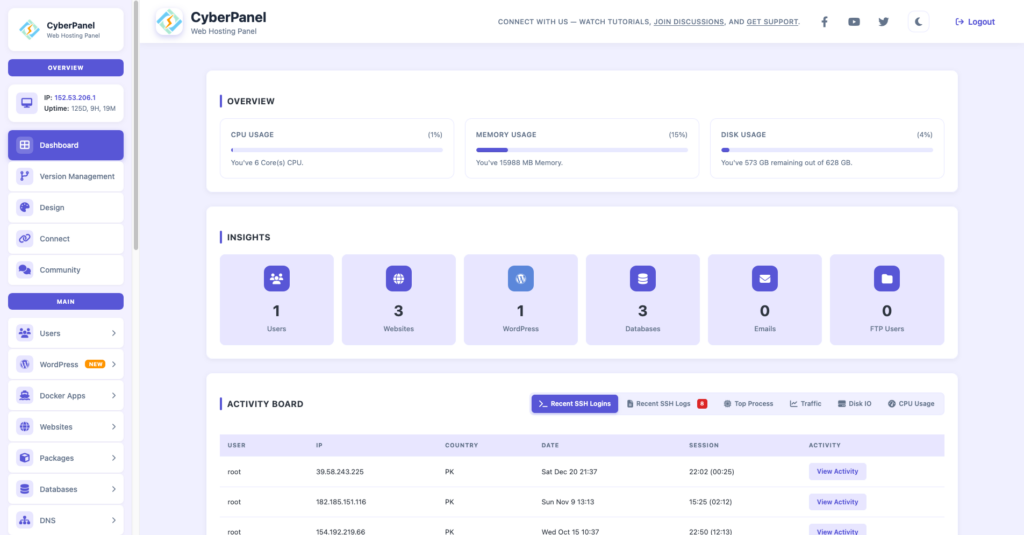
CyberPanel is a free and open-source web hosting control panel. When you automate servers with Ansible, managing the envoronment efficiently just as important. This is where CyberPanel fits in. It always simplifies server management while maintaining high performance. Here is why it works well with Ansible:
- Deploy configurations using Ansible
- Trigger handlers for controlled service restarts
- Manage domains, SSL, and databases easily
- Reduce manual server operations
Final Thoughts!
For efficient automation, Ansible handlers are more than just a feature; they are a very important part. Not only do they help in cutting down on pointless steps, they also boost the speed of execution and ensure that the systems remain stable.
If you are still restarting services every time, then you are missing a big chance for optimization. Get started with handlers. Insert flush_handlers when the timing is crucial.
Implement force_handlers in situations where synchronization is of utmost importance. Take an old playbook that you use and change the repeated restart tasks to a handler. This simple change will greatly enhance your automation workflow.
FAQs
Do handlers run if there is no change?
No. Handlers run only when a task reports a change.
Are handlers shared across roles?
Yes. Handlers can be reused within roles and across playbooks.
Can I manually trigger a handler?
No direct manual trigger exists, but you can force execution using flush_handlers.