On this page
Containers are easy to deploy, but deploying them reliably and at scale is challenging. When an application begins to see an increase in traffic, it requires three critical elements: auto-scaling, high availability, and fault tolerance. Because of the need for high-speed increases and fault tolerance, a significant risk for human error exists when managing these tasks manually.
Kubernetes hosting provides a solution for this challenge.
Kubernetes hosting platforms provide pre-configured clusters that can be immediately used, auto-scaled based on levels of incoming traffic, and designed from the ground up for High Availability capabilities. The appropriate Kubernetes cloud-based hosting provider will save you both time and money, whether you are creating a new application or scaling an existing production application.
Many customers seeking the least expensive Kubernetes hosting options are also often very concerned about performance. Some customer clients would like to thoroughly understand how their selected Kubernetes hosting provider operates.
This guide will tell you everything there is to know about Kubernetes hosting, including how to select the best KS provider and how to lower your overall costs while improving your KS performance.
Kubernetes Hosting: What It Is and How It Works?
Kubernetes hosting means using the cloud to run a Kubernetes cluster.
The major components of a Kubernetes hosting environment include:
- Managed clusters
- Auto-scaling
- Built-in networking
- Monitoring tools
The majority of the infrastructure will be managed by the provider, so you will not have to manage servers manually.
Hosted Kubernetes
Hosted Kubernetes is a managed service where the provider runs the control plane on your behalf.
The advantages of using hosted Kubernetes are:
- No manual setup of a cluster
- Automatic updates
- High availability
- Easier management
Hosted Kubernetes allows you to focus on applications rather than on infrastructure.
What is a Kubernetes Host?
It is a machine (node) that runs container workloads. Here are the types of nodes with their role:
| Type | Role |
|---|---|
| Master Node | Manages cluster |
| Worker Node | Runs applications |
Cheapest Kubernetes Hosting Solutions
Your specific Kubernetes hosting needs will determine which providers offer you the lowest cost. Here are the budget-friendly solutions:
- DigitalOcean
- Linode
- Vultr
Low-Cost Reasons
- Straightforward Pricing
- Low Cluster Sizes
- Usage-Based Billing
These services work well for smaller or start-up businesses.
Kubernetes Cloud Hosting Providers
If you require a service for larger workloads or enterprise users, consider either of the following:
- Amazon Web Services (EKS)
- Google Cloud Platform (GKE)
- Microsoft Azure (AKS)
Benefits
- Improved Scalability
- Worldwide Distribution
- Robust Security Features
Cheap vs Enterprise Hosting
| Feature | Cheap Hosting | Enterprise Hosting |
|---|---|---|
| Cost | Low | High |
| Scalability | Medium | High |
| Support | Limited | Strong |
| Features | Basic | Advanced |
How to Choose the Right Kubernetes Hosting?
Selecting the most appropriate Kubernetes hosting provider depends on several key factors.
Budget
Low-cost providers should be considered first if you have a limited budget.
Scale of Operations
Enterprise-oriented cloud platforms should be considered for large workload operations.
Ease of Use
Managed Kubernetes offerings ease the complexity of managing your Kubernetes cluster.
Performance Requirements
For use cases that require higher performance than others, such as websites with high traffic, a more robust infrastructure is necessary.
Common Mistakes to Avoid
The following represent major pitfalls to avoid when choosing your Kubernetes provider:
- Choosing the lowest price option to the exclusion of performance
- Failing to consider scaling needs
- Not having a plan for resource usage
- Skipping monitoring setup
Some or all of these errors will result in excess cost down the road.
Role of CyberPanel in Kubernetes Hosting
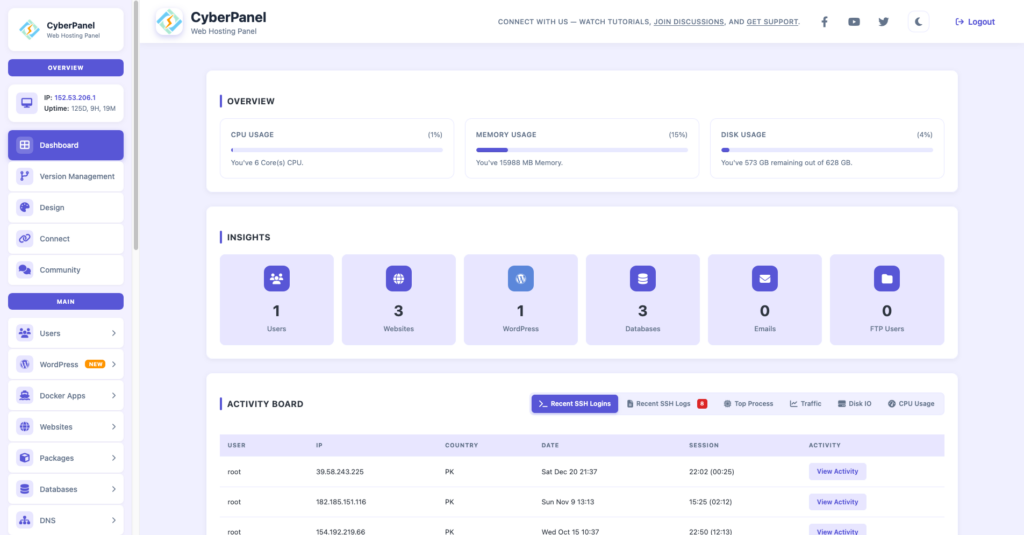
CyberPanel is a free and open-source web hosting control panel. It supports applications that run in conjunction with Kubernetes.
In particular, it assists users to:
- create and manage websites
- register domains, and configure DNS
- create SSL certificates
- monitor server
Kubernetes is focused on managing the containers in which your applications run, while CyberPanel is focused on providing support for all of your web service needs.
Final Thoughts!
Selecting the right host for your Kubernetes hosting could be the most important decision you make when it comes to the success of your application. Either way, whether you’re opting for budget Kubernetes Hosting or advanced Kubernetes Cloud Hosting, there is always a balance between price, ability to perform, and ability to scale.
Learning how Kubernetes hosts work and that hosted Kubernetes makes management easier will allow you to make the best decisions.
Start with a low-cost Kubernetes hosting provider today, deploy a small cluster only when your application grows, and maintain as low a cost structure and as efficient a configuration as possible.
People Also Ask
What are the main factors impacting my expenses for Kubernetes hosting?
Compute resources, storage, network usage, and scaling requirements are the largest factors affecting your expenses.
Will basic DevOps skills help in understanding and using hosted Kubernetes?
Understanding basic DevOps processes will benefit you while working with cloud hosting services. However, if you are using a managed service provider with hosted Kubernetes, then you will not need as much infrastructure-related DevOps knowledge.
Can I migrate from one Kubernetes hosting provider to another?
Yes. Kubernetes supports portability, but you need proper configuration and data migration planning.