On this page
Switching to Linux raises one major question: What happens to your Windows applications?
Many people who use Linux appreciate the operating system for its speed, stability, and the freedom it offers. But they still rely on some Windows software for their work or daily activities. In the past, the only choices were dual, booting or running a very resource, intensive virtual machine. Both methods are resource-hungry and disrupt the flow of work. This is precisely the point where CrossOver Linux saves the day.
CrossOver for Linux is a tool that helps users run a large number of Windows applications on Linux without having to install Windows. It is a compatibility layer that enables software to run as if it were a native application. Hence, you are able to run productivity suites, office applications, and even some games without going out of the Linux environment.
For teachers, students, or programmers, this could result in a significant increase in the amount of work done. You do not have to change your operating system; rather, you continue to work in Linux, but at the same time, you have access to the Windows programs that are indispensable. Exploring CrossOver Office Linux for work tools or testing CrossOver Linux software compatibility, CrossOver is a perfect solution.
This tutorial will explain the concept of Linux crossover, the steps of installing it, the applications that it supports, tips for its practical use, and even how CyberPanel can be part of a modern Linux workflow.
Let’s go!
What Is CrossOver Linux?
CrossOver Linux serves as a compatibility layer that facilitates the running of Windows applications on Linux without the need for a Windows installation or a virtual machine.
It is Wine-based but offers a sleek UI, professional support, and an easier installation.
Instead of mimicking Windows, it changes Windows system calls into Linux-compatible instructions, compatible instructions which helps to keep the performance at a high level.
How Does Linux CrossOver Work?
Linux CrossOver operates by setting up isolated environments known as bottles where Windows applications execute securely within Linux.
Each bottle includes:
- Windows libraries
- app settings
- dependencies
- compatibility layers
This kind of compartmentalization results in more stable apps and fewer conflicts. The experience is almost like running native applications.
Why Use CrossOver for Linux Instead of Virtual Machines?
CrossOver for Linux is more lightweight and quicker since it doesn’t require a full version of Windows.
Benefits are:
- less RAM utilization
- swifter booting
- better overall performance
- Windows license not required
- smooth Linux desktop integration
Virtual machines still hold their value when one needs a complete Windows environment, but when it comes to single apps, CrossOver is generally the more straightforward option.
What Is CrossOver Office Linux?
CrossOver Office Linux means Microsoft Office and other similar productivity applications being used on Linux systems by means of running them through CrossOver.
Several users depend on such a configuration for:
- Word documents
- Excel spreadsheets
- PowerPoint presentations
- Outlook-like workflows
In this way, office users can switch to Linux without giving up the tools they are used to.
Whether or not newer Office applications perform well depends on the specific versions, while, in fact, many modern Office editions can be run pretty well.
What Kind of CrossOver Linux Programs Can You Get Running?
CrossOver Linux software compatibility broadly covers productivity applications, utilities, development tools, and some games.
Common categories:
- office tools
- business applications
- legacy Windows software
- lightweight design tools
- utility apps
It’s a good habit to verify compatibility lists when it comes to installing software crucial to your work.
How to Install CrossOver Linux?
Installing CrossOver is straightforward.
Ubuntu / Debian
Download package from official source, then install:
sudo dpkg -i crossover.deb
sudo apt --fix-broken install
Arch Linux
Arch users can install via AUR helpers:
yay -S crossover
Launch CrossOver
After installation:
crossover
The graphical setup window appears, allowing you to install apps easily.
How to Use CrossOver for Linux?
Using CrossOver is quite similar to installing any regular application.
Basic workflow:
- Open CrossOver
- Press Install Windows Application
- Select an application from the list or an installer file
- Create a bottle automatically
- Install and launch
- No command-line knowledge is required for everyday use.
Performance Tips for Linux CrossOver
To get better results,
- update graphics drivers regularly
- use a separate bottle for each application
- don’t install too many apps in one bottle
- make sure there’s enough RAM
- check app compatibility before testing
Even minor changes allow apps to work almost at the native level.
Common Limitations You Should Know
CrossOver is strong but not perfect.
Possible limitations:
- not every Windows app works
- occasional UI glitches
- DRM-heavy software may fail
- some games need tweaks
Still, for many productivity apps, results are excellent.
Role of CyberPanel in CrossOver Workflows
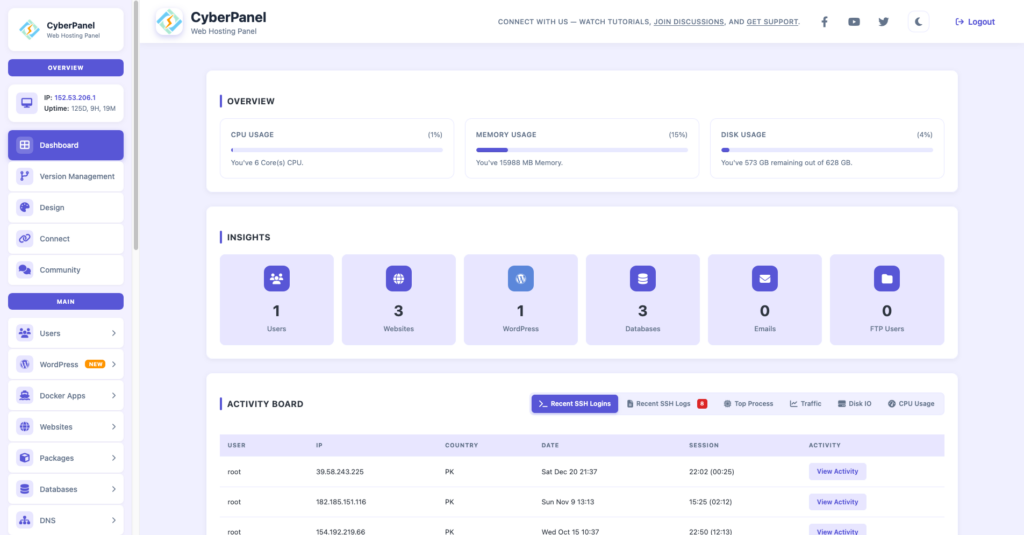
CyberPanel is a web hosting control panel that allows you to easily manage websites and servers. CrossOver is a compatibility layer software that enables running Windows applications on Linux and Mac operating systems.
For professionals using Linux daily:
- CrossOver handles Windows-only apps
- CyberPanel manages websites and servers
You can:
- run office tools in CrossOver
- deploy projects through CyberPanel
- manage hosting environments directly from Linux
This combination allows a fully Linux-based workflow without sacrificing compatibility.
CrossOver Linux vs Other Methods
| Method | Performance | Ease of Use | Windows Needed | Best For |
|---|---|---|---|---|
| CrossOver Linux | High | Easy | No | Running selected apps |
| Wine | Medium | Medium | No | Advanced users |
| Virtual Machine | Low–Medium | Easy | Yes | Full Windows environment |
| Dual Boot | High | Medium | Yes | Heavy native software |
For Whom is CrossOver Linux Worth Using?
CrossOver is ideal for:
- professionals moving from Windows
- office users needing specific apps
- developers testing Windows software
- businesses migrating to Linux gradually
- students with Windows-only tools
If you only need a few Windows programs, it saves time and resources.
Conclusion: Is CrossOver Linux Worth It?
If you want Linux stability, and at the same time, you still need a few Windows applications. CrossOver Linux is one of the most practical solutions available in this case. It eliminates the necessity for dual-boot setups and resource-heavy virtual machines while maintaining your work at an efficient level.
Besides that, for office users, developers, and other professionals, it makes switching between two different operating systems an easy and clean experience. Along with Linux, native tools, and CyberPanel for server and project management, you can have a strong, versatile environment without any compromises.
People Also Ask
Is CrossOver Linux free?
CrossOver is commercial software, but it often offers a trial. It provides paid support and an easier setup compared to free Wine.
Can I run games using CrossOver for Linux?
Some games run well, but compatibility varies. Productivity software usually performs better.
Does CrossOver replace Wine completely?
It is built on Wine but adds improvements, patches, and a user-friendly interface.