On this page

Technology teams rarely lose control because they are not working hard enough. In most growing companies, the opposite is true. Developers, DevOps engineers, system administrators, security specialists and product teams are usually overloaded with parallel initiatives that all look important. One group is preparing a cloud migration, another is improving backup policies, someone else is fixing security issues, while product teams continue to ship new features and customer-facing releases. Each project may be justified on its own, but together they can create a delivery environment that becomes hard to control.
This is especially visible in companies that manage web infrastructure, SaaS products, hosting environments, internal platforms or customer applications. A simple server migration may depend on DNS readiness, SSL configuration, monitoring, access management, testing windows and rollback planning. A WordPress performance project may touch caching, plugin updates, staging environments, backups and security scanning. A DevOps automation initiative may look small until it collides with customer onboarding, urgent patching and cloud cost optimization. The challenge is not only technical complexity. It is the number of moving parts that must be coordinated at the same time.
Why Simple Tracking Stops Working at Scale
At an early stage, teams can often manage this with spreadsheets, ticketing tools, chat threads and weekly status calls. That approach works when everyone knows the context and the number of projects is limited. As the company grows, however, this model starts to break. Project data becomes scattered, ownership becomes unclear and leadership receives updates that describe activity rather than control. A task may be marked as completed in one tool, delayed in another and invisible in a management report. The company has information, but it does not have visibility. Visibility is the foundation of control in technology delivery. It means knowing what is running, who owns it, which projects are delayed, which dependencies are critical and where key people are overloaded. Without that view, managers often discover problems too late.
A cloud migration slips because the same engineers are needed for security remediation. A backup improvement programme slows down because storage decisions were not approved. A customer deployment is delayed because staging environments are being used by another project. These are not isolated planning mistakes. They are symptoms of a missing portfolio view.

The Hidden Risk of Disconnected Technology Projects
The biggest risk is that technology projects influence each other even when they are managed separately. Infrastructure work affects product delivery. Security work affects release planning. Compliance work affects documentation and audit evidence. Automation work affects operations. When each team tracks its own tasks independently, no one may see how delays in one area create pressure somewhere else. This is why growing technology companies need more than task management. They need a way to understand how projects connect across teams, systems and business priorities.
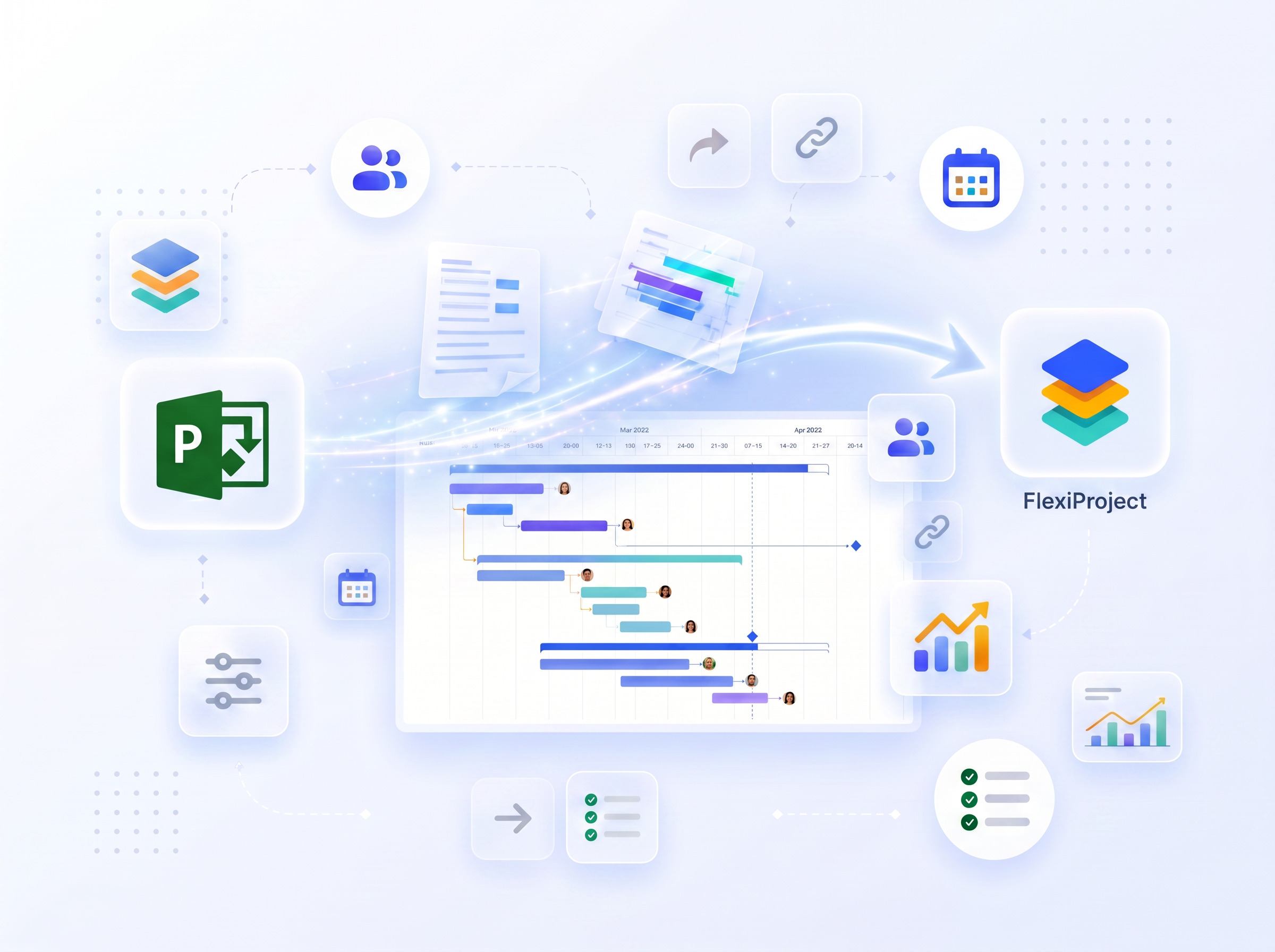
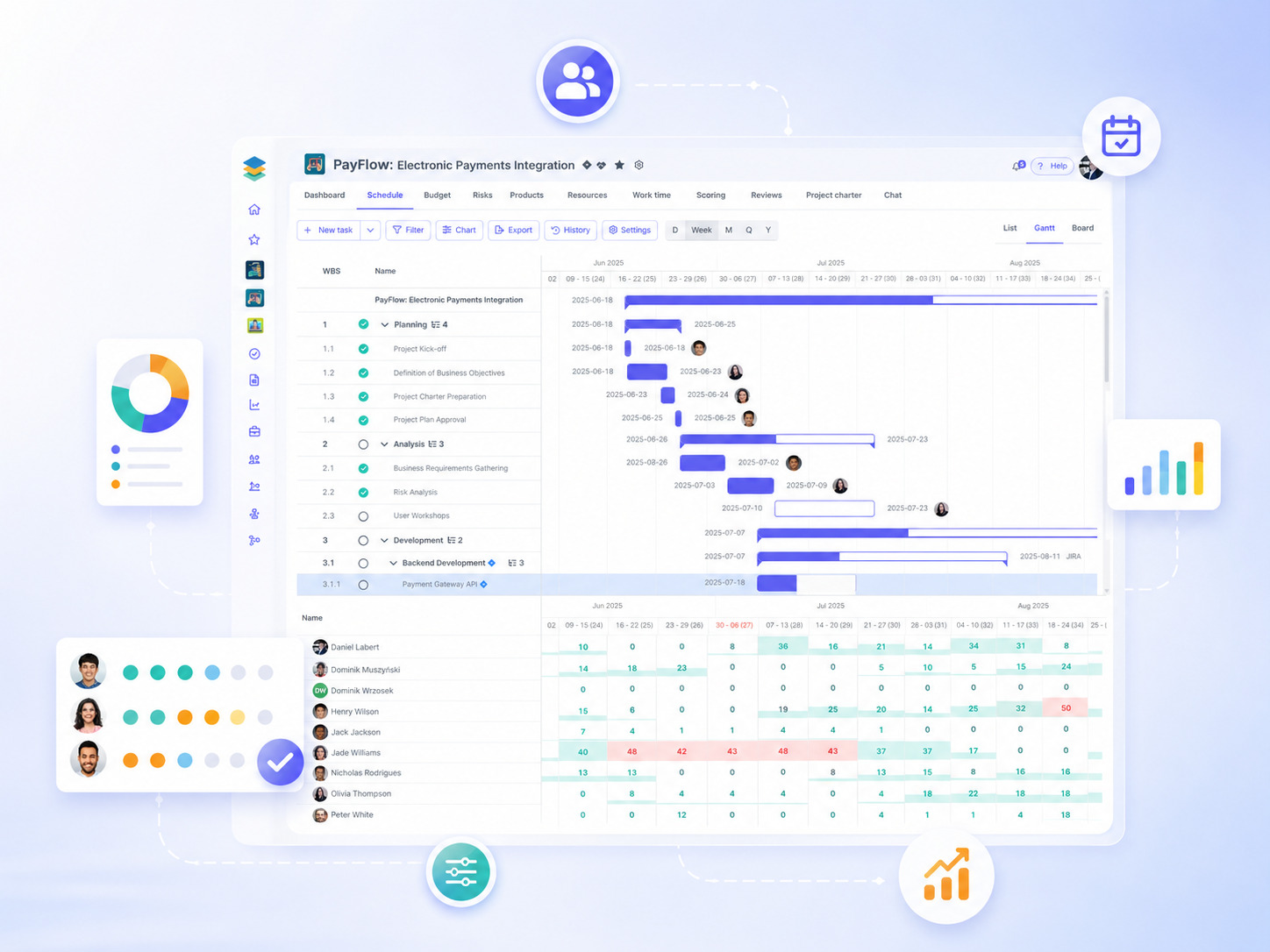
This is where a structured project environment becomes important. A platform such as Flexi Project – project management platform helps organizations move from fragmented tracking to a more consistent way of planning, monitoring and reporting project work. For technology teams, the value is not only in listing tasks or assigning deadlines. The real value comes from having one place where project ownership, schedules, resources, risks and progress can be seen together. That kind of view helps leaders identify delivery risks before they become operational problems.
More Tools Do Not Always Mean More Control
A common mistake in technology organizations is assuming that more tools automatically create more control. In practice, too many disconnected tools can create the opposite effect. A development team may use one system, operations another, security another and management a spreadsheet that summarizes everything manually. The result is a chain of translation between tools, people and reports. Every translation introduces delay and uncertainty. By the time the leadership team sees the status, the situation may already have changed.
Control does not mean micromanagement. It means having reliable enough information to make decisions early. If a DevOps team is over capacity, leadership should see it before the project timeline collapses. If two strategic initiatives require the same cloud architect, this should be visible before both teams commit to unrealistic dates. If a security hardening project depends on application owners who are already involved in a product release, that dependency should not remain hidden in a comment thread. Good project control gives managers the confidence to decide what moves first, what waits and where additional support is needed.

Resource Conflicts Are the Quiet Bottleneck
Resource conflicts are often the quiet bottleneck in technology delivery. Most companies do not fail because they lack projects. They struggle because too many projects depend on the same small group of experienced people. Senior engineers, architects, DevOps specialists and security experts become informal chokepoints. They are invited to every important initiative because their knowledge is essential, but their actual availability is rarely visible across the full portfolio. In a spreadsheet, their names appear in several places. In reality, the company is building its roadmap around people who may already be fully committed.
Dependencies are another reason technology projects become difficult to control. A server migration may depend on firewall rules, DNS changes, customer communication and tested rollback procedures. A new monitoring setup may depend on naming standards and infrastructure tagging. A security patching initiative may depend on application testing and maintenance windows. These dependencies are easy to underestimate because they often sit between teams rather than inside one team’s task list. When they are not actively managed, they create delays that feel unexpected but were actually predictable.

From Individual Projects to Portfolio-Level Visibility
For growing organizations, the next stage of maturity is moving from individual project control to portfolio-level visibility. That does not mean creating heavy bureaucracy. It means giving CTOs, operations leaders and project owners one reliable view of what is happening across the technology roadmap. Which projects support customer growth? Which reduce operational risk? Which protect infrastructure stability? Which initiatives are blocked? Which teams are overloaded? These questions matter because technology work is closely tied to business performance. If infrastructure projects slip, customers may feel it. If security work is delayed, risk increases. If product delivery slows down, revenue may be affected.
This is also why choosing tools should not be reduced to simple task tracking. When evaluating the best project management software, technology companies should look at whether the system can support scale, reporting, resources, project dependencies and management-level visibility. A tool that works well for a small project team may not be enough when the organization manages infrastructure, product development, customer delivery and internal transformation in parallel. The right system should help teams execute, but it should also help leaders understand the bigger picture.

What Good Project Control Looks Like in Practice
Good control has a practical shape. Project owners know what they are responsible for. Teams understand deadlines and dependencies. Managers can see whether the project is on track without asking for manual updates every few days. Leadership can compare priorities and decide where resources should go. Risks are visible early enough to act on them. Reports are not recreated from scratch before every meeting. The organization spends less time reconciling information and more time making decisions. This becomes particularly important in environments where uptime, security and customer commitments matter. A delayed internal project may not look critical at first, but if it affects backup reliability, server performance, access control or deployment automation, it can quickly become a business issue. Technology leaders need to understand not only whether work is happening, but whether the right work is moving at the right speed. That is difficult when project data lives across disconnected files, tools and conversations.
Fewer Blind Spots, Better Technology Delivery
Managing multiple technology projects without losing control is ultimately about reducing blind spots. It is about seeing the connections between projects before those connections become problems. It is about recognizing that a busy team is not always an effective team, and that a full roadmap is not always a realistic roadmap. As companies grow, the ability to coordinate work across systems, people and priorities becomes a competitive advantage.
Technology organizations do not need more noise. They need clearer visibility, better prioritization and stronger execution discipline. When project work is connected to resources, risks and business priorities, leaders can make better decisions and teams can deliver with less friction. That is how growing companies move from reactive project management to controlled technology delivery.
This is a sponsored article.