On this page
It’s been a whirlwind few years for the Linux desktop. With the continued transition from the ancient X11 display server to the new standard in Wayland, developers are busy at work on faster, sleeker, and even more efficient ways to experience the Linux desktop. One new project worth keeping an eye on is Niri.
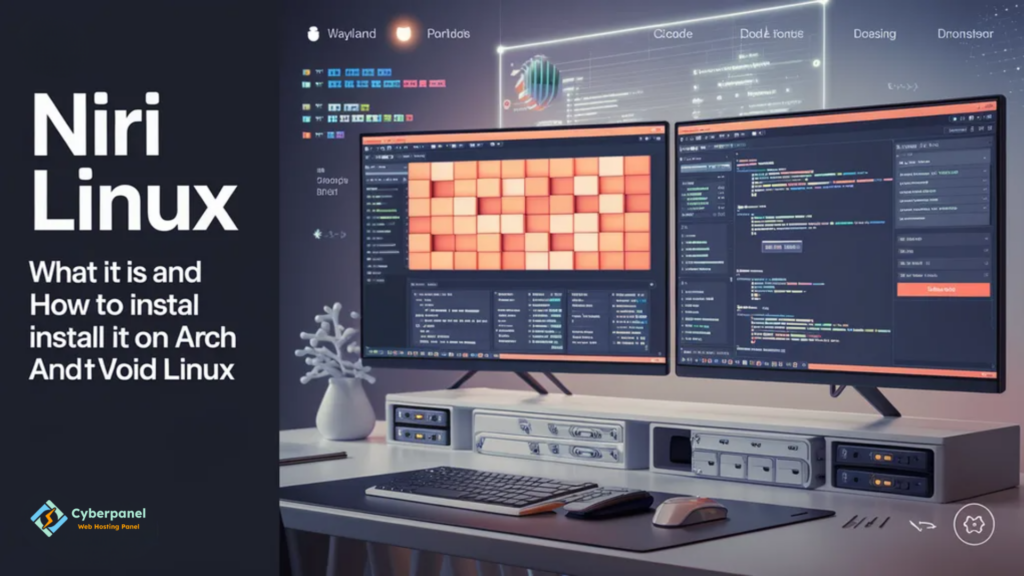
It may be easy to get confused by Niri; many mistake it for a new Linux distribution, while others think it’s yet another Linux desktop environment like GNOME or KDE Plasma. Niri is neither. Niri is an innovative scrollable Wayland compositor tailored to users who appreciate keyboard-focused interaction. Instead of forcing you to organize windows into discrete workspaces, Niri provides an endless, infinitely scrolling workspace where new windows naturally appear as you move between applications.
This approach leads to an organized and efficient desktop that feels both fast and unobtrusive.
If you are a developer, system administrator, or simply a curious Linux user, Niri can offer a refreshing take on managing your applications. In this comprehensive article, you will learn what Niri is, what makes it unique, how it stacks up against the competition, and, most importantly, how you can get Niri working on Arch Linux, Void Linux, and a number of other mainstream Linux distributions.
What Is Niri Linux?
The first thing to understand is that Niri is not a Linux distribution. It is a Wayland compositor that controls how application windows are displayed and managed.
Think of it as the software responsible for arranging your windows on the screen. Unlike traditional desktop environments that rely heavily on the mouse, Niri is built around keyboard navigation and dynamic window management.
Its most distinctive feature is the scrolling workspace. Instead of switching between fixed virtual desktops, your workspace expands horizontally as you open more applications. This creates a continuous workflow that feels natural once you become familiar with it.
Because Niri runs on Wayland, it also benefits from improved security, smoother graphics, and better performance compared to many older X11-based window managers.
Why Is Niri Different?
Many Wayland compositors organize windows using predefined layouts. Niri takes a different approach.
As you open applications, your workspace grows instead of becoming crowded. You simply scroll through your windows rather than jumping between multiple desktops.
This design offers several advantages.
- Cleaner workspace organization
- Better multitasking
- Faster keyboard navigation
- Less time switching between workspaces
- Improved focus while coding
For developers who often keep terminals, browsers, documentation, and editors open at the same time, this workflow can feel much more efficient.
Key Features of Niri
Niri is a development environment with features that will undoubtedly appeal to Linux users.
• Dynamic Window Management (Drag & Drop or Automatic)
Windows can also be manipulated by your mouse if you choose to drag and drop them (or let them snap).
• Smooth Rendering
It will always perform as it should do, no glitches, no performance losses when there should be no losses there anyway.
• Full & Transparent Window Maximisation
Niri supports both window maximisation and true, seamless window maximisation for apps that wish to fill your screen in their entirety.
• Full Touch Support
Full and completely open support for touchscreen gestures.
• Multi Monitor
• Fully Keyboard Driven
• Very lightweight
The whole system will be as lean and light as possible, using the least amount of system resources.
How to Install Niri on Linux
Installing Niri depends on the Linux distribution you’re using.
Before you begin, make sure your system is fully updated and already running Wayland.
Niri Arch Linux Installation
Arch Linux users can install Niri using the available package source for their system.
First, update your system.
sudo pacman -SyuInstall Niri using the appropriate package.
sudo pacman -S niriIf the package is not available in your configured repositories, you may need to install it through the Arch User Repository using your preferred AUR helper.
Once installed, configure your display manager or session to launch Niri during login.
Niri Void Linux Installation
Void Linux also supports Niri through its package management system, depending on the repository configuration.
Update your packages first.
sudo xbps-install -SuThen install Niri.
sudo xbps-install niriAfter installation, configure your login session and create the required configuration files if they are not generated automatically.
Although Arch Linux and Void Linux are common choices, Niri can also be used on other distributions depending on package availability.
These include:
- Fedora
- NixOS
- Debian
- Ubuntu
- openSUSE
Installation methods may differ, so always check your distribution’s package repository or the official Niri project documentation.
Niri vs Hyprland
| Feature | Niri | Hyprland |
|---|---|---|
| Layout | Scrollable | Dynamic tiling |
| Learning Curve | Moderate | Moderate |
| Animations | Minimal | Advanced |
| Performance | Excellent | Excellent |
| Keyboard Workflow | Excellent | Excellent |
Is Linux Niri Suitable for Beginners?
Depends on how comfortable you are with Linux. If you are an experienced Linux user, you’ll have an easier time with the keyboard-centric environment. On the other hand, for new Linux users, a desktop such as GNOME or KDE Plasma might seem a bit more familiar since they rely on the GUI more. Even so, it’s easy to adapt to Niri’s workflow once you use it for a couple of days.
CyberPanel: The Perfect Server Manager for Niri-lovers
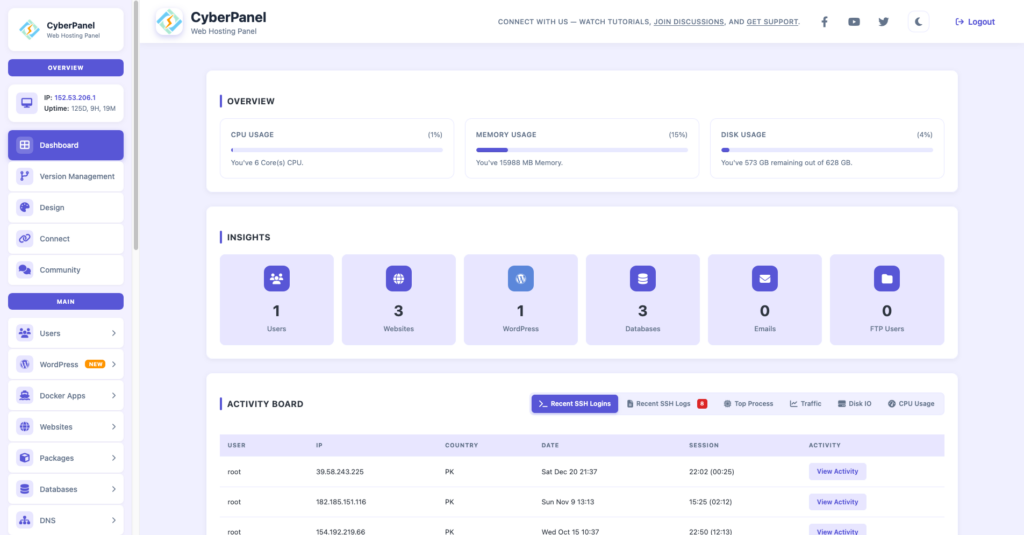
I’m willing to bet that if you’re using Niri, you also happen to spend some time on Linux servers too. CyberPanel is a web hosting control panel. It is perfect in conjunction with Niri, as it’s a complete server administration interface. Rather than diving deep into configuration files and digging your way through command lines to get something set up, you’re able to get to work through a nice, easy web GUI.
CyberPanel allows for site deployment, managing SSL certs, dealing with database servers, and managing server logs and resources.
You can’t really ask for anything more, and combine it with Niri’s setup and it’s ideal.
Final Remarks
The new concept that Niri is providing for the Linux desktop computing is certainly novel and different from conventional desktops. By providing scrolling workspaces, multitasking would seem a more convenient and structured arrangement. In conjunction with Wayland’s sophisticated technology, Niri is lightweight and responsive enough for developers as well as for advanced Linux users. When installing Niri on Arch Linux, Void Linux, or any other supporting distributions, you should be able to access a clean desktop that has more emphasis on functionality and efficiency.
FAQs
Who should use Niri?
Niri is ideal for developers, system administrators, programmers, and Linux users who prefer a keyboard-driven workflow.
Is Niri better than Hyprland?
Neither is objectively better. Niri focuses on scrollable workspaces and simplicity, while Hyprland emphasizes customization and advanced animations.
Is Niri a Linux distribution?
No. Niri is a Wayland compositor that can be installed on many Linux distributions.