

It can take quite a while to prepare a server that is ready to run an application. Most times, the administrator has to work through the steps of installing the operating system, setting up dependencies, securing the environment, tweaking the settings, and finally checking that everything is in order before the application can be effectively used. Although this method offers the most flexibility, it can easily be a source of confusion for small business developers, educators, and other organizations working with new and reliable deployments in a hurry.
At this point, TurnKey Linux is a real lifesaver.
With the preconfigured virtual appliances for all sorts of applications, TurnKey Linux makes setting up a server easier for everyone. Instead of you creating an environment from scratch, all the system components and recommended configurations are already included in the ready-to-run solution that you only need to deploy.
More than just ordinary users, the TurnKey Linux community has also been increasingly constituted of developers, system administrators, educational institutions, and businesses searching for shorter deployment timelines. Whether you’re setting up WordPress, Nextcloud, GitLab, a database server, or a file-sharing platform, TurnKey Linux drastically cuts the time you spend on the setup.
This article will introduce you to TurnKey Linux, explain how to use the TurnKey Linux Virtual Appliance Library, list its features, show you the deployment options, explore the advantages, reveal drawbacks, and justify its comeback in the Linux world.
What Is TurnKey Linux?
TurnKey Linux is an open-source initiative that delivers many ready-to-use virtual appliances and server solutions based on Debian Linux.
Each appliance is tailored to a particular use case and is packaged with:
- Operating system
- Application software
- Necessary dependencies
- Security updates
- Management tools
- Optimized configurations
The main idea is to simplify the deployment process and enable users to quickly launch production-ready services.
Instead of manually preparing and configuring a server for a few hours, users can just download an appliance and start using the application nearly immediately.
What Is The TurnKey Linux Virtual Appliance Library?
TurnKey Linux Virtual Appliance Library is a collection of pre-built Linux appliances ready for deployment, tailored to different operating environments.
These appliances come fully equipped to run the designated service.
Some of the widely used appliances are:
- WordPress
- Nextcloud
- GitLab
- LAMP Stack
- MediaWiki
- PostgreSQL
- MySQL
- Nginx
- File Servers
- Development Platforms
This repository is the core of the TurnKey Linux ecosystem.
Users only need to pick an appliance, launch it, and start their work.
Why Linux TurnKey Solutions Are Popular?
One reason why organizations have started to look for ways to deploy their solutions much faster is without compromising stability.
The traditional way of deploying software involves a lot of steps, like:

- Operating system installation
- Package configuration
- Security hardening
- Service optimization
- Dependency management
TurnKey Linux brings automation to most of these steps.
The advantages are:
- Speedy deployments
- Less chance for configuration errors
- Standardized environments
- Less stress on maintenance people
- Increased output
All this can mean less work for the operations teams for many companies.
The Most Important Features Of TurnKey Linux
Preinstalled Applications
There is no additional setup needed because each appliance has everything necessary to operate.
That means it drastically cuts down on the time needed for installation and configuration.
Debian Foundation
TurnKey Linux is based on Debian, one of the most stable and well-known Linux distributions. This way, the user:
- Gets a reliable system
- Is covered for safe usage
- Can count on the system
- Staying operational for a long time
- Has a very large selection of software packages
- Open Source
TurnKey Linux is completely open source.
Any company can see how the appliance is built, change it, and add new features if necessary.
Security Updates
Appliances are designed with security in mind and receive updates that help maintain a secure environment.
Lightweight Design
Most appliances include only necessary components.
This reduces resource consumption and improves performance.
Typical TurnKey Linux Appliances
WordPress Appliance
Get a fully equipped WordPress setup up and running in a matter of minutes.
You get here:
- WordPress
- Either Apache or Nginx
- Database server
- PHP environment
Nextcloud Appliance
These come with a cloud storage service that is self-hosted.
Perfect for:
- File sharing
- Collaboration
- Team productivity
- GitLab Appliance
This solution brings to you a complete DevOps platform for source control and CI/CD workflows.
LAMP Stack Appliance
Solutions with:
- Linux
- Apache
- MySQL
- PHP
A favorite among web developers.
Deployment Options
One of the things that makes TurnKey Linux different is that it is very flexible.
Users can deploy appliances in multiple environments.
Virtual Machines
Supported platforms include:
- VMware
- VirtualBox
- Proxmox
- Hyper-V
- Cloud Platforms
Many appliances can be deployed on:
- AWS
- Azure
- Google Cloud
- Bare Metal Servers
Organizations can install TurnKey Linux directly on physical hardware.
Containers
Certain workloads can be adapted for containerized environments.
TurnKey Linux Vs Traditional Linux Server Deployment
| Feature | TurnKey Linux | Traditional Deployment |
|---|---|---|
| Setup Speed | Fast | Slower |
| Configuration Effort | Low | High |
| Customization | Moderate | Very High |
| Maintenance | Simplified | Manual |
| Learning Curve | Lower | Higher |
Who Should Use TurnKey Linux?
Small Businesses
Small businesses with very limited IT resources can use TurnKey Linux to set up their services quickly.
Developers
Using TurnKey Linux, developers can easily set up a testing environment without extensive configuration.
Educational Institutions
Educational institutions like schools and training centers can easily deploy online learning platforms.
System Administrators
System administrators can reduce their workload by using preconfigured environments.
Startups
Using TurnKey Linux, startups can concentrate on their product development since infrastructure setup will no longer be a concern.
Advantages Of TurnKey Linux
Besides the core features, the biggest advantages include:
- Faster provisioning
- Minimized the likelihood of deployment errors
- Environment consistency
- Minimal administration effort
- Flexible open-source nature
- Well-established Debian base
These advantages are what make TurnKey Linux highly desirable for companies looking to maximize their operations.
Potential Limitations
TurnKey Linux is a powerful tool with many advantages, but users should also be aware of the aspects where it might be lacking.
Limited Flexibility
The use of the pre-set environments may exclude the complete range of user requirements.
Learning Dependency
Linux knowledge is still a must for administrators to fix complicated problems.
Appliance Scope
Some very specific applications might not be part of the library.
Why TurnKey Linux is Still Relevant in 2026?
Automation and very quick deployment are an essential part of modern infrastructure.
In fact, TurnKey Linux is a great fit for these objectives because it offers:
- Repeatable Deployments
- Faster Provisioning
- Reduced Complexity
- Reliable Application Environments
So, for companies that want to speed up deployment without losing stability, TurnKey Linux still has a lot to offer.
How CyberPanel Makes a Good Pair With TurnKey Linux?
Eventually, many companies deploying Linux applications end up requiring integrated hosting and server management.
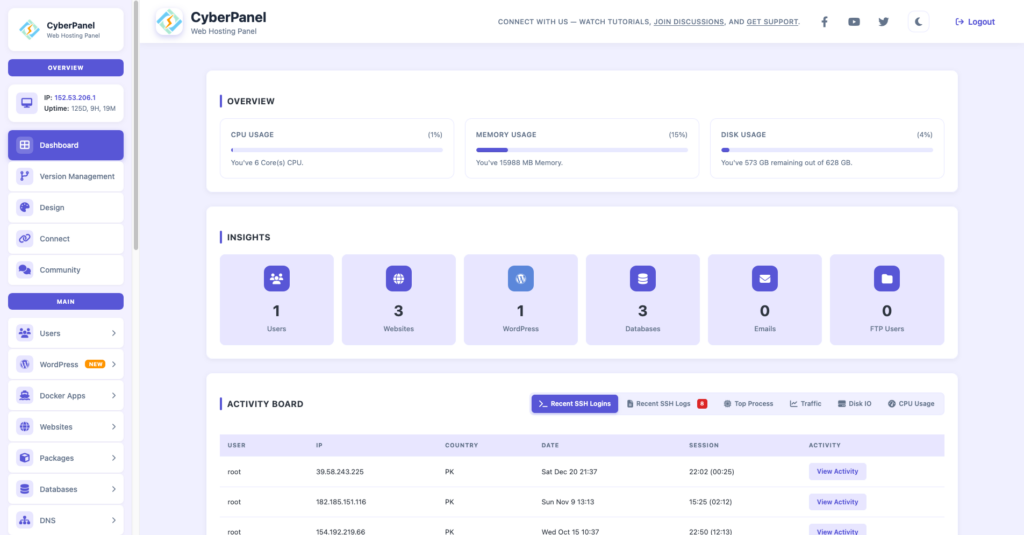
CyberPanel is a free and open-source web hosting control panel that runs on OpenLiteSpeed. It is a great tool for making website deployment, SSL management, backups, database administration, and server monitoring much easier.
Those organizations that have been deploying their products using TurnKey Linux appliances can incorporate CyberPanel into the larger Linux infrastructure workflows to simplify the ongoing server management and website operations.
Conclusion
Using TurnKey Linux is among the quickest and most efficient ways to get Linux applications up and running without the need to spend a lot of time manually setting up servers. By utilizing the TurnKey Linux Virtual Appliance Library, companies can very easily set up production-ready environments and, at the same time, take advantage of the robustness and security of Debian. Whether the target environment includes websites, cloud services, development platforms, or business applications, TurnKey Linux is still going to be a very effective tool for quick deployment in 2026.
If you want to make Linux deployments easier, take a look at TurnKey Linux and see how virtual appliances that are already configured can help you start services more rapidly, decrease the complexity of configuration, and spend more time on your actual projects.
FAQs
Can TurnKey Linux Run In Virtual Machines?
Yes. It supports VMware, VirtualBox, Proxmox, Hyper-V, and other virtualization platforms.
Is TurnKey Linux Based On Debian?
Yes. TurnKey Linux is built on Debian Linux and benefits from its stability and package ecosystem.
Is TurnKey Linux Free?
Yes. TurnKey Linux is open source and available free of charge.