

Today, data is without a doubt one of the most valuable assets we own as individuals and organizations. Whether it’s family pictures, business files, enterprise data, server hosting, software development assets, or music and video collections, we need to keep our data safe and easily available. While cloud storage is very common, people increasingly favor a Linux NAS for its control, privacy, performance, and lower long-term costs. A network-attached system is a network file server.
It refers to the technology of supplying shared disk space by a server to computers on a network. This is a better option than scattered files on various laptops, desktops, external disks, cloud accounts, and other places. The files are stored in NAS in one single location, so users can access and organize.
No matter if you are building a media server, a backup server, a business file server, or a private cloud network, Linux offers some of the best NAS platforms on the market. This comprehensive article covers these subjects relating to Linux NAS setups and their user-friendliness in 2026. How Operating Systems, NAS software, storage levels, benefits, and deployment work together.
What Is A Linux NAS?
A Linux NAS is a Network-Attached Storage system operating on the Linux platform.
It is a central storage server that enables several users and devices to reach file data locally or, based on the scenario, through the internet.
A Linux NAS might offer:
- File storage
- Backup services
- Media streaming
- Data synchronization
- Virtual machine storage
- Shared business documents
- Private cloud functionality
Since Linux is very stable and efficient with resources, it is one of the top choices as a platform for NAS installations.
How NAS Storage Linux Works?
Unlike a single computer, a NAS system is connected directly to your network.
Normally, the process is:
- The storage drives are inserted into a NAS unit or server.
- The Linux operating system handles storage and file systems.
- Shared directories are made.
- Network users log in.
- Files are accessible from different devices.
Using this method, the manual transfer of files between different systems is completely redundant.
What Makes Linux Suitable For NAS Storage?
Linux comes with a few perks that make it stand out against proprietary NAS platforms.
Customizability
System administrators have the freedom to modify a very large part of the system.
Price Effectiveness
Linux NAS systems are often free of charge and open to the public.
Protection

Linux is equipped with sophisticated permission and security mechanisms.
Compatibility with Hardware
Linux can be used with a wide variety of storage devices and controllers.
Expandability
You can increase your storage based on your business needs.
Such features make Linux a choice even for the most demanding users, including individual users and enterprises.
What Is A Linux NAS OS?
Linux NAS OS stands for an operating system on Linux that is designed for network-attached storage.
Such systems help make storage handling easier through offering:
- Administration via the web
- Storage pools
- Managing users
- Backup tools
- File sharing
- Monitoring dashboards
Rather than setting up every single service manually, administrators can manage storage via easy-to-understand interfaces.
Top Linux NAS OS Options In 2026
The market is largely dominated by several Linux-based NAS operating systems.
OpenMediaVault
OpenMediaVault is definitely among the most user-friendly NAS platforms, with familiarity with new users.
Main features are:
- Web-based management
- Support for plugins
- RAID management
- Backup tools
- Docker integration
It will work great for a home user or a small business.
TrueNAS SCALE
Although originally associated with FreeBSD-based systems, TrueNAS SCALE uses Linux and provides enterprise-grade storage capabilities.
Features include:
- ZFS storage
- Virtualization
- Containers
- High availability options
Unraid
Unraid offers flexible storage management and strong application support.
It is especially popular among:
- Media enthusiasts
- Home labs
- Content creators
Rockstor
Rockstor focuses on Btrfs-based storage management and provides modern NAS functionality.
Linux NAS Software Options
The selection of the best NAS software for Linux is based on your needs. Common software components include:
Samba
Is compatible with Windows for file sharing.
NFS
Most frequently used when sharing between Linux systems.
Rsync
Brings for efficient backups and synchronization.
Docker
These services run applications directly on the NAS.
Nextcloud
Converts NAS storage into its own private cloud platform.
Most administration cobines some of these to establish a performance perimeter.
Choosing The Right Linux NAS Drive
Choosing the best Linux NAS drive is vital to choosing.
NAS-Specific Drives
Drives designed for NAS environments offer:
- Enhanced reliability
- Improvements in vibration resistance
- Support for ongoing operations
- WD Red series
- Seagate IronWolf series
SSD Storage
Solid-state drives provide:
- Faster performance
- Lower latency
- Reduced power consumption
However, SSDs are generally more expensive per terabyte.
RAID Configurations For Linux NAS
| RAID Level | Purpose |
|---|---|
| RAID 0 | Performance |
| RAID 1 | Mirroring |
| RAID 5 | Performance + Redundancy |
| RAID 6 | Enhanced Fault Tolerance |
| RAID 10 | High Performance + Redundancy |
Common Linux NAS Use Cases
Home Media Server
Home media server is a popular Linux NAS use case that allows you to store and stream various types of media content.
For example, you can keep your movie collection on the NAS and play it on your TV or other devices.
Besides, the NAS can be used to store other types of media like music, photos, and TV shows that you can access and enjoy anytime.
Business File Server
Document centrally, the business file server is one of the Linux NAS application which is providing the shared document storage for the company employees.
That helps employees to find what they need quickly and helps collaboration because they can see and edit shared files in real time.
Backup Solution
Backup and recovery are always good things to have, yet quite often ignored until the last moment.
The security of the company depends heavily on data backup.
Private Cloud
Offer cloud-like functionality without relying on third-party providers.
Development Environment
Store source code, virtual machine images, and project files.
Linux NAS Vs Cloud Storage
| Feature | Linux NAS | Cloud Storage |
|---|---|---|
| Data Control | Full | Limited |
| Monthly Cost | Low | Ongoing |
| Customization | High | Limited |
| Internet Dependency | Optional | Required |
| Privacy | High | Provider Dependent |
Security Best Practices For Linux NAS
Storage security should never be overlooked.
Recommended practices include:
- Strong passwords
- Multi-factor authentication
- Regular updates
- Encrypted storage
- Access control policies
- Automated backups
Security measures help protect against both accidental loss and malicious threats.
How CyberPanel Enables Linux Storage Infrastructure Support
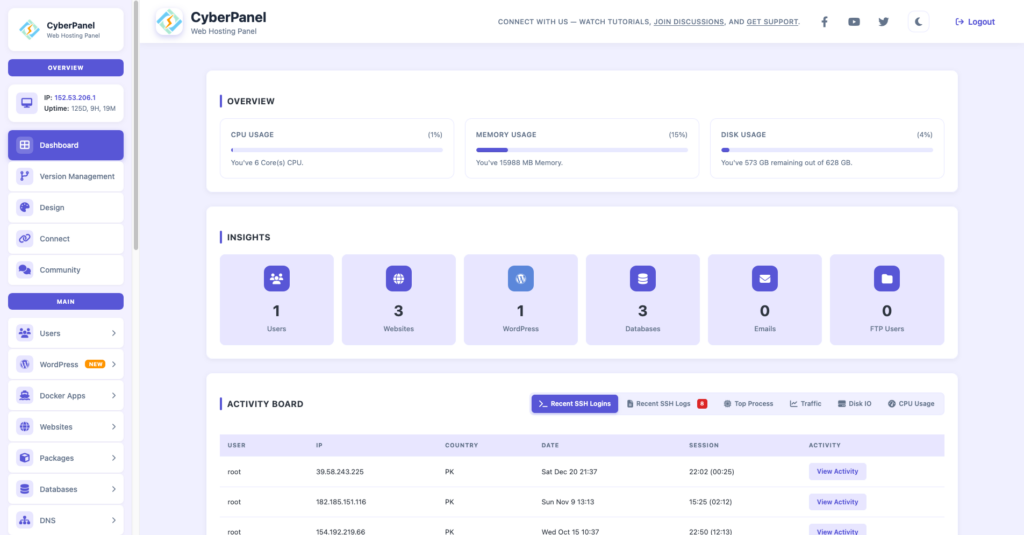
On top of operating NAS systems, some organizations may also have websites, applications, and Linux servers.
CyberPanel is a web hosting control panel developed by OpenLiteSpeed that offers both a free and commercial license. It abstracts the complexities of website deployment, backup, SSL certificate management, database administration, and server monitoring.
Organizations deploying Linux-based infrastructure can leverage CyberPanel in NAS environments, as it will give them a unified platform for the management of their web services and storage resources.
Conclusion
A Linux NAS is a very flexible, cost-effective, and reliable method for managing storage centrally among the options available. Regardless of whether you are creating a home media server, securing business data, setting up a private cloud, or rolling out enterprise storage infrastructure, Linux has the right tools and operating systems that can be shaped to meet almost any need. Linux NAS solutions lead the market for modern storage environments thanks to robust security, lots of customization options, and wide hardware compatibility.
Want to make your own NAS storage solution? First, pick the best Linux NAS operating system, next get dependable storage hardware, and last, build a secure centralized system that will always give you access to your data, keep it safe, and give you full control.
FAQs
Can A Linux NAS Run Virtual Machines?
Yes. Many modern Linux NAS platforms support virtualization technologies, allowing users to run virtual machines directly on the storage server.
Is ZFS Better Than Traditional File Systems For NAS?
ZFS offers advanced features such as data integrity checks, snapshots, and storage pooling, making it popular for enterprise and high-reliability NAS deployments.
What Happens If A NAS Drive Fails?
The outcome depends on the storage configuration. RAID and backup systems can help prevent data loss when individual drives fail.