


Kubernetes has revolutionized the way modern applications are built, but the manual handling of Kubernetes resources rapidly becomes a hassle as the environment enlarges. Helm makes the work easier by bundling the Kubernetes app components to be installed as reusable charts, while Ansible offers a great set of automation features to help in setting up infrastructure and managing the deployment of apps. Their combination yields an extremely streamlined pattern of working with cloud-native apps.
This explains why Ansible Helm is gathering momentum among DevOps engineers, Kubernetes administrators, and platform teams. Rather than doing Helm commands manually or keeping complex deployment scripts, Ansible is capable of automating the entire deployment lifecycle, beginning with the installation of Helm and configuration of Kubernetes clusters, followed by the deployment of applications, upgrades, and rollbacks.
It is no wonder that people often Google Ansible deploy Helm chart, Ansible Helm install, Ansible AWX Helm chart, and Ansible Helm charts because these tool combos are very popular in production Kubernetes environments. Whether you are deploying one app or managing hundreds of Kubernetes workloads in several clusters, the dual usage of Ansible together with Helm greatly enhances the level of consistency, repeatability, and running efficiency.
Here you will see the way Ansible and Helm work together, get the hang of deploying Helm charts with Ansible, setting up Helm automatically, deploying AWX through Helm charts, and adhering to the best practices of Kubernetes automation for the year 2026.
What Is Ansible Helm?
Ansible Helm is about combining Ansible automation with Helm to control Kubernetes apps.
One no longer has to type Helm commands in the terminal, but instead, Ansible incorporates these tasks in the automated playbooks.
This gives a chance to teams to:
- Install Helm
- Deploy applications
- Upgrade releases
- Roll back deployments
- Remove applications
- Standardize Kubernetes automation
Your workflow becomes less prone to human error, and your deployments are more uniform if you choose Ansible.
Reasons For Combining Ansible With Helm
Helm makes Kubernetes app deployment easy; However, Ansible handles the automation of infrastructure management.
Using both, you get:
- Repeatable deployments
- Infra-as-code (IaC)
- Rapid Kubernetes provisioning
- Upgrades performed automatically
- Consistent production environments
DevOps pipelines the world over are leveraging this duo.
The Way Ansible And Helm Interact
Usually it goes this way:
- Provision Kubernetes infra.
- Install Helm via automation.
- Add necessary Helm repos.
- Deploy charts of applications.
- Check deployment status.
- Do upgrades when needed.
As everything is treated as code, this leads to both predictability and replicability of the deployments.
Installing Helm Using Ansible
One of the first automation tasks is Ansible Helm install.
Instead of manually downloading and configuring Helm on every machine, Ansible can automate the process.
Typical automation includes:

- Downloading Helm binaries
- Verifying versions
- Installing dependencies
- Configuring executable paths
This ensures every deployment environment uses the same Helm version.
Example:
- name: Install Helm
  shell: |
curl https://raw.githubusercontent.com/helm/helm/main/scripts/get-helm-3 | bashAlthough this approach works, production environments often use dedicated Ansible modules and package repositories instead of shell commands.
Deploying Helm Charts With Ansible
One of the most common automation tasks is Ansible deploy Helm chart.
Rather than executing multiple Helm commands manually, Ansible manages the deployment through declarative playbooks.
Example:
- name: Deploy NGINX
  kubernetes.core.helm:
    name: nginx
    chart_ref: bitnami/nginx
    release_namespace: web
create_namespace: trueThis approach allows the deployment to become part of a larger Infrastructure as Code workflow.
Managing Ansible Helm Charts
Businesses deploy multiple Kubernetes applications quite often. Ansible Helm charts help in this situation by enabling playbooks to control the whole process of:
- Installing applications
- Upgrading versions
- Setting configuration values
- Creating namespaces
- Handling repositories
- Deleting releases
As everything is codified and automated, deployments stay the same across different stages of the software development cycle.
Updating Existing Helm Releases
With Helm, you can update your application easily.
Ansible automates:
- Version upgrades
- Change of configurations
- Changing container images
- Refining scaling
Rather than doing the deployment commands outside, you make changes through the version-controlled playbooks.
Rolling Back Failed Deployments
Sometimes production deployment fails without warning.
Ansible can handle Helm rollbacks to put the last working releases.
Some of the advantages are:
- Lower downtime
- Quicker recovery
- Standardized rollback processes
- Better reliability in operation
Autonomous rollback is a great feature, in particular for an enterprise setup.
Deploying AWX Using Ansible Helm Chart
Since AWX runs mostly on Kubernetes, it is natural that many administrators want the Ansible AWX Helm chart.
Helm makes it easy to install AWX by collecting all Kubernetes resources needed in one package.
Steps typically followed in deployment are:
- Installing Helm
- Adding AWX chart repository
- Setting up namespaces
- Provisioning storage
- Running the Helm chart
- Checking the pods
You can make the deployment steps of AWX on multiple hosting platforms identical by automating them with Ansible.
Best Practices For Ansible Helm Deployments
You can do these things to have a dependable automation of Kubernetes:
- Keep your playbooks in a version control system.
- Use variables rather than hard-coded values.
- Keep the development and production configurations separate.
- Perform a deployment validation before the production rollout.
- Remember to regularly update the Helm charts.
- Set up automated rollback processes.
- Run playbook tests in staging environments.
Observing these practices will help you stay safe from operational risks and will also make your system easier to maintain.
Advantages Of Using Ansible With Helm
Here are the advantages of using Ansible Helm:
Complete Automation
The deployment of infrastructure and applications can be turned into a single workflow.
Improved Consistency
Each deployment is carried out by following the same procedures.
Better Scalability
Managing big Kubernetes environments is no longer such a daunting task.
Faster Recovery
The possibility of doing rollbacks automatically greatly reduces the time the user is without the service.
CI/CD Integration
Ansible and Helm can be easily integrated with platforms like:
- GitHub Actions
- GitLab CI/CD
- Jenkins
- Azure DevOps
Common Challenges
In reality, Ansible Helm deployments make it easier to manage Kubernetes; it is important for teams to be aware of some challenges.
Kubernetes Authentication
Playbooks need to be able to present the right credentials to get cluster access.
Chart Version Compatibility
There is a possibility that older charts will not work well with newer Kubernetes versions.
Configuration Complexity
Large applications often require extensive value files.
Secrets Management
Sensitive credentials should never be hard-coded into playbooks.
Using secret management solutions improves security.
How Does CyberPanel Work Well with Kubernetes Automation?
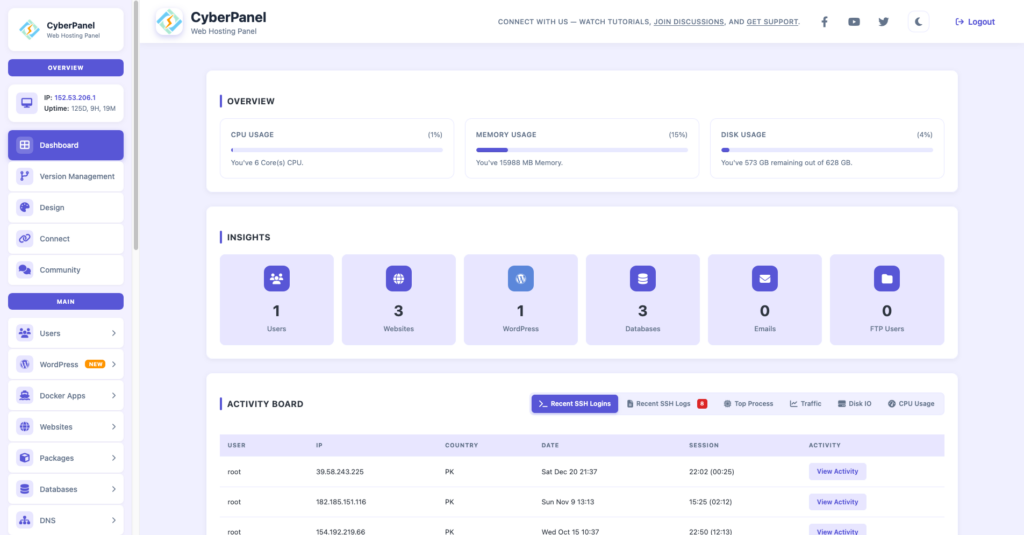
Besides Kubernetes applications, many companies also automate their web hosting infrastructure.
CyberPanel is a free web hosting control panel based on OpenLiteSpeed. It makes managing websites, SSL certificates, backups, databases, email hosting, and Linux server administration easier.
Where Ansible and Helm help automate Kubernetes workloads, CyberPanel offers a highly productive way for teams to manage a traditional Linux hosting environment, and can easily be combined with infrastructure managed using Kubernetes.
Conclusion
Ansible + Helm is an amazing automation solution for Kubernetes application deployment. Be it an Ansible Helm Install, Multi-Ansible Helm Chart Management, Ansible-Helm Deployment, or even the deployment of the Ansible AWX Helm Chart, combining the technologies will result in more trustworthy, repeatable, and easily scalable Kubernetes workflows. As the Kubernetes world is getting bigger, leveraging Ansible’s automation while using Helm as a package manager would still be one of the best ways to handle infrastructures that would fit the modern cloud-native scenario.
Are you prepared to take a step further and automate your Kubernetes deployments? Start doing Ansible with Helm now and make your application management simple, get better consistency, and make your cloud infrastructure production-ready.
FAQs
Can Ansible Install Helm Automatically?
Yes. Ansible can automate Helm installation using package managers, installation scripts, or dedicated deployment tasks.
Can Ansible Upgrade Existing Helm Releases?
Yes. Playbooks can automate Helm upgrades while preserving configuration values and minimizing deployment effort.
Is Ansible Helm Suitable For Enterprise Kubernetes Environments?
Yes. The combination is widely used in enterprise DevOps because it supports repeatable deployments, Infrastructure as Code practices, and integration with modern CI/CD pipelines.