On this page
Most of the gadgets we use in our day-to-day lives have some form of computer in them. Even if we may not be aware of it. From smart TVs and Wi-Fi routers to factory robots and medical equipment, many devices and machines tend to rely on some form of computer program to operate. And the operating system that powers them is often Embedded Linux.
Unlike desktop Linux, which is used on traditional personal computers, Embedded Linux is designed to perform specific tasks and provide a stable platform for running programs. It is also more flexible and comes with a variety of features and tools that are highly beneficial for hardware development. That is why it remains the preferred choice for many manufacturers when it comes to building connected devices. And if you want to understand more about the technology that powers most of the gadgets we use daily or embark on a career in embedded development, then it is important to learn about Embedded Linux.
This guide will explain what Embedded Linux is, how it works, its many benefits and applications, and why companies choose to use it.
What Is Embedded Linux?
Embedded Linux is a customized variant of the Linux operating system that is typically used to control devices or machines that perform a dedicated set of tasks. Whereas Linux is a generic operating system that can run on a broad range of computer hardware, Embedded Linux is usually deployed on a specific type of hardware that is designed to execute a particular set of instructions. These specialized computers are known as embedded systems.
An embedded system typically has a modified version of Linux pre-installed on it that has been tweaked to work on a specific hardware platform. Most embedded systems are used in non-PC devices, and Embedded Linux gives them a stable and flexible foundation that allows developers to build and deploy programs on them.
Some of the modifications made to Linux during the customization process include the removal of unnecessary packages, components, and applications. This reduces memory consumption, increases performance, and accelerates the boot process, which is important since embedded systems are usually tasked with executing certain functions and cannot afford to waste time. Unlike traditional Linux distributions, Embedded Linux provides a minimalistic yet powerful software framework that enables applications to run without compromising on performance, memory, and stability.
How Does Embedded Linux Work?
An Embedded Linux OS works in a similar way to its desktop counterpart, except that it has been customized to work on a specific set of hardware components.
| Component | Purpose |
|---|---|
| Linux Kernel | Communicates with hardware |
| Bootloader | Starts the operating system |
| Device Drivers | Enables hardware communication |
| Root File System | Stores applications and system files |
| User Applications | Performs device-specific tasks |
Why Use Embedded Linux?
Some manufacturers prefer Embedded Linux due to its combination of flexibility and stability.
Some of the most common advantages of using an embedded operating system are:
- Open source license
- Hardware compatibility
- Great security
- High reliability
- Sustained support
- Scalability
- Wide Ecosystem
Linux runs on systems with many different types of processors; thus, Linux does not require the manufacturer to design a new operating system that works exclusively with their hardware.
Common Uses for Embedded Linux
Several modern devices utilize Linux-based systems.
The following are some of the most common examples:
Smart Home Devices
Some of the most common consumer electronics that possess embedded Linux are smart speakers, surveillance cameras, home automation systems, and thermostats.
Networking Equipment
Linux is used for various networking components such as routers, switches, and firewalls.
Automotive
Linux is used in automobiles to operate infotainment systems, navigation systems, dash displays, and driver-assist technologies.
Industrial Control
Linux is utilized in industrial machinery for supervisory control and data acquisition.
Medical Equipment
Some medical devices, including imaging equipment and patient monitors, run on embedded Linux operating systems since medical equipment requires extreme stability.
Embedded Linux vs Desktop Linux
| Feature | Embedded Linux | Desktop Linux |
|---|---|---|
| Primary Use | Dedicated devices | General computing |
| User Interface | Optional | Required |
| Hardware | Custom-built | Standard PCs |
| Storage | Minimal | Larger |
| Power Consumption | Optimized | Less restrictive |
| Customization | Extensive | Moderate |
Popular Embedded Linux Distributions
Several projects simplify Embedded Linux development.
Some of the most widely used include:
- Yocto Project
- Buildroot
- OpenWrt
- Ubuntu Core
- Debian Embedded
Each distribution serves different industries and development requirements.
For example, OpenWrt is widely used for networking devices, while Yocto Project allows developers to build highly customized Linux images for commercial products.
Challenges of Developing Embedded Linux Systems
Although the Embedded Linux development process offers a significant amount of flexibility, there are also considerable challenges.
- A developer must create the system in a way that it optimally uses the available RAM, storage, and processing power.
- The compatibility with different types of hardware must also be taken into account, as specific processes often require specialized hardware.
- The maintenance and update of the system is also something to consider for long-term projects, as Linux requires regular security updates to remain compatible with modern software.
These problems can, however, largely be avoided with good planning.
Embedded Linux Security Best Practices
The security of systems running embedded Linux is becoming a growing concern, as an increasing number of devices are connected to the Internet.
To help embedded Linux devices remain secure, one must follow some best practices, such as keeping the kernel up to date, disabling unneeded services, and denying remote access to the system when possible.
The data stored on the device must also be encrypted when possible, while the use of secure boot can prevent unauthorized modifications to the system software. By following these recommendations, one can ensure that their Linux-based device is secure from cyber threats for as long as possible
Managing Linux Servers with CyberPanel
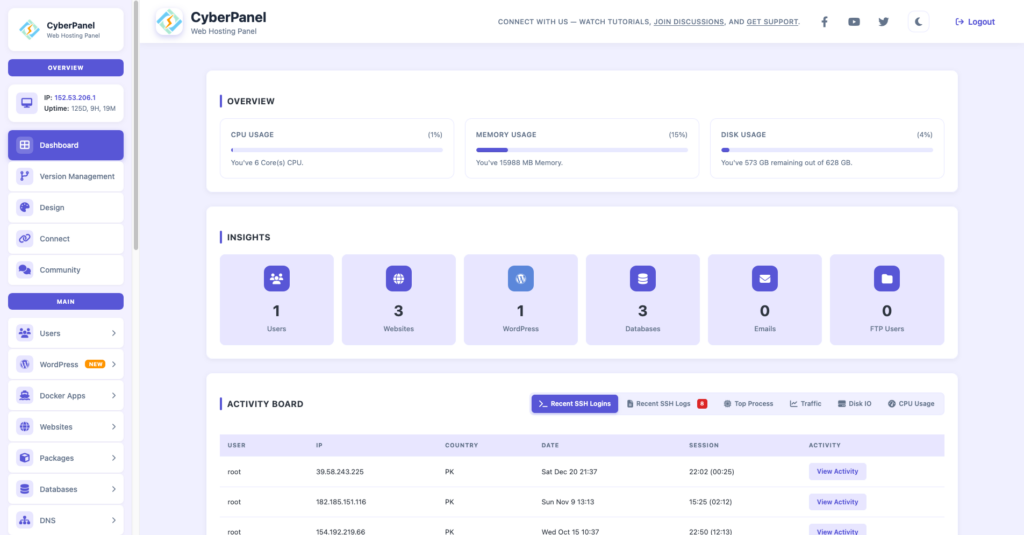
Many companies that develop products with embedded Linux systems also have experience with systems running Linux at the backend. CyberPanel is a powerful web hosting control panel that makes it easier to manage web hosting services and Linux servers in general, as it offers a variety of tools for managing websites, databases, emails, DNS, and much more. It can also be used by companies that offer their customers Linux-based hosting services or maintain Linux servers at the backend.
Is Embedded Linux The Right OS For You?
If you are looking for a reliable, flexible, and easy-to-maintain operating system for your specialized computer, you cannot go wrong with Embedded Linux.
It is a great choice for just about any project that requires custom hardware or software, as it offers extensive support for different processors and can therefore run on a wide variety of devices. With the increasing use of IoT devices and other technologies that require embedded systems, Embedded Linux will continue to be a popular choice among developers.
Final Thoughts
Embedded Linux has made yet another revolution in the world of technology, offering a more flexible alternative to other operating systems. It has enabled developers to create operating systems that are perfectly suited for their particular needs and devices, rather than forcing them to work around existing operating systems.
Whether you are working on a web-connected IoT device, a piece of industrial machinery, a self-driving car, or a networking appliance, Embedded Linux is the perfect foundation for your project. It is an operating system that keeps getting better with time, ensuring that your technology will not become obsolete in the near future.
Are you developing a product that requires Embedded Linux? Let us know what you are working on in the comment section below!
FAQs
Does every embedded device use Linux?
No. Some devices use real-time operating systems (RTOS) or proprietary operating systems depending on their requirements.
Which programming languages are commonly used with Embedded Linux?
C and C++ are the most common choices, although Python, Rust, and Go are increasingly used in embedded development.
Is Embedded Linux suitable for IoT devices?
Yes. Embedded Linux is widely used in IoT products because it offers networking capabilities, hardware flexibility, and strong community support.