On this page
Imagine if you could find an easy way to represent all time and date information across the world with one number? No formats, no time zones, no confusion. Well, that is exactly what Linux Epoch does.
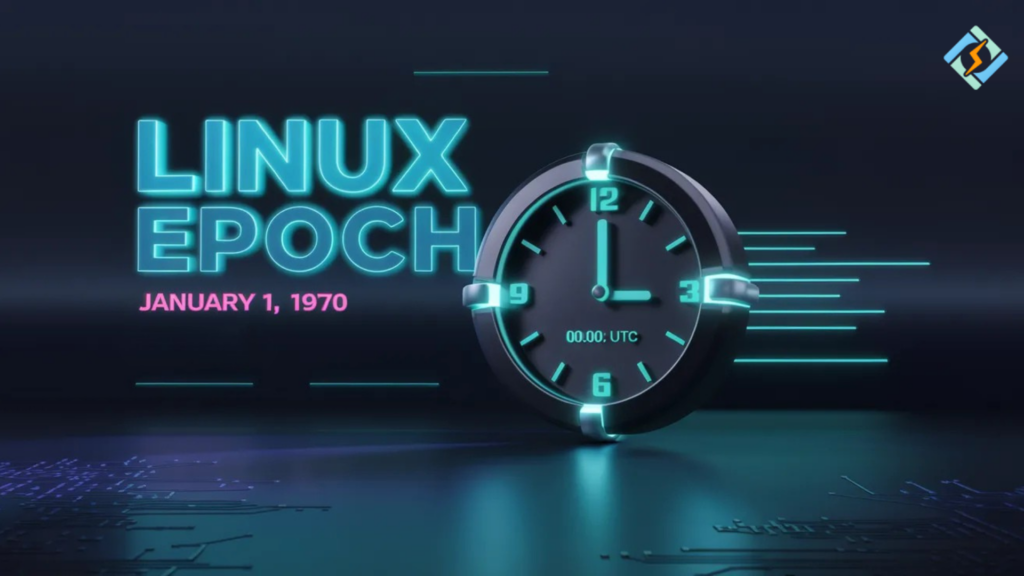
It turns the time into a single, understandable way of representing it. In Linux and Unix-based systems, time is not stored as “2026-01-01 10:00 AM”; it is stored as a number of seconds elapsed since the starting point. This value is called Linux Epoch time and is represented from January 1, 1970 (UTC).
This default makes it easier for the systems to calculate and compute the time and to synchronize it between servers. If you are dealing with log automation, APIs, or scripting, you need to understand Linux Epoch timestamps. With this knowledge, you can easily debug, schedule, and convert time formats without any errors.
For many developers, the Linux Epoch converter is one of the handy tools. In this tutorial, you will learn about how Linux Time Epoch operates, how to create and convert timestamps in Linux, and how to use them in actual DevOps scenarios with the help of tutorials.
What Is Linux Epoch & Why Does It Matter?
Linux Epoch refers to the number of seconds that have passed since January 1, 1970, at 00:00:00 UTC. This is popularly known as the Unix Epoch, and it acts as the standard reference point for time in Linux systems. Systems use a single integer value, which makes calculations faster and more reliable.
Understanding Linux Epoch Time With Example
Let’s see how Linux Epoch Time looks in practice.
Command
date +%sOutput
1715904000This number represents the total seconds since January 1, 1970.
Working of Linux Epoch Timestamp
It is stored as an integer value. Here’s how it works:
- It increases every second
- It is always based on UTC
- It ignores local time zones
This makes it ideal for distributed systems where consistency is critical.
Convert Human Date To Linux Epoch Time
You can convert a readable date into epoch time using the date command.
Command
date -d "2026-01-01 00:00:00" +%sOutput
1767225600Convert Linux Epoch Time To Human Readable Format
To reverse the process:
Command
date -d @1767225600Output
Thu Jan 1 00:00:00 UTC 2026Linux Epoch Converter Tools
A Linux Epoch Converter helps you quickly switch between formats. You can use command-line tools, online converters, and scripting methods. These are useful when you have to analyze logs or debug APIs.
Practical Example In Bash Scripting
Script
#!/bin/bash
current_time=$(date +%s)
echo "Current Epoch Time: $current_time"Current Epoch Time: 1715904000Comparing Two Linux Epoch Timestamps
Epoch makes comparison easy.
Example
if [ 1715904000 -gt 1715800000 ]; then
  echo "Time is greater"
fiOutput
Time is greaterReal World Use Cases Of Linux Time Epoch
1. Log Analysis
System logs store time in epoch for accuracy.
2. API Development
Many APIs use epoch timestamps for consistency.
3. Automation Scripts
Cron jobs and scripts rely on epoch for scheduling.
4. Database Storage
Epoch values reduce complexity in time calculations.
Common Mistakes to Avoid
| Mistake | Problem | Solution |
|---|---|---|
| Ignoring UTC | Wrong time | Always use UTC |
| Using wrong format | Conversion error | Use correct flags |
| Mixing milliseconds | Incorrect value | Verify units |
Linux Epoch Seconds Vs Milliseconds
- Seconds → Standard in Linux
- Milliseconds → Used in JavaScript
Example
Seconds:      1715904000
Milliseconds: 1715904000000 Best Practices For Using Linux Epoch Timestamp
- Always store time in UTC
- Convert only when displaying
- Validate input formats
- Use built-in tools for accuracy
Role of CyberPanel in Time-Based Server Management
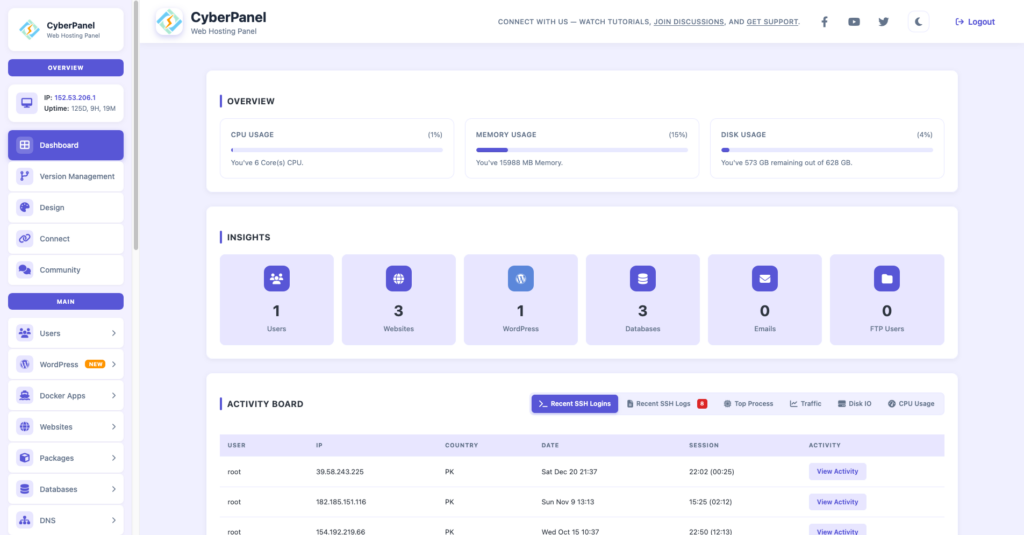
CyberPanel is a free web hosting control panel that is open-source, powered by OpenLiteSpeed.
In real workflows:
- Linux epoch handles time calculations
- Automation uses timestamps
- CyberPanel manages server operations
Conclusion: Master Time With Linux Epoch
Linux Epoch is one of the most basic principles when it comes to system operations.
It codifies the passage of time, offers people and programs a simple, reliable way to work with it, and runs everything from logs to automation.
When you understand how Linux Epoch timestamps work, you have much more control over your script server applications.
Start using Epoch time in your workflows, and you’ll instantly realize how much easier life becomes.
FAQs
Can Epoch Time Be Negative?
Yes, for dates before 1970.
Is Epoch Time Timezone Dependent?
No, it is always based on UTC.
How Do I Get Linux Epoch Time Quickly?
Use the date +%s command.