On this page
Why do a lot of Linux users decide to stop using heavy operating systems and go for lightweight distributions instead? Usually, the reasons come down to three: speed, stability, and simplicity. A lot of modern Linux distributions heavily concentrate on visuals and additional features, but in doing so, they often compromise performance. That’s why MX Linux stands apart.
Recently, Linux MX has been gaining a lot of attention as it is lightweight, dependable, and easy to use for beginners, without sacrificing advanced features. It brings together the Debian level of stability with the addition of useful desktop tools that help users manage their systems more easily. Whether someone is using mx-linux to give their old hardware a new lease of life, make a productive workstation, or find a highly stable Linux desktop, it keeps showing up in the top lists.
More and more people have been searching for how to download MX Linux because they want an operating system that can do its job effectively. Then again, the community eagerly anticipates the next major MX Linux 25 release date for performance enhancement, better hardware support, and a polished desktop experience.
This article is going to introduce you to what sets MX Linux apart, how it really runs in a user’s environment, what features are essential, and why it has become one of the most respected lightweight Linux distributions available today.
What Is MX Linux & Why It Got Hype?
MX Linux is a Linux distribution based on Debian that targets reliability, time-saving, and simplicity.
It is based on the combination of:
- Debian Stable repositories
- AntiX components
- Custom MX Tools to make administration easier
This battery of elements produces an operating environment that is very lightweight and capable of running on both new and old computers.
Considering that many beginner distros totally hide the advanced features, MX Linux brings a nice balance between user-friendliness and system-level controls.
MX Linux Performance And System Efficiency
One of the biggest reasons behind the popularity of Linux MX is performance.
MX Linux is optimized to consume fewer system resources compared to heavier desktop distributions.
Typical Idle Resource Usage
| Resource | MX Linux |
|---|---|
| RAM Usage | 500MB to 700MB |
| CPU Usage | Very Low |
| Disk Usage | Lightweight Installation |
This makes it ideal for:
- old laptops
- low-end desktops
- virtual machines
- development systems
MX Linux Desktop Environment And User Experience
MX Linux is a great combination of the traditional XFCE desktop environment and some great anti-features like low resource usage, fast responsiveness, and customization flexibility.
XFCE offers:
- low resource consumption
- desktop design based on the classic layout
- rapid response
- flexibility in tweaking
In contrast to the current desktop environments, which pay a lot of attention to animations, XFCE gives priority to speed and operability.
Besides that, MX Linux comes with a set of customised utilities, namely MX Tools. These tools provide easy ways to do:
- package installation
- driver setup
- system snapshots
- boot repair
MX Linux Download Options And Installation Process
The demand for mx linux download continues to rise because the installation process is straightforward.
Official Editions
MX Linux provides multiple versions:
| Edition | Purpose |
|---|---|
| XFCE | Main stable edition |
| KDE | More advanced desktop experience |
| Fluxbox | Extremely lightweight setup |
Installation Requirements
| Component | Minimum |
|---|---|
| RAM | 1GB |
| Storage | 8GB |
| CPU | Modern x86 processor |
Basic Installation Flow
- Download ISO
- Create bootable USB
- Boot system
- Start installer
- Configure partitions
- Complete setup
The installer is simple compared to many advanced Linux distributions.
MX Linux Vs Ubuntu
| Feature | MX Linux | Ubuntu |
|---|---|---|
| Resource Usage | Low | Higher |
| Desktop Speed | Fast | Moderate |
| Beginner Friendly | Yes | Yes |
| Custom Tools | Extensive | Limited |
| Stability | Very High | High |
MX Linux 25 Release Date & What To Expect?
On November 9 2025, the MX Linux development team officially rolled out MX Linux 25 “Infinity”, the next major installment in the Debian 13 “Trixie” based distribution series.
Among other things, this release brought the whole MX Linux platform up to date. While still maintaining the lightweight and stable performance that the distribution has always been recognized for. MX Linux 25, in fact, managed to continue delivering a performant, well-supported, and efficient desktop experience, whereas a number of Linux distributions tend to become resource-heavy with each new release.
What Features Were Added in MX Linux 25?
MX Linux 25 introduced major architectural and desktop-level improvements across the operating system.
- Core Improvements In MX Linux 25
- Migration to Debian 13 “Trixie” base
- Linux 6.12 LTS kernel in standard editions
- Linux 6.15 Liquorix kernel in AHS editions
- Improved Secure Boot support
- New deb822 repository format
- Better installer workflow with replace-install option
- zram swap support for improved memory management
The KDE edition also received Plasma 6 improvements with both X11 and Wayland session support.
Release Date for MX Linux 25.1
The first patch update, MX Linux 25.1 “Infinity, ” was officially made available on January 19, 2026.
Rather than making changes to the whole system, MX Linux 25.1 was all about polishing, fixing bugs, and increasing support for hardware.
Major Changes In MX Linux 25.1
- Debian 13.3 package synchronization
- Linux 6.12 LTS updated kernels
- Linux 6.18 Liquorix kernel for AHS edition
- Mesa 25.3.3 graphics stack updates
- Improved boot stability
- Better hardware detection
The biggest change was the return of dual-init support. It allowed users to boot with both:
- systemd
- SysVinit
Why MX Linux 25 Matters In 2026
MX Linux 25 has reinforced the distro’s reputation as one of the most stable lightweight Linux operating systems that will still be present in 2026. The release has improved:
- compatibility with modern hardware
- responsiveness of the desktop environment
- performance of package management reliability over time
Beyond all this, it has kept the light-weight ethos that has made MX Linux a hit on :
- ancient laptops
- systems with low resources
- workstations for development
- virtual environment setups
Upcoming MX Linux 25.2 Development
In May 2026, discussions and beta testing internally within the MX Linux community on the development of MX Linux 25.2 already took place.
The next version might concentrate on:
- installer refinement
- package optimization
- additional hardware support
- desktop stability improvements
- kernel
Reasons Why Developers And Power Users Choose MX Linux
MX Linux is a great choice for beginners; Though, it is also very well regarded among highly skilled users. Here are the reasons:
- Debian reliability
- minimum system resources required
- consistent updating schedule
- few running background processes
This implies it is great to be used for:
- development workstations
- server administration
- automation
- virtual machines
Package Management In MX Linux
MX Linux uses the APT package manager because it is Debian-based.
Update System Packages
sudo apt update && sudo apt upgradeInstall New Software
sudo apt install nginxThe package ecosystem is massive because it relies on Debian repositories.
MX Linux Snapshot Feature And System Recovery
The built-in snapshot in MX Linux is definitely a standout feature.
This makes it possible:
- making a backup of the entire system
- copying a setup
- rolling back a broken system
Why It Matters
- Most entry-level Linux distributions usually miss out on a strong set of recovery tools as standard.
- MX Linux is a huge step towards a backup disaster recovery.
- MX Linux For Older Hardware
- Even on the oldest computers, MX Linux hardly ever struggles.
Real Benefits
- running without jerks even on low RAM
- less CPU usage
- quick booting
- doing many things efficiently
It is probably why a lot of users decide to give up Windows and switch to MX Linux on very old laptops.
Security And Stability In Linux MX
MX Linux stems from Debian Stable. It is part of one of the most reliable Linux ecosystems.
Stability Advantages
- packets verified by testing
- less frequent breaking upgrades
- trustworthy over long stretches
Sounds like a good setting for:
- office spaces
- schools
- workstations in the production line
How CyberPanel Works with MX Linux?
Linux distributions for server and hosting activities are found in infrastructure workflows.
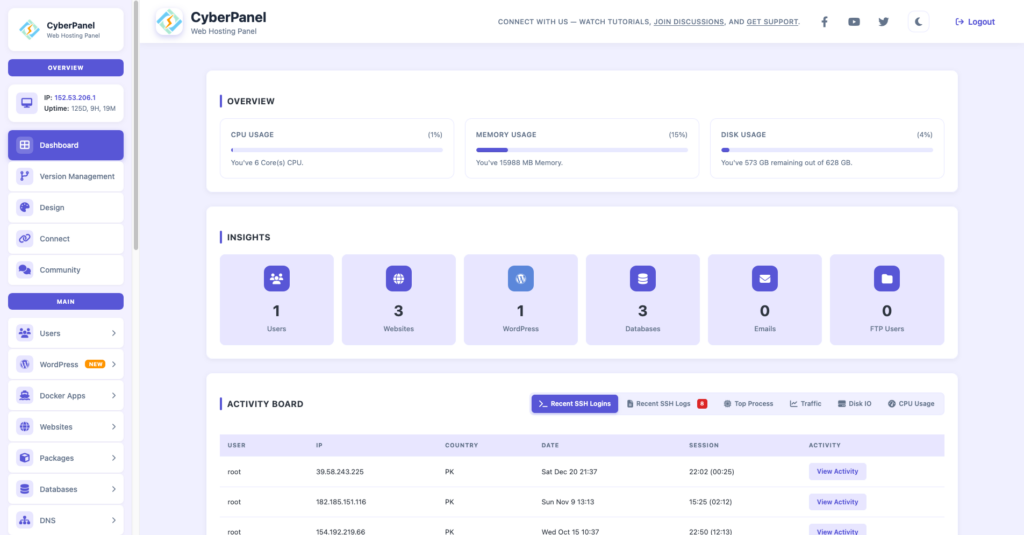
CyberPanel is a web hosting control panel backed by OpenLiteSpeed. It is free and open-source and gives an interface to manage websites, databases, emails, and other server resources on Linux.
In real-life cases:
- MX Linux acts as a minimal development workstation
- Linux handles scripting and automation
- CyberPanel is in charge of production hosting infrastructure
This results in a cohesive work process combining desktop productivity and server handling.
Conclusion
MX Linux is still one of the leading choices in 2026 thanks to its excellent combination of performance even on weaker machines, high stability, and user-friendly design. The latest releases, MX Linux 25 and MX Linux 25.1, brought enhancements in hardware compatibility, speed of the desktop, and overall system trustworthiness while maintaining their simplicity.
MX Linux is definitely among the top lightweight distros if you want both old computer refurbishing and a quick and stable Linux environment.
Give MX Linux a try and see for yourself how much faster and more streamlined your Linux work can be!
FAQs
Is MX Linux Faster Than Ubuntu?
In most cases, yes. MX Linux uses fewer resources and performs better on older hardware.
Does MX Linux Support Gaming?
Yes, but gaming support depends on drivers and hardware configuration.
Is MX Linux Stable For Daily Use?
Yes, it is known for excellent stability because it is based on Debian Stable.