On this page
Linux permissions are simple and usually sufficient for most tasks. You can set the read, write, and execute modes for the owner of a file, its group, and others. But what if you need to give a particular user access to a file without changing its ownership? This is when Linux File ACLs can come in handy.
If you are looking for information about Linux ACL, Linux ACLs, ACL Linux, ACL on Linux, or ACL in Linux, it means that you have encountered a situation where standard Linux permissions are not enough.
In this guide, you will learn what Linux ACLs are, what benefits they offer, how they work, and how to add, edit, or delete them with practical examples.
What Is an ACL in Linux?
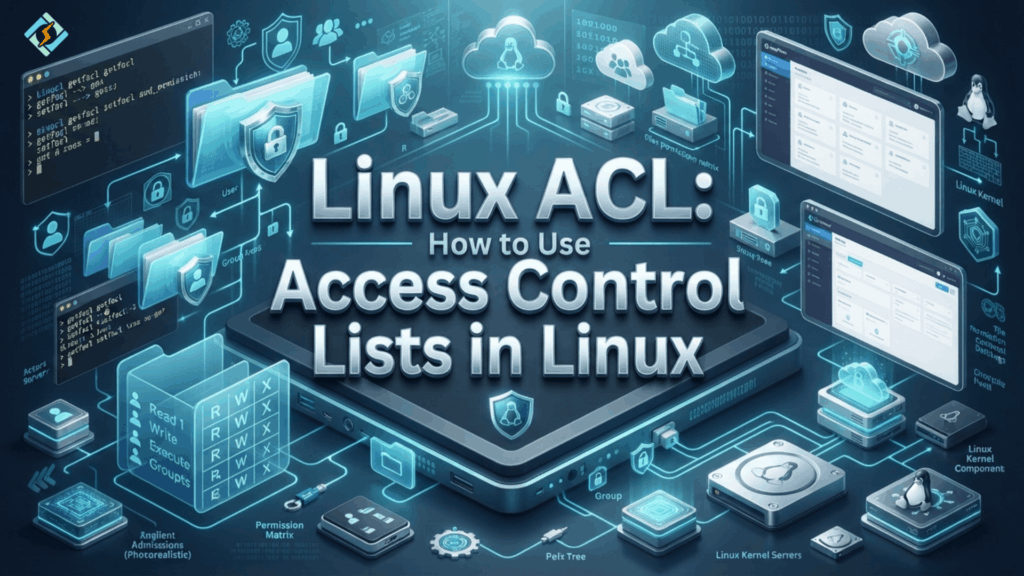
An Access Control List (ACL) is an extended permission system that allows you to set more detailed rules about which users or groups can access your files and folders compared to standard permissions.
With basic Linux permissions, you can only set read, write, and execute modes for the owner of a file, its group, and others. By contrast, Linux ACLs let you grant access to specific users or groups beyond the owner and their group.
For example, you can allow one developer to modify a certain configuration file without giving write permissions to all members of their team.
This is particularly useful in collaborative environments where you need to grant different levels of access to various users or groups.
Why Use Linux ACLs?
Linux Access Control Lists offer better flexibility and security compared to standard file permissions.
Some common use cases include:
- Giving access to individual users
- Providing permissions to multiple groups
- Simplifying shared projects with more fine-grained access controls
- Avoiding unnecessary permission changes by directly editing ACL entries instead of file ownerships
- Enhancing security by restricting access to sensitive files or folders while allowing broader access to others
- Improving overall management of permissions in a multi-user environment.
How Linux ACLs Work?
Linux ACLs let you define additional permissions beyond the basic owner, group, and others for each file and directory.
These permissions can be set for specific users or groups, letting you control who can read, write, execute, or access the contents of a file or directory.
Linux stores these extra permissions as part of the file’s metadata alongside standard permissions, thus enabling a more granular approach to access control.
Check Whether ACL Is Enabled
Most modern Linux distributions support ACLs by default.
To verify whether a filesystem supports ACLs, inspect its mount options.
mount | grep aclIf ACL support is not enabled, you may need to update your filesystem mount configuration before using ACL commands.
How to View ACL Permissions
The getfacl command displays all ACL entries for a file or directory.
Example:
getfacl project.txtOutput:
# file: project.txt
# owner: admin
# group: developers
user::rw-
user:john:r--
group::r--
mask::rw-
other::---This output shows both the standard Linux permissions and any additional ACL entries.
How to Set an ACL in Linux
The setfacl command adds or modifies ACL permissions.
To give a specific user read and write access:
sudo setfacl -m u:john:rw project.txtHere:
-mmodifies the ACLuspecifies a userjohnis the usernamerwgrants read and write permissions
The file owner and group remain unchanged.
Grant ACL Permissions to a Group
You can also assign permissions to an entire group.
Example:
sudo setfacl -m g:developers:rwx project.txtEvery member of the developers group now receives the specified permissions.
Set Default ACLs for Directories
Default ACLs automatically apply permissions to newly created files and folders inside a directory.
Example:
sudo setfacl -d -m g:developers:rwx projects/This is particularly useful for shared development environments.
Remove ACL Entries
To remove a specific ACL entry:
sudo setfacl -x u:john project.txtTo remove every ACL entry from a file:
sudo setfacl -b project.txtAfter removal, the file returns to standard Linux permissions.
Common ACL Commands
| Command | Purpose |
|---|---|
getfacl file | Display ACL entries |
setfacl -m | Add or modify permissions |
setfacl -x | Remove a specific ACL |
setfacl -b | Remove all ACLs |
setfacl -d | Configure default ACLs |
Linux ACL vs Traditional Permissions
| Feature | Standard Permissions | ACL |
|---|---|---|
| Owner, Group, Others | Yes | Yes |
| Individual Users | No | Yes |
| Multiple Groups | Limited | Yes |
| Default Directory Permissions | Limited | Yes |
| Fine Grained Access | No | Yes |
ACLs extend the existing permission system rather than replacing it.
Common Use Cases for Linux ACLs
Linux ACLs are very practical in a variety of real-world scenarios.
Some common examples of their use cases include:
- Hosting software development projects
- University computer labs
- Company file servers
- Backup directories
- Departmental document sharing
- Multiuser Linux servers
- Web hosting platforms
They offer a degree of flexibility that makes collaboration easier while keeping things reasonably organized.
Best Practices for Managing ACLs
While using ACLs you should consider adhering to the following best practices to get the most out of them:
- Giving users exactly the set of permissions they need to get their work done.
- Keeping ACLs reviewed and cleaned up so that they don’t have any permissions that are no longer necessary.
- Using groups to define common sets of permissions wherever it makes things easier.
- Keeping track of significant changes to permissions for reference, especially when troubleshooting.
- Testing new or changed ACLs to ensure that they have the intended effect.
A competent approach to assigning and managing permissions in Linux will greatly reduce the amount of administrative hassle while improving system security.
How CyberPanel Helps You Leverage Linux ACLs?
Linux ACLs are useful in any situation where you have a multiuser server and need to define exactly which users and processes can do what. Knowing how they work will help you secure your sensitive data while still being able to work and collaborate with others effectively.
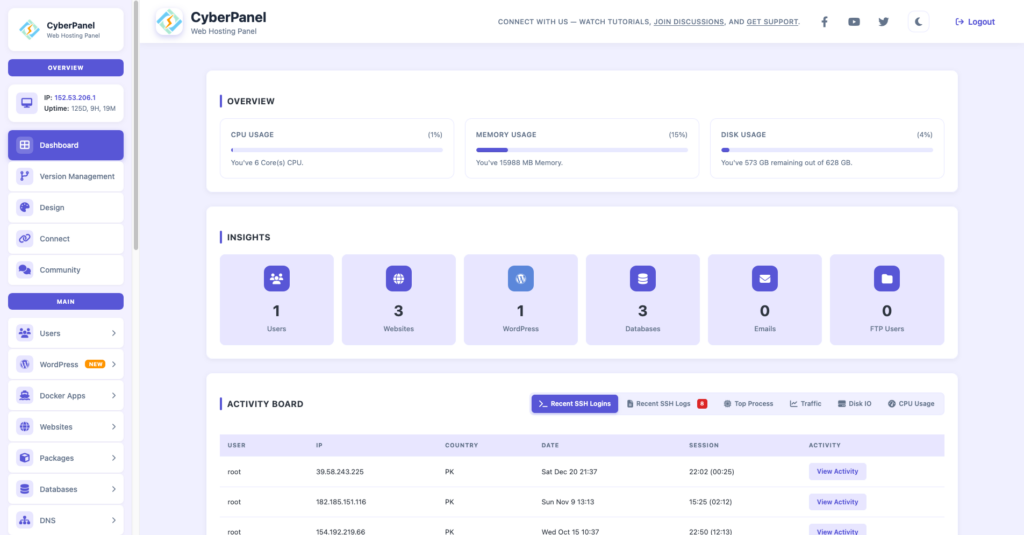
In conjunction with standard file permissions ACLs give you the ability to define who can access which resources with what level of freedom. CyberPanel is a web hosting control panel that makes managing a Linux server easier by introducing a number of useful abstractions and automations. It allows you to manage hosting-related components such as websites, users, SSL certificates, databases, backups, and deployments with greater ease, securing your Linux environment in the process.
Conclusion
Linux ACLs offer a practical way to define file and directory permissions that goes beyond the capabilities of the standard owner/group/others permissions model. They allow you to grant individual permissions to both users and groups, making collaborative work easier to set up and more secure. In practice, this means that you can give your users more freedom and flexibility while still being able to keep things properly organized and protected.
Go ahead and try creating an ACL for a test file you created to see how it can help you improve your own Linux security practices.
FAQs
How do I know if an ACL is causing a permission problem?
Use getfacl to inspect the file or directory. It displays all ACL entries and helps identify permissions that may be granting or restricting access unexpectedly.
Are Linux ACLs suitable for large enterprise environments?
Yes. ACLs are widely used in enterprise environments where different users or teams require specific access to shared resources without changing ownership structures.
How can I copy ACL permissions to another file?
You can export ACLs with getfacl and restore them using setfacl, making it easier to duplicate permission settings across multiple files or directories.