On this page
Not all Linux distros are created equal. Some are optimized to bring new life to old computers while others are created with a focus on speed and efficiency. Fatdog Linux falls into the second category as a lightweight but powerful distro that provides users with everything they need with minimal overhead. If you are looking for Fatdog Linux, you are in the right place.
In this guide, you will learn:
- What is Fatdog Linux?
- How to download and install Fatdog Linux?
- Whether Fatdog Linux works with 32-bit systems?
- Why Fatdog Linux is a great choice for users?
- When is Fatdog Linux the right option for you?
Let’s dive in!
What is Fatdog Linux?
Fatdog Linux is a fast and lightweight Linux distribution built from scratch with inspiration from the Puppy Linux project.
While it has similarities to other lightweight distros, Fatdog Linux is unique in its ability to run directly from a USB or DVD and utilize RAM to provide users with a powerful desktop environment without overloading systems with overhead.
Fatdog Linux 32-bit builds on this foundation by delivering a complete desktop experience with a graphical interface, web browser, file manager, multimedia tools, and other software.
Why Use Fatdog Linux?
Many Linux users turn to Fatdog Linux when they need something lighter and faster.
Some reasons Fatdog Linux is a good choice for users and developers include:
- Lightweight and powerful
- Quick boots
- Runs applications directly from memory
- Runs from USB
- Low overhead
- Good for hardware testing
- Persistent storage options
- Easy backup and restore tools
Testing environments benefit from these features since they allow developers, testers, and users to load Fatdog Linux with minimal resources dedicated to the OS itself.
Fatdog Linux also enables these capabilities for regular users who need a portable operating system.
Does Fatdog Linux Support 32-bit?
While older versions of Fatdog Linux did support 32-bit processors, the distro is now largely optimized for 64-bit systems.
As such, Fatdog Linux mainly focuses on new hardware for better performance.
If you have a computer that only supports 32-bit instructions, consider using an older version of Fatdog Linux or try an alternative like Puppy Linux, antiX, Debian 32, MX Linux, or Tiny Core Linux. Always ensure the Linux distro you use supports your hardware before attempting to download anything.
How to Download Fatdog Linux ISO?
Downloading Fatdog Linux is a breeze.
- All you have to do is go to the main Fatdog Linux website and get the latest version that supports your hardware.
- Make sure the integrity of the downloaded Fatdog Linux ISO is good before proceeding.
- Once you have the ISO file, you can use it to create bootable media.
- Many tools allow you to do this with minimal effort, including Rufus, balenaEtcher, Ventoy, or Fedora Media Writer.
How to Install Fatdog Linux?
One of the best things about Fatdog Linux is that it does not require you to install it on your computer.
- Many users enjoy running Fatdog Linux as a portable application from USB drives.
- However, if you want to use Fatdog Linux as your primary operating system, you will have to go through the installation process.
- To begin, you have to create Fatdog Linux bootable media. You can do this by copying the ISO file to a USB drive using your favorite tool.
- Once you have created Fatdog Linux bootable media, you can boot your computer into Fatdog Linux by changing the boot order in the BIOS or by selecting the Fatdog Linux option in the GRUB menu.
Before installing Fatdog Linux on your computer, make sure all your peripherals work with it.
Check that the following devices work with Fatdog Linux:
- Keyboard
- Mouse
- Monitor
- Networking hardware
- Sound card
- Hard drives
Once you have verified your hardware works with Fatdog Linux, you can proceed with the installation.
- Launch the Fatdog Linux installer and select the drives you want to use with the new operating system.
- Once you have selected the storage drives, the Fatdog Linux installer will prompt you to select the partitions you want to mount.
- Pick the partitions you want to use to store the operating system data, /home directory, and other files.
- Next, make sure you have the boot settings right.
- Install the bootloader recommended by the Fatdog Linux installer so that your computer can easily boot into the new operating system.
Minimum System Requirements
| Component | Recommended |
|---|---|
| Processor | 64-bit CPU |
| RAM | 2 GB or more |
| Storage | 8 GB available space |
| Boot Media | USB or DVD |
| Display | 1024 × 768 or higher |
Common Uses for Fatdog Linux
Fatdog Linux is suitable for more than reviving older computers.
Many users rely on it for:
- Portable Linux workstations
- System recovery
- Hardware diagnostics
- Privacy-focused browsing
- Learning Linux
- Backup and rescue tasks
- Testing software without installation
Because it can run as a live operating system, it is also useful when troubleshooting computers that fail to boot normally.
Fatdog Linux vs Puppy Linux
| Feature | Fatdog Linux | Puppy Linux |
|---|---|---|
| Architecture | Mostly 64 bit | 32 bit and 64 bit options |
| Performance | Very fast | Very fast |
| Live USB Support | Yes | Yes |
| RAM Based Operation | Yes | Yes |
| Beginner Friendly | Yes | Yes |
How Cyberpanel Complements Your Linux Workflow?
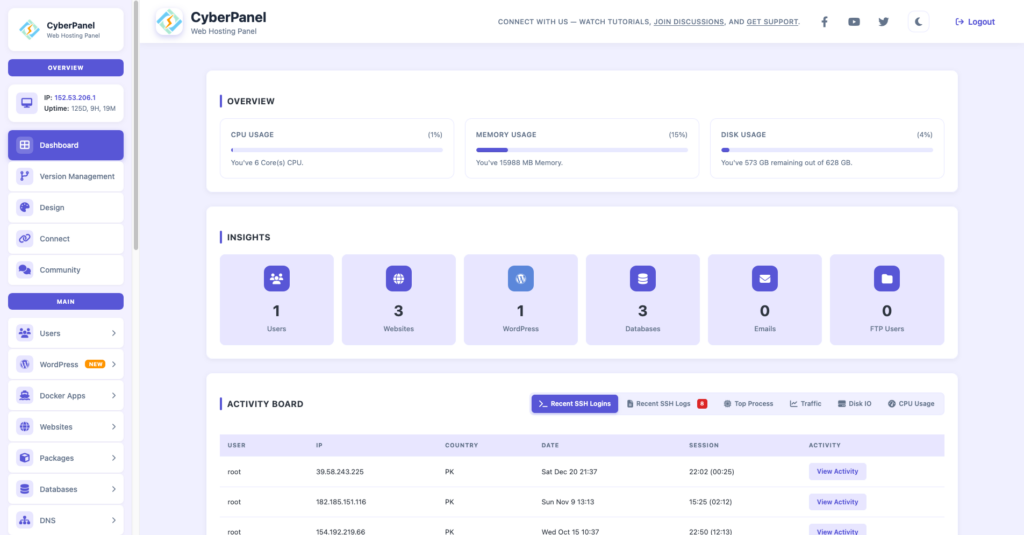
Fatdog Linux is great for learning Linux, system recovery, and having a portable operating system on a USB drive. But once you get comfortable with Linux, you might want to do more than just play on the desktop. CyberPanel is your free and open-source web hosting control panel. It is a good option for managing a Linux server, whether it is a website or cloud-hosted.
Conclusion
Fatdog Linux is a great lightweight OS, but this doesn’t mean it’s bad. If you want a portable OS, it’s a good choice. It will be able to give you what you need, without a steep learning curve. And while newer versions are geared towards 64-bit hardware, it’s retained the speed and agility that made it a favorite amongst Linux enthusiasts for years.
Download the latest iso for Fatdog Linux, and try it out on a USB drive. See what a small, quick Linux can do before you commit to dual-booting or using it as your primary OS.
FAQs
How do I update Fatdog Linux?
Updates typically depend on the release you’re using. Check the official project documentation for the recommended update process instead of assuming it follows the package management approach of other Linux distributions.
Can I use Fatdog Linux for everyday work?
Yes, for many users. It includes essential desktop applications and supports web browsing, document editing, and multimedia tasks, though software availability may differ from larger distributions.
Does Fatdog Linux save files after rebooting?
Yes. If you enable persistent storage, your files and settings can be saved between sessions even when running from a USB drive.
Can I run Fatdog without installing it?
Yes. Fatdog Linux is designed to run as a live operating system from a USB drive or DVD, allowing you to test it without modifying your hard drive.
Is Fatdog suitable for virtual machines?
Yes. Fatdog Linux works well in virtualization software such as VirtualBox and VMware, making it useful for testing or learning Linux without changing your primary operating system.