On this page
If you are searching for Tails OS Linux, you may be wondering whether Tails is actually a Linux distribution or a completely different operating system. Tails is a Linux-based operating system designed primarily for privacy and anonymity. It runs from removable media, uses Tor for network connections, and is designed to leave minimal traces on the computer after a session ends.
Unlike Linux Mint or Ubuntu, Tails is not designed to be your ordinary everyday operating system. Its entire design focuses on creating a temporary, privacy-oriented computing environment.
Is Tails OS Linux?
Yes, Tails OS is Linux. Tails is built on Debian and uses the Linux kernel, desktop environment, Linux applications, and standard Linux system components.
The major difference is its purpose. A traditional Linux distribution normally lives on your computer’s internal drive and stores your applications, documents, settings, and other data. Tails is designed to run from a USB drive and provide a temporary environment.
| Feature | Tails OS | Regular Linux |
| Linux-based | Yes | Yes |
| Runs from USB | Yes | Optional |
| Privacy-focused | Yes | Depends on distribution |
| Tor integration | Yes | Usually requires setup |
| Persistent storage | Optional | Standard |
| Everyday desktop | Not its main purpose | Usually yes |
So when someone searches for tails linux os or linux tails os, they are essentially looking for information about a specialized Linux operating system rather than a separate alternative to Linux.
How Does Tails OS Work?
Tails starts from a USB drive instead of requiring you to replace the operating system already installed on your computer.
A typical setup looks like this:
USB Drive
↓
Tails OS
↓
Linux Desktop
↓
Tor Network
↓
Internet
The system includes privacy-focused applications and is configured to route Internet traffic through Tor. This helps hide your normal IP address from websites and makes network activity harder to associate directly with your connection.
However, Tails does not make you automatically anonymous. Your own actions still matter. Logging into a personal account, sharing identifying information, or mixing different identities can compromise the privacy you are trying to maintain.
Does Tails OS Save Your Files?
By default, Tails is designed around an amnesic approach. Most information from your session is not intended to remain on the computer after you shut down.
However, Tails provides Persistent Storage for users who need certain files or settings to survive between sessions.
For example, you might keep:
- Personal documents
- Encryption keys
- Selected configuration settings
- Bookmarks
- Other supported persistent data
This gives you control over what should remain available.
| Tails setup | Data behavior |
| Normal session | Temporary working environment |
| Persistent Storage disabled | Data generally disappears after shutdown |
| Persistent Storage enabled | Selected information can remain encrypted |
The important point is that Tails does not mean “nothing can ever be saved.” It means persistence is deliberately controlled instead of being the default behavior.
What Is Tails OS Used For?
Tails is useful when privacy is more important than having a conventional desktop experience.
Common legitimate uses include:
- Privacy-focused browsing
- Temporary computing sessions
- Working with sensitive documents
- Using Tor without configuring your normal operating system
- Separating certain activities from your everyday computer environment
- Carrying a privacy-focused Linux system on a USB drive
It can be particularly useful when you want to use a different computing environment without modifying your existing Windows or Linux installation.
Can You Run Tails Alongside Windows or Linux?
Yes. You can keep Windows or another Linux distribution installed on your internal drive and use Tails from a USB drive.
For example:
Internal SSD
├── Windows
└── Linux Mint
USB
└── Tails OS
When you need Tails, boot the computer from the USB. When finished, shut it down and return to your normal operating system.
This is one of Tails’ biggest practical advantages. You do not have to replace your existing desktop just to use a privacy-focused environment occasionally.
Tails OS vs Linux Mint vs Kali Linux
Tails, Linux Mint, and Kali Linux are all Linux-based, but they are built for very different purposes.
| Linux distribution | Main purpose | Ideal use |
| Tails | Privacy and anonymity | Temporary privacy-focused sessions |
| Linux Mint | General desktop computing | Everyday use |
| Kali Linux | Security testing | Authorized cybersecurity work |
| Ubuntu | General-purpose Linux | Desktop, development, servers |
This means Tails is not automatically “better” than Linux Mint or Kali Linux.
If you want a comfortable desktop for browsing, documents, development, and multimedia, Linux Mint is more practical.
If you are learning authorized penetration testing, Kali Linux provides specialized security tools.
If you need a portable environment designed around privacy, Tails is the more appropriate choice.
What Are the Limitations of Tails Linux OS?
Tails’ specialized design also creates some limitations.
Tor can make Internet access slower than a normal connection. Some websites may restrict Tor traffic or require additional verification. Hardware compatibility can also vary, especially with newer or unusual Wi-Fi, graphics, and peripheral hardware.
Tails is also not ideal if you want to install large numbers of applications, store a large collection of files, play modern games, or customize a Linux desktop permanently.
In other words, Tails is specialized rather than universally better.
Can Tails OS Be Used for Web Hosting?
Tails is not designed for production web hosting.
A hosting server needs persistent storage, reliable networking, databases, SSL certificates, domains, backups, monitoring, and services that remain available continuously. Tails’ temporary privacy-focused architecture is not intended for that environment.
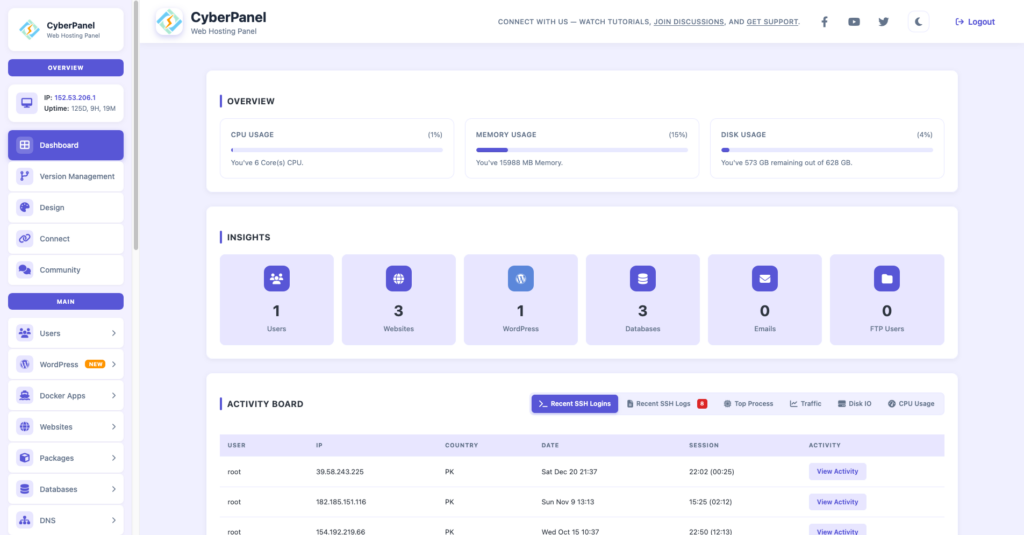
If your goal is to manage websites on Linux, a web hosting control panel such as CyberPanel is a much better fit.
CyberPanel provides a graphical management layer for websites, domains, SSL, databases, DNS, backups, and other hosting tasks.
The difference is straightforward:
Tails OS
↓
Privacy-focused Linux environment
CyberPanel
↓
Linux web hosting management
So you should not treat CyberPanel as a tool for managing Tails. They solve completely different problems.
Is Linux Tail OS Completely Anonymous?
No. This is one of the most important things to understand about what is Tails OS Linux, and privacy-related searches.
Tails provides privacy-oriented technology, but it cannot protect you from every mistake.
For example, if you use Tails and sign into your personal email account, the service can still identify your account. If you share your real name, phone number, location, or other identifying information, the operating system cannot undo that disclosure.
Tails should therefore be viewed as a privacy tool, not an invisibility switch.
Frequently Asked Questions
Can Tails OS replace Linux Mint?
It can technically perform many desktop tasks, but it is not intended to replace a conventional desktop distribution. Linux Mint is much more suitable for permanent everyday computing.
Can I install Tails directly on my hard drive?
Tails is designed primarily to run from removable media. Its USB-based approach is a major part of its privacy model, so treating it like a normal permanently installed Linux distribution misses the point.
Does Tails require Tor?
Tor is a central part of Tails’ privacy design and networking model. If your main goal is ordinary Linux computing without Tor-based networking, a general-purpose distribution will probably be more appropriate.
Final Verdict
Tails OS Linux is a specialized Linux operating system designed for privacy, anonymity, and portable computing. It runs from removable media, integrates Tor into its networking approach, and provides optional encrypted Persistent Storage for information you deliberately want to keep.
If you want a normal desktop, Linux Mint or Ubuntu will usually be more convenient. If you need authorized security-testing tools, Kali Linux is more appropriate. But if you want a portable Linux environment built around privacy, Tails OS is one of the most interesting choices available.
For Linux users who also manage websites, keep the distinction clear: Tails is a privacy-focused operating system, while CyberPanel is a web hosting control panel designed to simplify persistent Linux server and website management.