
On this page
Suppose your automation could stop errors before they even start. It’s a common misconception that the majority of automation failures are due to complex logic. In reality, most failures are the result of a tiny detail that was taken for granted without actually verifying it. For instance, a variable could have been left out, a configuration file might not be available, a system value could be wrong, and so on. Such small issues go unnoticed during the initial tasks and only become visible once the playbook has already been executed significantly. At that stage, resolving an issue is more complicated, time-consuming, and possibly even dangerous. This is why Ansible Assert is a game-changer.
Thanks to Ansible Builtin Assert, you don’t have to wait for the playbook to fail halfway through. This feature lets you specify explicit conditions that must be true before further execution can happen. And if these conditions are not satisfied, the playbook will be halted at once with a helpful message. It eliminates hidden errors as well as confusion.
Assertions are your key to having complete control over the course of your automation, whether you are using it for Ansible Assert File Exists, looking for real-world examples, or testing different values via Ansible Assert Loop.
Using this guide, you will learn how to employ it effectively in your actual work environments.
What is Ansible Assert?
Ansible includes the Ansible Assert module to validate conditions inside a playbook. The purpose of Ansible Builtin Assert is simple. Here is what:
- It enforces expected conditions
- Step execution when conditions fail
- Provide clear failure messages
Why Ansible Builtin Assert Is Important?
When you don’t validate:
- Playbooks might break unexpectedly
- It becomes very hard to figure out what went wrong
- You might even end up deploying only a part of the changes
When you use Ansible Assert:
- Errors will raise early
- Problems will be clearly explained
- Execution becomes predictable
This is called fail-fast automation, and it is a good habit always used in real production environments.
Ansible Assert Examples (Basic Usage)
- name: Validate variable exists
  ansible.builtin.assert:
    that:
      - my_variable is defined
    fail_msg: "Required variable is missing"
success_msg: "Validation passed"What this does
- checks if variable exists
- stops execution if not
- provides readable output
Ansible Assert File Exists (Most Practical Use Case)
One of the most common implementations is checking file existence before executing tasks.
- name: Check config file
  ansible.builtin.stat:
    path: /etc/app/config.yml
  register: file_check

- name: Ansible Assert File Exists
  ansible.builtin.assert:
    that:
      - file_check.stat.exists
fail_msg: "Config file is missing. Aborting execution."Why this matters
- prevents service failures
- avoids broken deployments
- ensures environmental readiness
This is the correct approach for Ansible Assert File Exists.
Ansible Assert Loop: Validating Multiple Inputs
When you are working with multiple values, loops make validation efficient.
- name: Validate multiple variables
  ansible.builtin.assert:
    that:
      - item is defined
    fail_msg: "Missing value: {{ item }}"
  loop:
    - "{{ db_host }}"
    - "{{ db_user }}"
- "{{ db_password }}"Advanced Ansible Assert Examples
Here are the examples:
Validate Port Range
- name: Validate port range
  ansible.builtin.assert:
    that:
      - app_port > 1024
      - app_port < 65535
fail_msg: "Port must be between 1025 and 65534"Validate Operating System
- name: Validate OS
  ansible.builtin.assert:
    that:
      - ansible_facts['os_family'] == "Debian"
fail_msg: "Unsupported OS detected"Validate Directory Exists
- name: Check directory
  ansible.builtin.stat:
    path: /var/www/html
  register: dir_check

- name: Assert directory exists
  ansible.builtin.assert:
    that:
- dir_check.stat.isdirReal-World Use Cases of Ansible Assert Deployment Validation
Check that essential files and variables are available before starting the deployment.
Configuration Enforcement
Before making any changes, it is good practice to check that the configuration rules are correct.
Security Checks
It is a wise move to verify that critical security files are present.
Infrastructure Readiness
Before automation, it is a good idea to check that the system meets the necessary conditions.
Common Mistakes to Avoid
Here are the common mistakes you should avoid:
Skipping Validation
It can result in unexpected failures down the line.
Weak Error Messages
It can turn debugging into a challenging task.
Overusing Assertions
It leads to unnecessary clutter in playbooks.
Ignoring Edge Cases
It can result in conditions being missed and workflows breaking.
Best Practices for Using Ansible Assert
Here are the best practices for you to follow:
- validate only critical conditions
- use clear and specific
fail_msg - group related checks together
- keep conditions simple and readable
- combine with
statfor file validation
When You Should Use Ansible Assert?
Use Ansible Assert when:
- Checking the environment before the deployment
- Making sure that the required inputs exist
- Verifying system conditions
- Preventing unsafe execution
You should not use it for minor or non-critical checks.
Role of CyberPanel in Automation Workflow
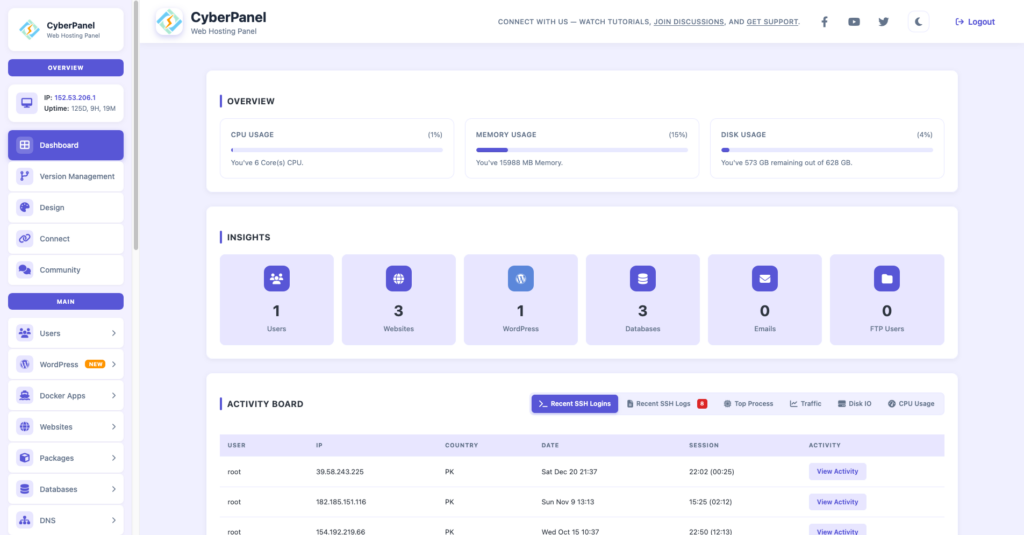
CyberPanel is a free and open-source web hosting control panel. It can be used alongside automation tools like Ansible in real-life scenarios.
How CyberPanel Fits –
- Manages hosting infrastructure
- Controls web servers and services
- Provides an interface for server operations
Combined Workflow
- Ansible Assert validates the configuration.
- Ansible Assert File Exists ensures the required files are present.
Conclusion
Ansible Assert is a minor feature that can create a huge impact.
Rather than allowing the automation to fail suddenly, it enables you to set and enforce clear rules before the execution continues. Assertions are your playbook’s mainstays, whether you are validating variables, checking files with Ansible Assert File Exists, or handling multiple inputs using Ansible Assert Loop. Fragile automation and reliable automation can be distinguished mainly by the presence of validation.
Incorporate Ansible Assert into your playbooks today. Start with basic checks like variable validation or file existence. Once you notice how stability is improved by early validation, apply it to your entire automation workflows for stronger and safer deployments.
FAQs
Does Ansible Assert stop execution for all hosts?
No, it stops execution only for the host where the condition fails unless global settings are applied.
Does Ansible Assert stop execution for all hosts?
No, it stops execution only for the host where the condition fails unless global settings are applied.
Can Ansible Assert check file permissions?
Yes, using the stat module, you can validate permissions and enforce them with assert.