

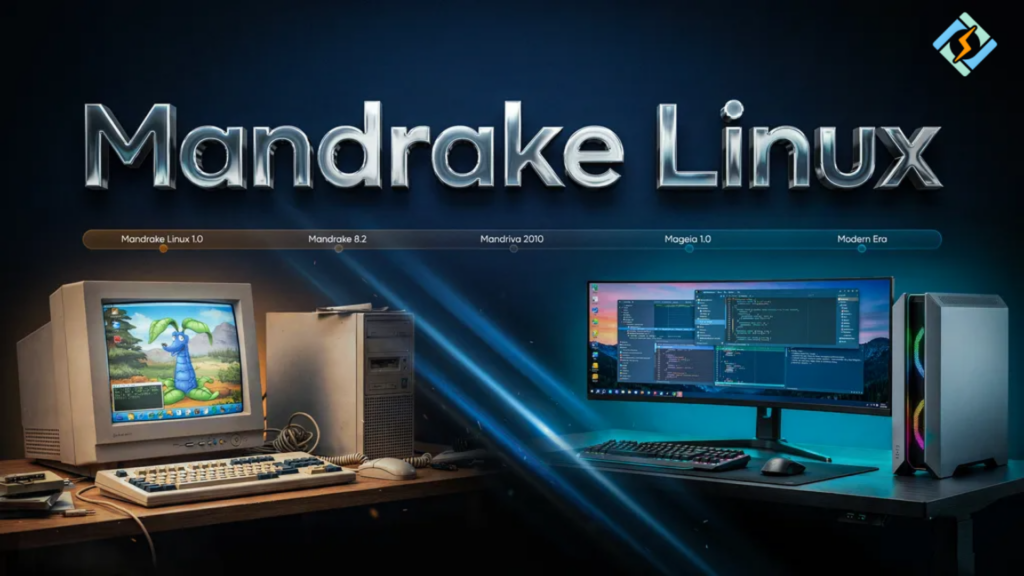
The Linux ecosystem is continuously evolving and changing with the emergence of different Linux distributions, some of which introduce new features and others follow what was done many years ago. For many modern users, the most common Linux distributions are probably Ubuntu, Fedora, Debian, and Arch. Yet, these influential Linux projects that set examples for most of today’s distributions were launched years ago. One such early Linux distribution was Mandrake Linux.
Mandrake Linux made its debut in the late 1990s and almost immediately set a benchmark for the most user-friendly Linux OSs. Back then, a Linux installation used to be a major project needing deep technical expertise, but Mandrake circumvented that by introducing graphical installation tools, simplifying hardware detection, and offering a highly user-friendly desktop interface. Thanks to Mandrake, users were able to switch from proprietary operating systems to Linux with great ease.
The original Mandrake project doesn’t exist anymore under the same name, but its legacy is still very much alive within the Linux community. Search for Linux Mandrake and Mandrake Linux versions are still very up-to-date because lots of enthusiasts, educators, and IT professionals want to find out about its history and influence on the modern Linux distributions.
What Is Mandrake Linux?
Mandrake Linux was a Linux distribution that MandrakeSoft originally released in 1998.
At the beginning, it was based on Red Hat Linux, but the main idea was to make Linux simple enough for everyday users.
Actually, going after a very small target group of experienced administrators is the very opposite of what Mandrake did. The highlight was on:
- Simple installation
- Easy-to-use desktop environments
- Hardware detection without any user intervention
- Graphical administration tools
- Improvement of Linux usability
With those features, Mandrake Linux became, by far, the most accessible desktop OS among its peers.
Brief History Of Linux Mandrake
For one thing, installing Linux during the late 90s was a real pain due to considerable manual configuration and the need for deep technical knowledge.
Mandrake Linux has radically altered the situation by offering several upgraded features that made desktop Linux more accessible. Main events leading to the success:
- 1998 Launch of the first Mandrake Linux release
- Desktop users quickly started choosing Mandrake
- Leading role of KDE desktop integration
- Accomplishing the goal of going beyond home users and targeting enterprises and schools
- Conectiva merger in 2005
- Changing the brand name to Mandriva Linux
Why Mandrake Linux Became So Popular?
Mainly, Mandrake’s popularity was thanks to its feature of removing those obstacles that are the main reasons why new Linux users tend to give up on the idea.
Major advantages included:
- Easy Installation
- Using its graphical installer, it was the first Linux that anyone could even dream of using at home.
- Excellent Hardware Detection
Besides, the truth is that a lot of hardware components were detected automatically during the OS install, and device drivers also delivered the quality of ready-to-use equipment one would expect from a Microsoft product.
KDE Desktop Optimization
Among other things, Mandrake attracted its customers by being really capable of delivering the richest, most feature-full, and stable Linux KDE session then available in the market.
User-Friendly Configuration Tools
Besides the big shift towards easier administration via the GUI, a lot of users also liked the command line interface, which was preserved, too.

Large Software Collection
The software collection catalog was huge and grew bigger every day because, besides Mandrake, it was compatible with and able to use other big software collections too.
These changes made it possible for Mandrake to become one of the top desktop Linux releases of the first decade of the 21st century.
Key Features Of Mandrake Linux
Graphical Installation Wizard
Compared to a couple of the best Linuxes, then, the installation of Mandrake took a lot less user input.
DrakTools Administration Suite
Mandrake was delivering a group of the most popular graphical system management utilities, which were by a large majority of the user community referred to as DrakTools.
With their help, these highly complex Linux tasks could be done in just a few mouse clicks:
- Network configuration
- User management
- Printer setup
- Software installation
- System administration
- Strong KDE Integration
Major Mandrake Linux Versions
| Version | Release Year | Notable Improvements |
|---|---|---|
| Mandrake Linux 5.1 | 1998 | Initial public release |
| Mandrake Linux 6.x | 1999 | Improved hardware support |
| Mandrake Linux 7.x | 2000 | Better KDE integration |
| Mandrake Linux 8.x | 2001 | Enhanced desktop usability |
| Mandrake Linux 9.x | 2002–2003 | Improved package management and stability |
| Mandrakelinux 10.x | 2004 | Better enterprise features before rebranding |
Mandrake Linux Vs Other Distributions
| Distribution | Primary Focus |
| Mandrake Linux | Ease of Use |
| Red Hat Linux | Enterprise & Servers |
| Debian | Stability |
| Slackware | Simplicity & Control |
| SUSE Linux | Enterprise & Desktop |
Transition From Mandrake To Mandriva
The merger of MandrakeSoft with the Brazilian Linux company Conectiva was a major milestone for the project and led to it getting a new name, Mandriva in 2005.
Mandriva Linux, after that merger, was the new distribution that took the goals of the old Mandrake and, at the same time, grew its presence worldwide.
Even though the original Mandriva stopped its development alone, the release managed to inspire quite a few user-based distributions.
Mandrake’s Lasting Influence On Modern Linux
Many of the things now thought of as typical Linux features were first made popular widely by Mandrake.
Some of these:
- Graphical installers
- Automatic hardware detection
- Easy software management
- Desktop-focused Linux design
- Beginner-friendly administration tools
Today’s Linux distros, such as Ubuntu, Linux Mint, Mageia, and OpenMandriva, are still somewhat following this ideology.
Can You Still Get Mandrake Linux?
The first Mandrake Linux distribution is dead; no new version has been made.
Its heritage still influences:
- Mageia
- OpenMandriva
- Other community-based initiatives
Most people who want to get the Mandrake way of doing things pick one of these actively maintained Mandrake descendants.
Is Mandrake Linux Still Available?
If you are a regular user, do not even consider installing the original Mandrake Linux.
Some of the factors are:
- No security fixes
- Very old versions of software
- Hardware no longer supported
- Problems with compatibility
The best bet for users wanting a Linux experience with Mandrake heritage is to choose one of the modern-day alternatives.
How CyberPanel Fits Into Modern Linux Workflows?
Mandrake Linux was instrumental in bringing desktop Linux to a wider audience. Today, Linux environments generally go beyond local user systems and include cloud hosting and server management.
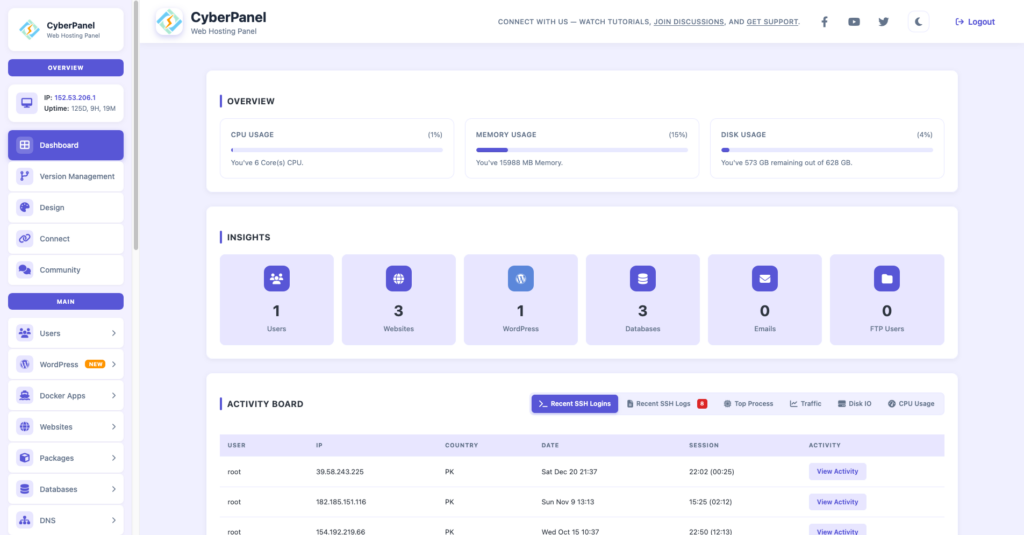
CyberPanel is a comprehensive and feature-rich web hosting control panel based on OpenLiteSpeed. It enables users to manage their websites easily, get SSL certificates, make backups, handle databases, set up emails, and administer the server.
Today, developers and system administrators who use living Linux distros find CyberPanel as a handy addition to their Linux toolkit that allows them to integrate the most advanced server technologies of the present day, even while they cherish the revolutionary milestones achieved by the Mandrake project.
Conclusion
Mandrake Linux was a significant player in the Linux democratization process. Thanks to its straightforward installer, graphical setup tools, great integration with KDE, and high emphasis on user comfort, it turned Linux from a small community operating system into a fully functional desktop environment. Even though the original distribution has been transformed and split into various new community-based ones, Mandrake’s influence remains evident in the latest Linux developments. Learning about Linux Mandrake and its versions offers a great perspective on the history of the modern desktop Linux ecosystem.
Do you want to learn about the fascinating story of Linux? Take a deep dive into the Mandrake Linux distribution and see how its features and concepts are still influencing today’s millions of Linux users.
FAQs
What Replaced Mandrake Linux?
Mandriva Linux succeeded Mandrake, and later community projects such as Mageia and OpenMandriva carried forward much of its development philosophy.
Why Is Mandrake Linux Still Historically Important?
Mandrake helped popularize desktop Linux by introducing easier installation, graphical management tools, and improved hardware support, influencing many modern distributions.
Why Was Mandrake Linux Renamed?
MandrakeSoft merged with Conectiva in 2005, leading to the distribution being renamed Mandriva Linux.