
On this page
Growing worries about online privacy; numerous internet users desire a more secure method of using the internet while safeguarding their information against being tracked; VPN services are critical in this area.
VPN services are essential for Linux users, as many experts and developers rely on Linux as their primary operating system. Proton VPN Linux, a viable VPN service geared toward service users with privacy in mind, is a top choice.
Proton does provide Linux users with native support, both through command line tools (CLIs) and graphical clients. So, anyone wanting to use Proton VPN Linux can do so in a few simple steps, which will give you secure internet access quickly.
This article will show you what Proton VPN does for IP address (i.e., via Linux), how to install Proton VPN for Linux, and how the Proton Plus level helps with privacy and speed.
What is Proton VPN?
Proton VPN is a virtual private network (VPN) developed by Proton AG that is meant to provide privacy and confidentiality for users online. It also encrypts the user’s internet traffic and prevents tracking of the user’s browsing activity.
Proton VPN offers many key features that include:
- Strong encryption protocols
- No-log privacy policy
- Secure core servers
- Global network of VPN servers
- Open-source applications
Proton VPN is commonly used by users who want to protect their privacy.
Benefits of Using Proton VPN on Linux
Users who use Linux are more likely to utilize open-source, transparently secure tools.
Reasons to use Proton VPN on Linux:
Strong Protection of Privacy
Your internet activity is protected through the use of strong encryption when you are connected to our VPN.
Officially Supported on Linux
We provide an Ubuntu-based client specifically for our VPN.
Open Source Software
The codebase for our software is an open-source application.
Global VPN Server Locations
Users can connect to our VPN from thousands of locations worldwide.
With all these features and benefits, Proton VPN for Linux has become a viable option for privacy.
Proton VPN Linux Installation
Installing Proton VPN Linux is simple on most distributions.
Example installation for Ubuntu or Debian systems:
sudo apt update
sudo apt install proton-vpn-gnome-desktop
After installation, launch the Proton VPN application from your system menu.
Log in with your Proton account and connect to a VPN server.
Expected output example when connecting through CLI:
Connecting to Proton VPN server...
Authentication successful
VPN connection established
Once connected, your internet traffic becomes encrypted.
Proton Linux Command Line Setup
Some Linux users prefer the terminal version.
Example command to log in:
protonvpn-cli loginConnect to the fastest server:
protonvpn-cli connect --fastestDisconnect from VPN:
protonvpn-cli disconnectThe CLI version makes Linux Proton ideal for servers and automation scripts.
Proton Plus Linux Plan
| Feature | Free Plan | Proton Plus |
|---|---|---|
| Server locations | Limited | Global access |
| Streaming support | No | Yes |
| VPN speed | Moderate | High speed |
| Secure Core | Limited | Full access |
| Simultaneous devices | Few | More devices |
Proton VPN Linux’s Security Features
The primary reason for selecting Proton VPN Linux is security.
Proton vpn’s key security features include:
AES 256 encryption
Strong encryption protects your internet traffic.
Multi-hop secure core architecture
Traffic goes through one or more secure servers.
Kill switch
Prevents leakage of data when the VPN is disconnected.
DNS Leak Protection
Keeps your real IP address hidden.
These features make Proton VPN Linux a powerful tool for maintaining privacy.
Proton VPN Linux’s Most Popular Use Cases
Linux users have multiple reasons to choose Proton VPN.
Most common use cases for proton vpn include the following:
- Using public Wi-Fi securely
- Bypassing geographic restrictions
- Securing remote working environments
- Maintaining browsing privacy
Linux users, including developers, researchers, and privacy-focused individuals, will use proton vpn primarily because of the strength of its security architecture.
The Advantages Of Using CyberPanels For VPN Server Environments
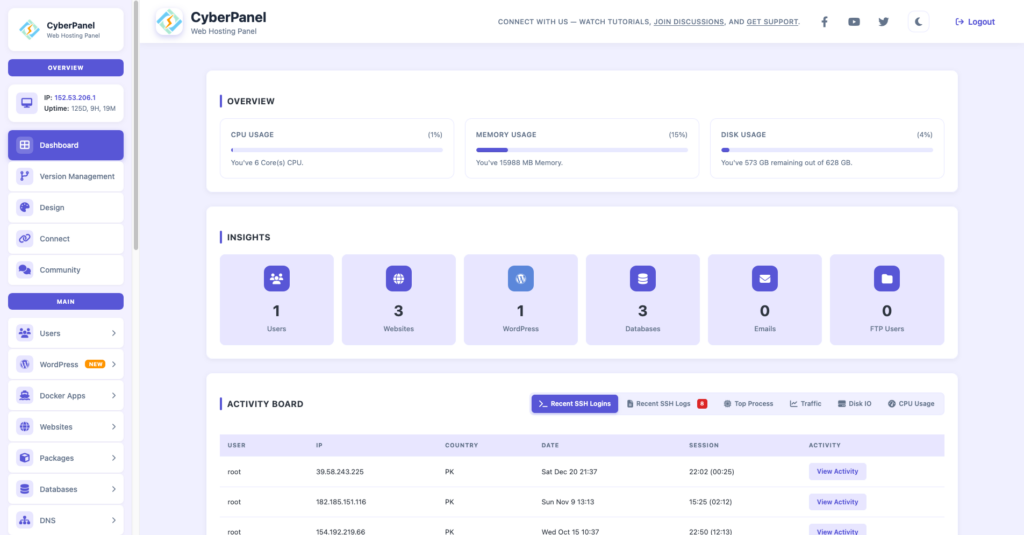
CyberPanel is a free and open-source web hosting control panel. Although Proton VPN runs under Proton’s control (infrastructure), the actual Linux Servers that host the Proton VPN Client and the services it has are typically managed through countless independent Linux Administrators.
CyberPanel provides the following capabilities to assist Linux Administrators in the management of the aforementioned environments:
- Domain Management
- DNS Configuration
- SSL Certificate Management
- Firewall Control
- Monitoring Servers
Although CyberPanel is not the software that runs the Proton VPN Clients, it assists Linux Administrators in simplifying the administration and management of their Linux Servers and associated infrastructure.
Common Proton VPN Issues When Running On Linux
A few Proton VPN Users have experienced minor problems when installing their Proton VPN Client.
Here are a few common examples of those minor problems:
Missing Dependencies
Make sure that you have the required packages installed before starting the installation process.
Compatibility With Distribution
Some of the older distributions do not provide support for the current versions of the Proton VPN Client software.
Firewall Interference
If an existing firewall rule prevents the user from being able to connect to the Proton VPN Client.
Most issues can be resolved with simple configuration changes.
Final Thoughts!
Proton VPN is an excellent choice for protecting your privacy on the internet with high encryption, open-source software, and official support for Linux.
Proton VPN is a powerful service for secure browsing and providing privacy with both free and paid (Proton Plus) options.
Install Proton VPN on your Linux device today, connect to a trusted and secure server, and begin using one of the best tools available to protect your internet activity.
FAQs
Does Proton VPN degrade my internet connection on a Linux device?
VPN encryption may affect your connection by causing a small reduction in its speed. Use of a Proton Plus server can help to eliminate the small reduction in connection speed.
Can I get Proton VPN at no cost on a Linux computer?
You can use the free version of Proton that supports a very limited number of servers and lower speeds.
Is Proton VPN compatible with every distribution of Linux?
Although many different distributions, such as Ubuntu, Debian, and Fedora, have Proton VPN supported, compatibility with any smaller distributions may be limited.