
On this page
If you test OS or kernels directly on hardware, it can be risky and slow. It can break your system, lose data, or spend hours setting up environments. This is when virtualization comes up as a smarter approach. And this is where QEMU Linux steps in. You can run full virtual machines, test kernels, and simulate different architectures with QEMU without touching your main systems. You can use Linux QEMU for kernel testing and Arch Linux QEMU for lightweight virtual environments.
In this guide, we will learn how QEMU works on Linux, how to run kernels, and how to manage virtual images effectively.
Let’s get started!
What is QEMU in Linux?
QEMU is a powerful virtualization tool. With QEMU Linux, you can:
- run virtual machines
- emulate different CPU architectures
- test OS
- develop and debug kernels
You can use Linux QEMU for the following:
- OS Testing
- kernel development
- embedded system simulation
- cloud image testing
How to Set Up Arch Linux QEMU?
As Arch is lightweight and flexible, you should use Arch Linux QEMU. Here is how to set it up:
Install QEMU on Arch Linux
sudo pacman -S qemu virt-managerStart Virtualization Service
sudo systemctl enable libvirtd
sudo systemctl start libvirtdAfter that, you will get QEMU installed. Moreover, virtual machines will be ready to run, and a GUI will be available via virt-manager.
How to Run a Linux Kernel vmlinux in QEMU?
When you run a kernel directly, it is useful for development. Here is the command example:
qemu-system-x86_64 \
  -kernel vmlinux \
  -append "console=ttyS0" \
-nographicThis command loads the Linux kernel (vmlinux), sets console output, and runs without the GUI.
Output:
- kernel boot logs displayed
- system starts in terminal
This is a common method for kernel testing.
QEMU IMG Linux Explained
QEMU img Linux refers to the qemu-img tool used for managing disk images.
Create Disk Image
qemu-img create -f qcow2 disk.img 10GConvert Image Format
qemu-img convert -f raw -O qcow2 disk.raw disk.qcow2Check Image Info
qemu-img info disk.imgWhy It Matters
- manage virtual disks
- convert formats
- optimize storage
QEMU on Linux lets users run different architectures without touching the main machine.
Benefits of Using QEMU on Linux
Safe Testing
No risk to the host system.
Multi-Architecture Support
Run ARM, x86, and more.
Kernel Development
Test kernels easily.
Flexibility
Highly customizable setups.
Common Mistakes to Avoid Missing KVM Support
KVM must be enabled for speed gains.
Wrong Kernel Parameters
Bad boot settings might stop the VM from starting.
Poor Resource Allocation
Lack of memory or CPU limits performance.
Ignoring Disk Format
Select qcow2 – it handles changes better over time.
QEMU vs VirtualBox
| Feature | QEMU | VirtualBox |
|---|---|---|
| Performance | High (with KVM) | Moderate |
| Flexibility | Very High | Limited |
| GUI | Optional | Built-in |
| Use Case | Advanced users | Beginners |
Role of CyberPanel in Virtual Environments
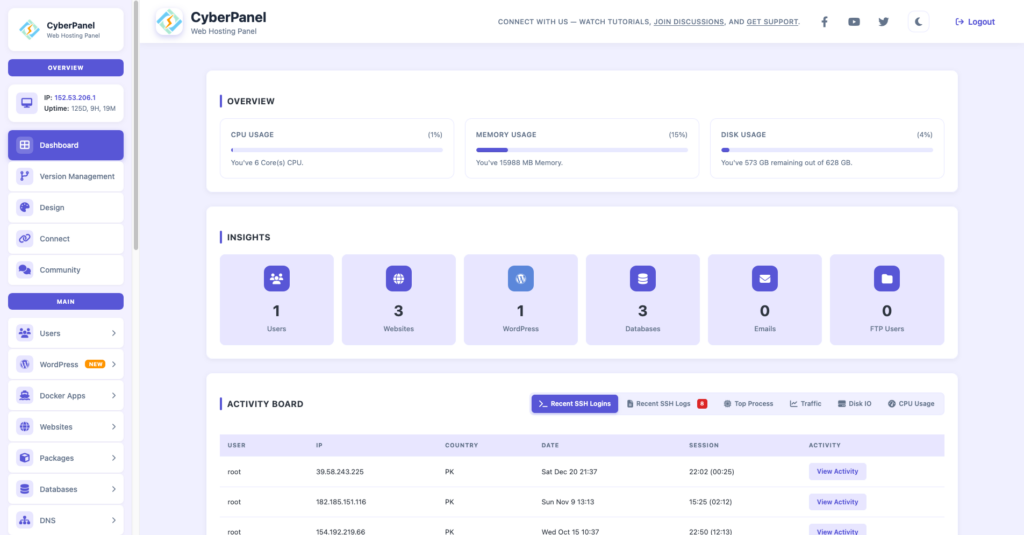
CyberPanel is a free and open-source web hosting control panel. It can be used inside virtual machines. It helps with:
- managing websites
- configuring domains
- SSL setups
- server monitoring
Conclusion
To sum up, QEMU Linux is a powerful tool for developers, testers, and system administrators. If you have to run full virtual machines, test kernels, or manage disk images with QEMU img Linux, it provides super flexibility.
With Linux kernel in QEMU you can have advanced system development. Moreover, Arch Linux QEMU gives you a lightweight and efficient environment.
Install QEMU today, create your first virtual machine, and start experimenting with kernel testing!
FAQs
What is the difference between qcow2 and raw images?
qcow2 supports compression and snapshots, while raw offers better performance but less flexibility.
Can I run Windows on QEMU Linux?
Yes, you can run Windows on QEMU Linux as a virtual machine.
Can QEMU run without hardware virtualization?
Yes. QEMU can run without KVM, but performance will be slower.
Thanks for the detailed overview of QEMU Linux 2026— it’s exciting to see how the platform is evolving to better support kernel development and image management. The integration of tools like Docker Manager and SSL handling really highlights a shift toward more streamlined, secure workflows for developers. It’s clear that the focus is on making complex infrastructure more accessible without sacrificing control or performance.