On this page
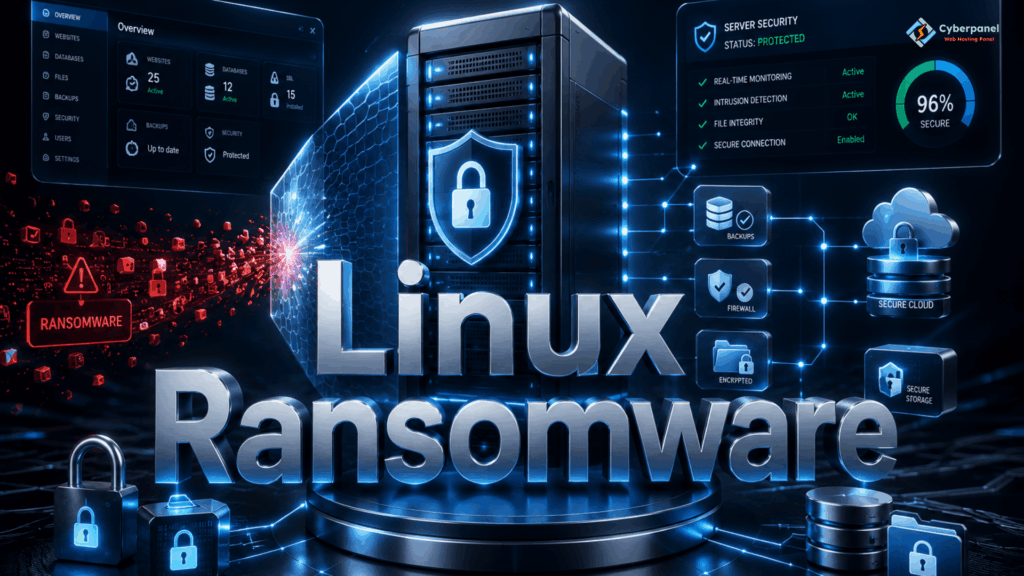
Linux has always been associated with security and reliability. Linux drives web servers, cloud platforms, enterprise software, and thousands of websites. However, despite being considered one of the most secure OS, Linux is not protected from ransomware attacks. And this is a problem because attackers are now targeting Linux-based systems more and more often.
Linux ransomware is designed to encrypt files or restrict access to critical data. After the attack, the hacker demands a ransom from the victim in exchange for the decryption key to gain access to the data again.
Linux ransomware is not as common as Windows ransomware. However, attackers are now targeting Linux-based systems because they hold more significant value. A single Linux server can contain web applications, databases, and customer data. Thus, encrypting such data can cause more damage than double the ransom.
If you are wondering how Linux ransomware works, what makes Linux systems a target for ransomware, and how to protect your Linux-based system, this guide is for you.
Linux Ransomware: What You Need to Know
Linux ransomware is malicious software that encrypts files or restricts access to critical data on Linux-based systems. After encryption, the hacker demands ransom from the victim in exchange for the decryption key.
Linux ransomware attacks are becoming more common as attackers are targeting enterprise Linux systems. Such attacks are highly damaging as a single Linux server can host hundreds of websites and web applications.
Linux ransomware can encrypt various data depending on the target. Thus, Linux ransomware can encrypt:
- Website data
- Customer databases
- Virtual machines
- Backup data
- Shared storage
- Business data
- Configuration files
Without proper backups, the encrypted data cannot be recovered.
Why Do Hackers Target Linux?
Linux is the most popular OS for cloud servers, web hosting, and enterprise software. Linux-based systems are the backbone of the internet. Many big-name companies use Linux for their cloud platforms and applications.
An attacker only needs to compromise one Linux server, and they will be able to take down hundreds or even thousands of websites and online services.
Such attacks are especially destructive for businesses that have their data and applications hosted on Linux servers. A successful ransomware attack can lead to the encryption of business data, website data, and databases. And with no backups, the business will be forced to pay the ransom.
Linux ransomware can be distributed in various ways. However, ransomware attacks on Linux servers are not as common as ransomware attacks on Windows workstations. Thus, Linux ransomware is usually distributed through compromised servers.
Weak SSH Credentials
Many Linux servers use the Secure Shell protocol to secure remote access. However, many system administrators use weak passwords for SSH, and attackers can brute-force their way into the system.
Unpatched Software
Attackers can take advantage of known vulnerabilities in unpatched software. Thus, it is essential to ensure that all software on the Linux server is up to date.
Vulnerable Web Applications
Many Linux servers host websites and web applications. If the applications have vulnerabilities, attackers can use them to gain unauthorized access to the system.
Stolen Credentials
In some cases, attackers can steal credentials from the system administrator and use them to compromise the system.
Misconfigured Services
Some services on the Linux server have misconfigured settings, allowing attackers to gain unauthorized access.
Once the attacker gains access to the system, they will use it to encrypt the data on the server. Also, the attacker might disable the server’s backup functionality to prevent the victim from restoring the data. After encryption, the attacker will leave a ransom note for the victim.
Linux Ransomware Attack Signs
If the Linux-based system is compromised by ransomware, the attack signs will depend on the attack stage. However, there are some ransomware attack signs that indicate that something is wrong with the system.
The most common ransomware attack signs are:
- Files are inaccessible
- Files have new extensions
- The system has ransomware notes
- The CPU or disk usage is at maximum
- The system has no backups
- There are suspicious log entries about the admin account
- The system has unauthorized processes running
- The server has unusual network connections
- The system has unexpected service failures
If some of these ransomware signs are present, the Linux system should be taken offline to prevent further damage.
How to Prevent Linux Ransomware
Linux ransomware protection is critical for enterprise Linux servers. The protection against ransomware requires a multi-layered approach because there is no single solution that can prevent all ransomware attacks. Below are some ransomware protection measures that can help secure Linux-based systems.
Update the Software
Attackers can use known software vulnerabilities to compromise the system. Thus, the software should be updated to ensure that all security issues are resolved.
Strong Authentication
Strong authentication is one of the best ways to protect Linux systems from ransomware. The system administrators should use SSH keys to access the system instead of passwords. It is also essential to configure multi-factor authentication for the admin accounts.
Limit Root Access
The root account should only be used for administrative tasks. System administrators should use a standard account for day-to-day activities.
Configure the Firewall
The Linux server should only allow traffic on the required ports. It is essential to deny all unauthorized traffic.
Secure the Remote Access
The remote access to the system should be limited to trusted IP addresses. It is also essential to disable unnecessary remote services such as SSH.
Scan for Vulnerabilities
It is critical to regularly scan the system for vulnerabilities. Vulnerability scanning will help identify weak points that can be used by attackers to compromise the system.
Monitor the Login Activity
The system’s login activity should be regularly monitored to detect unauthorized login attempts.
Create Backups
Backups are one of the best ransomware protection measures. The system administrator should configure regular backups that will store the data in secure locations. It is critical to have daily, offsite, and offline backups to ensure that the data can be recovered after a ransomware attack.
Best Security Tools for Linux
Several tools can strengthen Linux security.
| Tool | Purpose |
|---|---|
| Fail2Ban | Blocks repeated login attempts |
| ClamAV | Malware scanning |
| UFW | Firewall management |
| AIDE | File integrity monitoring |
| Lynis | Security auditing |
Linux Ransomware vs Windows Ransomware
| Linux | Windows |
|---|---|
| Often targets servers | Often targets desktops |
| Common entry through SSH | Common entry through phishing |
| Focuses on business infrastructure | Focuses on user devices |
| Usually affects hosting environments | Usually affects office environments |
| Frequently attacks cloud workloads | Frequently attacks local workstations |
Can You Recover Without Paying?
Sometimes. It depends on the combination of several circumstances:
- Do you have backups?
- What ransomware family was used?
- Are there any free decrypters for this family?
- How long was the attack not noticed?
Security experts usually do not recommend paying off ransomware authors since there is no guarantee you will recover your data, and you are financially supporting criminals. Instead, it is better to have an incident response plan that will guide you through the steps required to mitigate and recover from ransomware attacks. Let’s discuss best practices for long-term ransomware protection.
Tips for Long-Term Ransomware Protection
The best way to protect your Linux servers from ransomware is to ensure system security through regular maintenance. It is essential to develop the proper security habits and have a set of procedures you go through to check if your system is not vulnerable. For instance, you can:
✓ Keep the server up to date
✓ Review permissions
✓ Uninstall unnecessary applications
✓ Check the server logs
✓ Test backups
✓ Do regular security audits
✓ Educate yourself and your team on the latest ransomware threats
These measures will greatly reduce your chances of getting infected with ransomware. CyberPanel helps you maintain OS security since it allows you to create and manage SSL certificates, backups, users, and servers. This way, you spend less time dealing with Linux server maintenance and have more time for other activities, such as regular log audits and updates.
How Can CyberPanel Help?
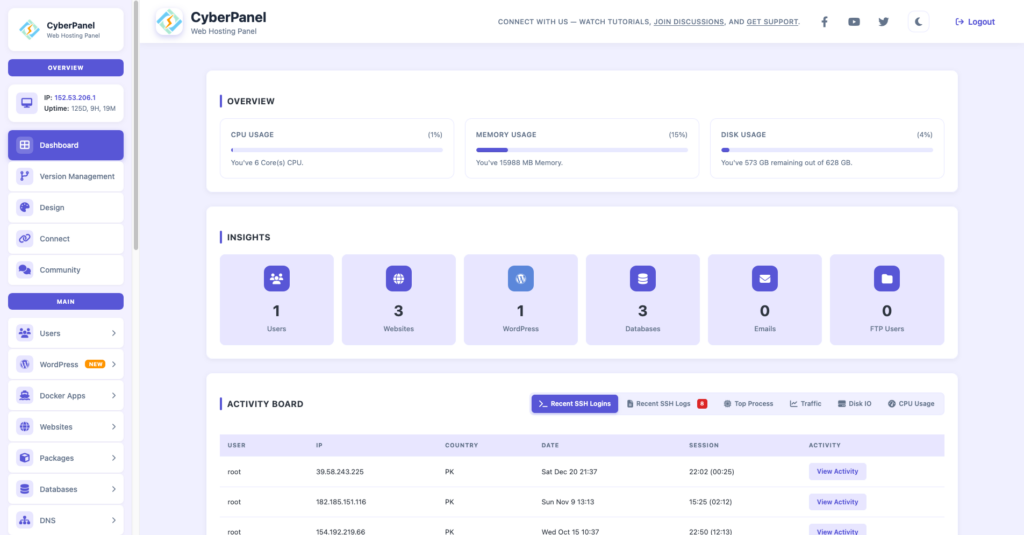
As mentioned above, CyberPanel is not a tool that directly protects Linux servers from ransomware. It’s a free and open-source web hosting control panel. It helps to establish proper server security habits and spend less time on mundane tasks. You can use CyberPanel’s dashboard to control and monitor managed websites, certificates, backups, users, and other settings without needing to type long and complicated terminal commands.
Summary
While Linux is a secure OS, it is crucial to implement the proper security measures to protect your system from ransomware attacks. Remember that in most cases, attacks are successful due to human error. That is why it is vital to update your system, take regular backups, monitor your logs and permissions, and adhere to other security best practices.
Review your Linux server security today and close potential vulnerabilities before attackers have the opportunity to exploit them!
People Also Ask
Is Linux ransomware becoming more common?
Yes. As Linux continues to dominate cloud computing, web hosting, containers, and enterprise infrastructure, attackers increasingly develop ransomware designed specifically for Linux environments.
Should businesses test ransomware recovery plans?
Absolutely. Regular recovery drills help verify that backups work correctly and ensure teams know how to respond quickly during an actual incident.
Can Linux ransomware spread across a network?
Yes. If attackers gain access to shared storage, network file systems, or connected servers, ransomware may encrypt data across multiple devices depending on permissions and network design.