On this page
Do you want to deploy your application? But now the problem is that you are torn between two options. One of the most confusing dilemmas these days is Kubernetes vs serverless. One offers you total control. The other one promises that you will do no management at all.
Most developers go for Kubernetes and end up with a feeling of being overwhelmed. Some select serverless, and discover the limits they hadn’t anticipated. And when you bring Docker vs Kubernetes vs serverless into the discussion, it becomes more confusing than ever. This road map helps you to see through the fog.
After reading this, you will get:
- Exactly what is different between serverless and Kubernetes?
- How does containerization work?
- Which option is best for each situation?
- What are the most popular opinions of developers in the debates about Kubernetes vs serverless on Reddit?
Just straightforward, useful knowledge. Let’s go!
Kubernetes vs Serverless: What Is It?
It is the discussion themes regarding the two different programming models. Kubernetes works with containers. Serverless executes code without the user being responsible for the servers.
In Kubernetes:
- You control the infrastructure
- You push containers
- You decide the scaling and networking
In Serverless:
- Cloud provider handles everything
- You run functions or small parts of services
- Auto scaling is already available
‘Containerization Serverless vs Kubernetes’ is a key concept.
- Kubernetes = built around containers (like Docker)
- Serverless = abstracts containers away
With Kubernetes, you package apps into containers. With serverless, you just deploy code.
Docker vs Kubernetes vs Serverless
| Feature | Docker | Kubernetes | Serverless |
|---|---|---|---|
| Purpose | Container runtime | Container orchestration | Code execution |
| Scaling | Manual | Automatic (configurable) | Fully automatic |
| Control | High | Very high | Low |
| Complexity | Low | High | Very low |
| Cost Efficiency | Medium | High (at scale) | High (small workloads) |
Kubernetes vs Serverless: Major Differences
Now, let’s dive deeper to understand the major differences in Kubernetes vs Serverless:
1. Control vs Simplicity
Kubernetes offers the user a chance to control every little detail. Serverless programming aims to hide all those details.
If you want customization, go for Kubernetes. And if you want speed, Serverless is the best option.
2. Scaling
Kubernetes scaling is not a simple matter of clicking a button. Serverless can scale itself for you. Serverless wins for simplicity.
3. Cost
Kubernetes is more suitable for long-running applications. Serverless is more suitable for short and event-driven tasks.
4. Performance
Kubernetes offers performance that you can rely on. Serverless might suffer from delays when a new instance has to start up.
Kubernetes vs Serverless Reddit Insights
Developers often share their views and practical insights on Reddit. Here are some common patterns:
- Beginners prefer serverless for quick deployment
- Large systems move to Kubernetes for control
- Serverless becomes expensive at scale
- Kubernetes feels complex but powerful
It means there is no ‘best option’. It always depends on your use case.
When to Choose Kubernetes?
You should choose Kubernetes if you:
- Are running microservices
- Want to have full control over infrastructure
- Your application is always running
- You wish to implement custom scaling logic
When to Choose Serverless?
You should choose Serverless if you:
- Are building APIs or event-driven apps
- Look for fast deployment
- Do not want to manage servers
- Your workload goes up and down in an unpredictable manner
Common Mistakes to Avoid
Here are some common mistakes you should avoid:
1. Going for Kubernetes Too Fast
It’s adding complexity that you might not require.
2. Deploying Serverless for Heavy Workloads
Costs may spiral rapidly.
3. Forgetting About Scaling Requirements
Decide based on anticipated growth, not just present demands.
The Use of CyberPanel in Both Approaches
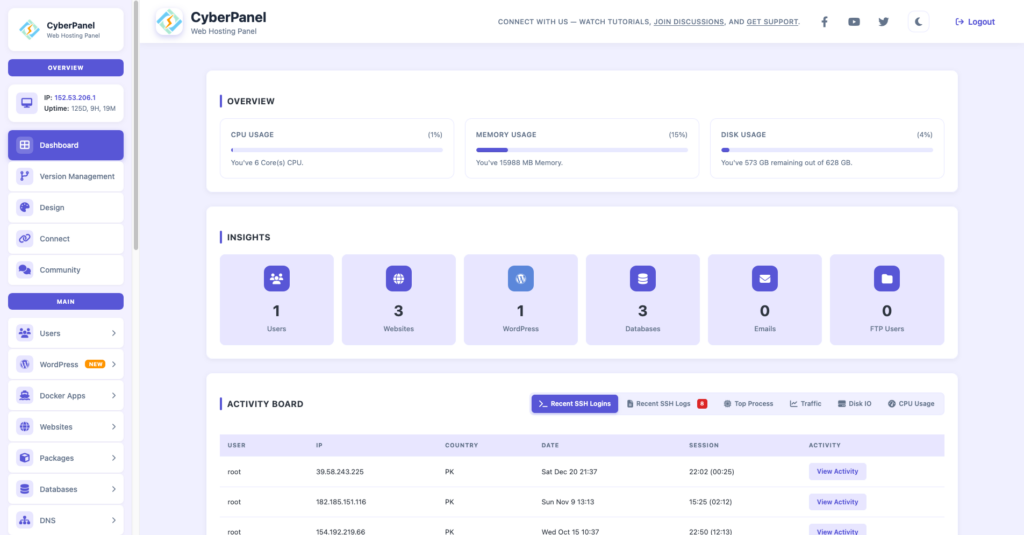
CyberPanel is a free and open-source web hosting control panel. It will back you up with your deployment whichever way you decide. With Kubernetes
- Domain and routing management
- Acts as a reverse proxy
- Performance enhancement with LiteSpeed Serverless
- Hosting frontend apps
- API connecting
- Easy DNS management
You can use CyberPanel to manage the web layer while your backend is running somewhere else.
Conclusion
The Kubernetes vs Serverless question isn’t one of deciding to have one or the other. It’s a matter of deciding what suits your system best. Kubernetes offers control and flexibility. Serverless offers speed and simplicity.
Determine your case. Only then select the tool that buttresses it. Make your decision today. Develop a mini production using
Kubernetes or serverless. Try it, analyze it, and confidently scale.
FAQs
Can I use Docker without Kubernetes?
Yes. Docker can run containers without orchestration.
Is serverless replacing Kubernetes?
No. Both solve different problems and often work together.
Is Kubernetes better than serverless?
Not always. Kubernetes offers control, while serverless offers simplicity.