On this page
Producing music on Linux means that this question has likely popped into your mind from time to time. With a huge global user base, FL Studio in Linux is clearly one of the most acclaimed digital audio workstations. Its unique pattern-based workflow, user-friendly piano roll, and wide variety of plugins have made it a favorite DAW for millions of music producers worldwide, covering all genres from hip hop and electronic to film scoring and lo-fi.
Sounds familiar, right? You land on the FL Studio download page, and the choices are just Windows and macOS. No sign of Linux. That, of course, hurts when it’s a community that is famously one of the most technically skilled groups worldwide.
The reality is much more complex than a straightforward yes or no answer. FL Studio working on Linux is something that you can do unofficially, not flawlessly, but truly and quite practically for many producers. Here we even tell you step by step: what works, what doesn’t, how to install, and what your alternatives are if installation isn’t the right path for your setup.
The Reality: Does FL Studio Officially Support Linux?
No. Image-Line, the Belgian company behind FL Studio as of 2026, has not produced and not even planned to release any Linux version of the software. The program is only available for Windows and macOS.
That has been the case for quite some time. Linux users have kept on pushing for native support, and Image-Line has recognized the desire without giving a commitment on the timeline or even a definitive answer. The software is highly dependent on Windows APIs, mainly in areas for audio routing and ASIO driver support, making a native Linux port a major engineering project rather than a simple recompilation.
However, what Image-Line has really done is something that should be highly appreciated. They have openly discussed. In reality, FL Studio runs quite well on Wine, the Windows compatibility layer for Linux, and their official support docs do not even discourage this method.
| Platform | Official Support | Stable Experience |
|---|---|---|
| Windows 10 / 11 | ✅ Full | ✅ Yes |
| macOS 12+ | ✅ Full | ✅ Yes |
| Linux (Native) | ❌ No | ❌ No |
| Linux (via Wine) | ⚠️ Unofficial | ⚠️ Mostly Yes |
| Linux (via VM) | ⚠️ Unofficial | ❌ Performance Issues |
| ChromeOS (Linux) | ⚠️ Unofficial | ⚠️ Limited |
What You Need Before You Begin
Before jumping into the installation process, it is important to understand what your system needs. Running FL Studio through Wine is not plug-and-play, and going in without preparation leads to frustration.
System Requirements
| Component | Minimum | Recommended |
|---|---|---|
| RAM | 4 GB | 8 GB or more |
| CPU | Dual-core 2 GHz | Quad-core 3 GHz+ |
| Storage | 4 GB free | 10 GB+ free |
| Audio Interface | Any ALSA device | ALSA or JACK setup |
| GPU | Any | Not critical for FL Studio |
| Linux Distro | Ubuntu 20.04+ / Fedora 36+ | Ubuntu 22.04 LTS |
| Wine Version | Wine 7.0+ | Wine 8.0+ or Wine Staging |
How to Install FL Studio in Linux?
If you are looking to install FL Studio in Linux, you must be here for this section mainly. Here we are going to show you the method of using Wine plus Winetricks to make a pure Windows environment inside Linux, where FL Studio can run smoothly.
Make sure to perform each step thoroughly. The major cause of failed installations is rushing this process.
Step 1: Install Wine on Your Linux Computer
Wine is the base of this entire arrangement. Just open your terminal and execute these commands according to your distribution.
On Ubuntu / Debian:
sudo dpkg --add-architecture i386
sudo apt update
sudo apt install wine wine32 wine64 libwine libwine:i386 fonts-wineOn Fedora:
sudo dnf install wineOn Arch Linux / Manjaro:
sudo pacman -S wineAfter installation, verify Wine is working:
wine --versionYou should see a version number returned. If you do not, revisit the installation step before proceeding.
Step 2 — Install Winetricks
Winetricks is a helper script that makes it significantly easier to install Windows components and libraries that FL Studio depends on. Without it, you would need to install each dependency manually.
sudo apt install winetricksOr download it directly:
wget https://raw.githubusercontent.com/Winetricks/winetricks/master/src/winetricks
chmod +x winetricks
sudo mv winetricks /usr/local/binStep 3 — Create a Clean Wine Prefix
A Wine prefix is an isolated Windows environment. Creating a dedicated one for FL Studio keeps it separate from any other Windows software you run through Wine, which reduces conflicts significantly.
bash
WINEPREFIX=~/.fl_studio_wine WINEARCH=win64 winecfgThis command opens the Wine configuration window. In the configuration window, set the Windows version to Windows 10 and click OK.
Step 4 — Install Required Windows Components
FL Studio requires several Windows runtime components to function. Use Winetricks to install them into your FL Studio prefix:
WINEPREFIX=~/.fl_studio_wine winetricks corefonts vcrun2019 dotnet48This process takes several minutes. Let it complete without interruption. You may see several installation windows appear and close automatically — that is expected behavior.
Step 5 — Download the FL Studio Installer
Go to the official Image-Line website and download the latest FL Studio installer for Windows:
https://www.image-line.com/fl-studio-download/
Save the .exe installer file to your Downloads folder. Always download from the official source. Never download FL Studio installers from third-party sites — the risk of receiving a modified or malicious file is significant.
Step 6 — Run the FL Studio Installer Through Wine
Now run the installer using your dedicated Wine prefix:
bash
WINEPREFIX=~/.fl_studio_wine wine ~/Downloads/fl_studio_installer.exeReplace fl_studio_installer.exe with the actual filename of the installer you downloaded. The FL Studio installation wizard will open. Follow it exactly as you would on Windows — accept the license agreement, choose your installation directory, and let the installer complete.
Step 7 — Launch FL Studio
Once installation is complete, launch FL Studio with the following command:
bash
WINEPREFIX=~/.fl_studio_wine wine ~/.fl_studio_wine/drive_c/Program\ Files/Image-Line/FL\ Studio\ 21/FL64.exeIf FL Studio opens, congratulations, the installation has worked. You will likely want to create a desktop shortcut or application launcher so you do not need to run this command every time.
Audio Configuration: The Most Critical Step
Getting FL Studio to run is easy. Getting the audio to work without issues is a different story, which is where many Linux users run into their bigger problems.
Using FL Studio on Windows calls for you to use ASIO, as they use low-latency for audio.
When using Linux through Wine, you have what comes next two realistic choices:
Option 1 ALSA: Simpler & Less Optimal
ALSA is the default Linux audio system. Wine can pass its audio through ALSA, has been tested with basic usage, and is functional.
It will be higher latency than you’d want for recording or live performance, but it makes a decent kind of beat machine or composer.
For the Wine configuration of your prefix, select the driver as ALSA.
Option 2 JACK: More Complex, Much Better
JACK is a professional audio server that runs on Linux and delivers the low-latency performance demanded by music production.
Although installation is more complex, the results are much improved.
Install JACK:
sudo apt install jackd2 qjackctlUse QjackCtl to configure and start the JACK server, then set Wine to use JACK as its audio driver. FL Studio audio will route through JACK, giving you latency comparable to a proper native installation.
For serious music production on Linux, JACK is not optional; it is the right choice.
Known Issues Running FL Studio on Linux
| Issue | Severity | Workaround Available |
|---|---|---|
| Some VST plugins crash | Medium | Test plugins individually; many work fine |
| High DPI display scaling issues | Low | Adjust Wine DPI settings in winecfg |
| MIDI device recognition inconsistent | Medium | Use JACK MIDI routing |
| Audio dropouts under heavy load | Medium | Increase JACK buffer size |
| Video rendering features broken | High | No reliable workaround currently |
| Some skins / themes render incorrectly | Low | Use default theme |
A major drawback is the video rendering limitation. In case your workflow includes the export of video via the FL Studio video player feature, running Linux through Wine does not present a fitting environment for that particular use case at the moment.
When it comes to just audio production, making beats, mixing, mastering, and writing songs, the experience is feasible and, to several producers, quite enjoyable.
Best Native Linux Alternatives to FL Studio
If you find the installation of FL Studio in Linux through Wine too unstable for your workflow, or if you simply want a native solution, what comes next, DAWs are well worth your consideration:
LMMS (Linux MultiMedia Studio)
If you are a Linux user looking for something that mirrors FL Studio the most closely, LMMS is probably your best bet. Besides being free and open-source, it is also a faithful imitation of FL Studio’s pattern-based approach. The beat editor, piano roll, and step sequencer will make new FL Studio users feel at home. It does not have as many features as FL Studio, but it is native, stable, and continues to be developed.
Ardour
Ardour is a robust DAW, and it supports Linux natively without compromises. Its primary focus is on recording and editing audio, unlike beat production; Yet, it has much improved its MIDI features lately. So, if your projects incorporate recording live instruments with programmed elements, you should definitely check out Ardour.
Bitwig Studio
Bitwig is, without doubt, the most attractive native Linux DAW on the market in 2026. It runs on a very modern modular architecture, comes with amazing MIDI support, and the workflow is very appealing to electronic music producers. Since it is a paid application, you have to pay for it, but still, it is the closest thing to a professional, polished native Linux DAW that one can get nowadays.
Reaper
There is a Linux version of Reaper, which is unofficial but as stable as the official versions of Windows and Mac that professionals have been using day by day. It’s an extremely lightweight, powerfully customizable, and very affordable once you weigh it against the feature set it presents to you.
| DAW | Linux Native | Free | FL Studio Similarity | Best For |
|---|---|---|---|---|
| LMMS | ✅ Yes | ✅ Yes | High | Beat making, learning |
| Ardour | ✅ Yes | Partially | Low | Recording, mixing |
| Bitwig Studio | ✅ Yes | ❌ Paid | Medium | Electronic production |
| Reaper | ✅ Unofficial | ❌ Paid | Low | General production |
| FL Studio via Wine | ⚠️ Wine | ❌ Paid | Exact | Existing FL users |
How CyberPanel Relates to Music Producers on Linux?
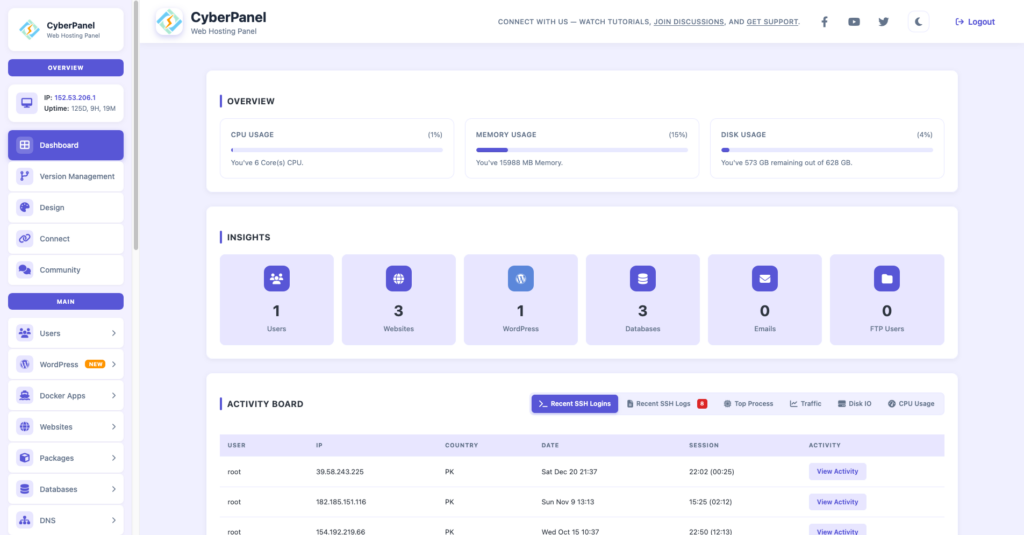
The reality of the situation is that it is much more connected than a first glance would suggest. In fact, more and more independent artists and recording studios are utilizing Linux servers for hosting sample libraries, transferring client files, running private collaboration tools, or remotely backing up project files.
CyberPanel is a control panel for Linux web hosting powered by OpenLiteSpeed. It is one of the best web hosting control panels for servers with self-hosted infrastructure. It supports Ubuntu and AlmaLinux and can be set up within a few minutes. It also gives you a very comprehensive web interface for managing files, databases, emails, and security – you do not have to rely heavily on command-line skills even for advanced tasks.
For a music producer working on Linux, a practical CyberPanel-powered server setup might look like this:
FL Studio project files on local Linux machine → automated backup script → remote Linux server managed via CyberPanel → private file manager accessible from any browser
This gives you version control over your projects, a secure off-site backup, and the ability to share stems or project files with collaborators through a private, password-protected interface — without depending on third-party cloud storage services.
Conclusion
Whether you can run FL Studio in Linux depends solely on the type of Linux user you are and the kind of music producer you want to be.
For example, if you feel comfortable with technology, are ready to spend some time solving problems, want to work mainly on making beats and composing music rather than shooting videos or performing live, and already have an FL Studio license, then using FL Studio on Linux via Wine is a possible and reasonable option. Thousands of music producers are doing it. Plus, this way of working has its support community, there are instructions on the web, and things have much improved since Wine came out.
However, if you are new to Linux, if you rely on certain VST plugins that might not be compatible with Wine, or if your use of FL Studio includes working with features like video rendering, then a Linux DAW, like Bitwig Studio or LMMS, might be a more appropriate suggestion for you. Anyway, 2026 will see the Linux music production scene at a level of strength that it has never enjoyed before.
Whether you decide to run FL Studio in Linux through Wine or go for a native Linux workflow, professional music production entirely within the Linux environment is possible with the tools available.
FAQs
Will all my VST plugins work on Linux through Wine?
Not all of them. Native Windows VST plugins run through Wine with varying results. Many popular plugins work correctly. Others crash or produce no audio. Testing each plugin individually after installation is the only reliable way to know which ones work in your specific setup.
Is LMMS a good enough replacement for FL Studio in Linux?
For users who are new to FL Studio or primarily make beats and electronic music, LMMS is a genuinely capable free alternative. For users who have years of experience in FL Studio and depend on its specific workflow and plugin ecosystem, LMMS will feel limited. Bitwig Studio is a more satisfying replacement for experienced producers willing to invest i
Is the audio quality affected when running FL Studio in Linux through Wine?
Audio quality itself is not degraded. The concern is latency and stability rather than quality. With a properly configured JACK audio server, the latency performance is acceptable for production work, though it may not match a native Windows ASIO setup.
Can I use FL Studio in Linux for professional music production?
Experienced Linux users with properly configured JACK audio setups do use this workflow professionally. It requires more initial setup and technical knowledge than a Windows installation, and some features remain broken. Whether it suits professional use depends on your specific workflow and tolerance for occasional instability.
Can FL Studio run natively on Linux without Wine?
No. As of 2026, Image-Line has not released a native Linux version of FL Studio. Wine is currently the only practical method for running FL Studio in Linux system.