On this page
The command-line interface for Kubernetes allows for limited interaction using only basic functionality. However, real-world application development typically requires automated, integrated, and programmable methods of controlling Kubernetes.
When developing tools or back-end services to work with Kubernetes, you must have a consistent means of accessing Kubernetes programmatically. That’s where Java-based clients become critical.
With Java Kubernetes Clients, developers can create, manage, and monitor Kubernetes resources natively from Java applications. From creating pods to accessing data about the cluster or automating workload operations, the Java Kubernetes client will allow you to do whatever you want within Kubernetes.
Many developers search for Kubernetes client Java examples, want to understand io kubernetes client java, or need the correct dependency for io.kubernetes client-java maven setup.
The rest of this guide will show you how the Java Kubernetes client works, how to set it up with Maven, and how to use it in production systems.
What Is Java Kubernetes Client?
Kubernetes exposes APIs that may be used to manage clusters.
The Java Kubernetes Client is an interface that allows Java applications to interact with these APIs.
Specifically, the Java Kubernetes Client allows you to:
- Create and manage Pods
- Access cluster resources
- Automate deployment of resources
- Monitor workloads
Because of these capabilities, it is easy to integrate Kubernetes with Java-based applications.
io.kubernetes client-java Maven Setup
To use the client, you need to add the dependency in Maven.
Maven Dependency
<dependency>
  <groupId>io.kubernetes</groupId>
  <artifactId>client-java</artifactId>
  <version>18.0.0</version>
</dependency>What This Does
- downloads Kubernetes client library
- adds API support to your project
- enables cluster communication
How to Connect to Kubernetes Cluster
Here is a basic example using kubernetes client java.
import io.kubernetes.client.openapi.ApiClient;
import io.kubernetes.client.util.Config;public class Main {
    public static void main(String[] args) throws Exception {
        ApiClient client = Config.defaultClient();
        System.out.println("Connected to cluster");
    }
}Expected Output
Connected to clusterThis confirms your application can access Kubernetes.
Example: List Pods Using Java Kubernetes Client
import io.kubernetes.client.openapi.apis.CoreV1Api;
import io.kubernetes.client.openapi.models.V1PodList;

CoreV1Api api = new CoreV1Api();
V1PodList list = api.listPodForAllNamespaces(null, null, null, null, null, null, null, null, null, null);

System.out.println("Total Pods: " + list.getItems().size());What This Does
- fetches all pods
- prints total count
- shows real-time cluster data
Benefits of Using the Kubernetes Client Java
When you use the Java Kubernetes client, you have many advantages:
- You can automate your deployment and operations.
- You can integrate your Java applications with Kubernetes.
- You can programmatically manage your cluster.
- You can scale your system through the use of a single large system.
Common Libraries for Kubernetes Java Client
The common libraries for the Kubernetes Java client are:
- CI/CD tools
- Monitoring tools
- Backend services
- Custom dashboards
The Kubernetes client Java library is perfect for developers who are developing cloud-native applications.
Common Mistakes to Avoid
Depending on various factors listed below, the way you use the Kubernetes client for Java will differ greatly. The following are the common mistakes to avoid when using the io.kubernetes client for Java:
- Driver configuration issues: Ensure that your kubeconfig is correctly configured and that you have access to the correct cluster.
- Incorrect client/server version pairs: Ensure that you are using the right driver for your version of your server.
- Missing RBAC roles: Ensure that you have the proper RBAC roles configured in order to access Kubernetes objects.
- Hardcoded credentials: Always use secure authentication mechanisms (i.e., GCP Service Account) or keep your credentials in a secure place (i.e., HashiCorp Vault).
Role of CyberPanel
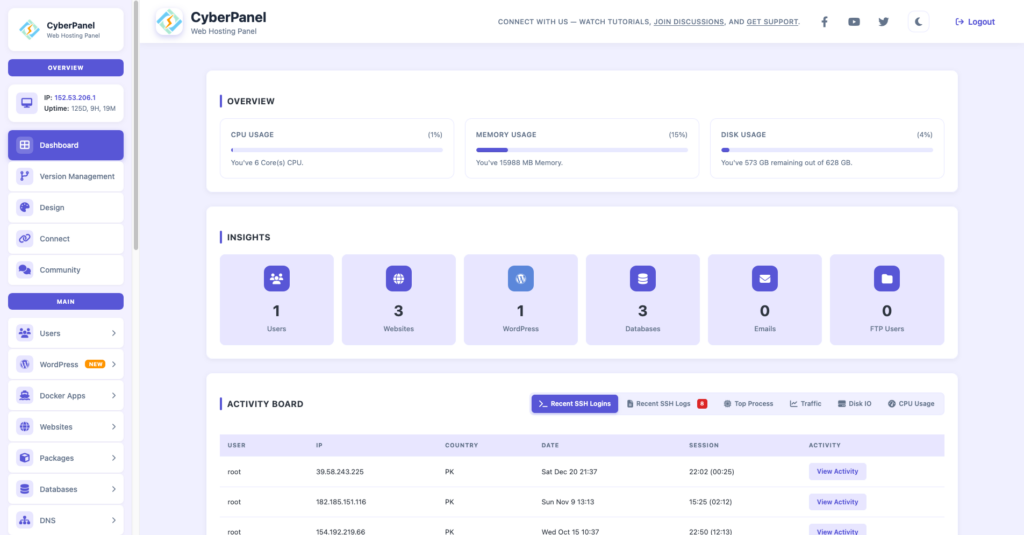
CyberPanel is your free and open source web hosting control panel. It can assist with the following services:
- Managing web applications
- Managing domains and DNS
- Configuring SSL certificates
- Monitoring applications.
As Kubernetes is responsible for the management of your containers, CyberPanel will manage how you host your applications.
Conclusion
To sum up, the Java Kubernetes client will provide you with access to Kubernetes resources and services and allow you to do a wide range of operations, from basic operations such as listing your pods to more complex operations such as managing all your cloud-based services using a single system.
As long as you configure your project using io.kubernetes client-java and understand how the Kubernetes client for Java works, you will have the tools you need to build and deploy scalable applications that will meet your requirements.
Add the Kubernetes Java client to your current project, connect to your Kubernetes cluster, and start automating your Kubernetes infrastructure from your Java code!
FAQs
Is the Kubernetes Java client officially supported?
Yes. It is maintained by the Kubernetes community and supports the full API.
Is it possible to use the Java client outside of a Kubernetes cluster?
Yes, you may use the kubeconfig file from anywhere.
How do you authenticate to Kubernetes via the Java client?
You can authenticate using either a kubeconfig file or token-based method using a service account.