On this page
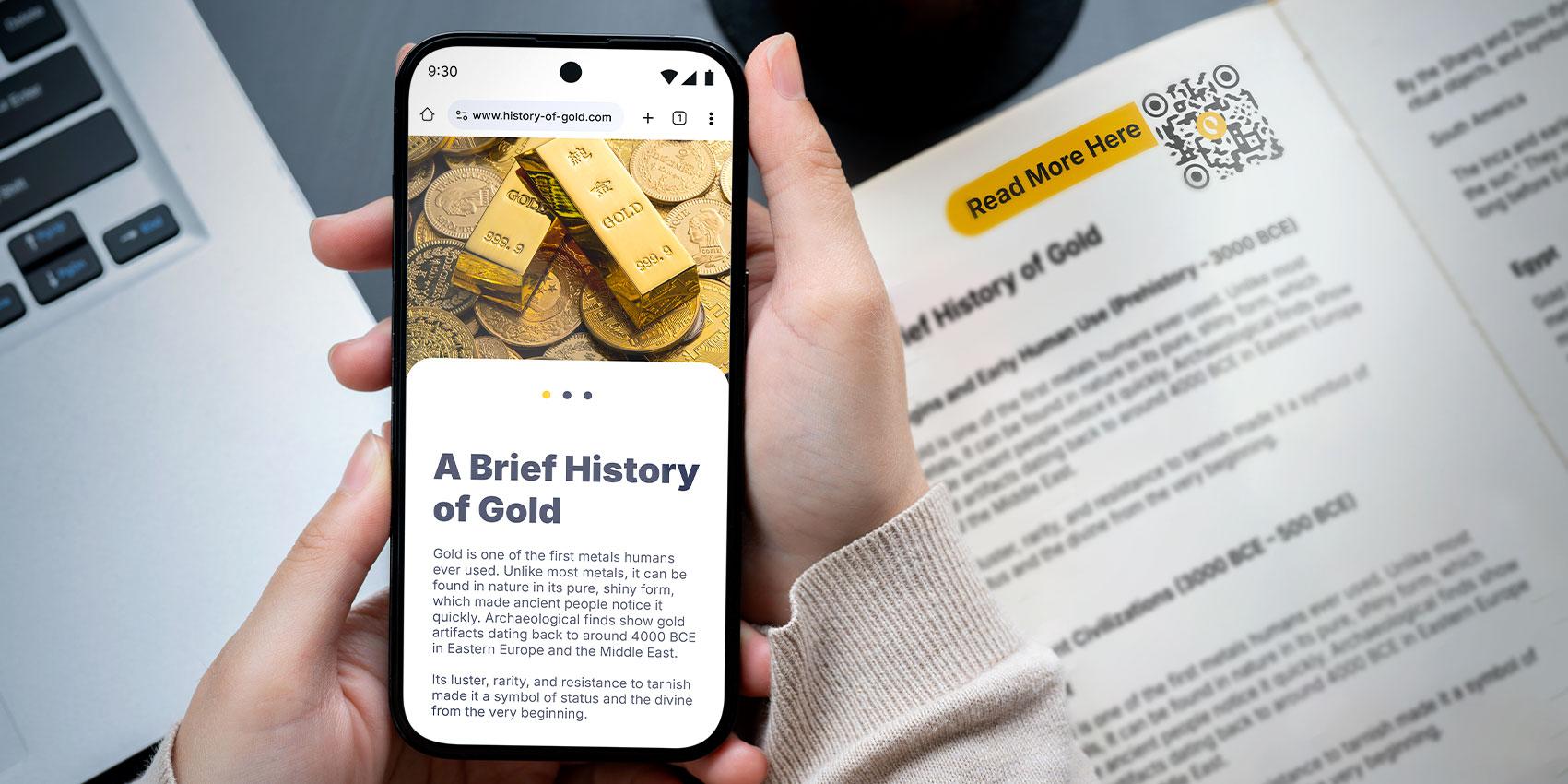
QR codes have been around for over five decades, but it’s only recently that we’ve discovered they’re a convenient means of accessing online information as well (they were previously used only to hold details of automotive parts).
A link QR code stores the web address of any online content. It can include blogs, social media posts, videos, and all else with a URL (Uniform Resource Locator).
According to a QR code statistics report from QR TIGER, 54.33% of all QR codes generated are for web addresses, making it the most popular use of QR technology.
In this article, we will explore practical ways to use QR codes for links and walk you through a step-by-step guide to creating one yourself.
11 applications of QR codes for links
Converting your usual URL into a QR code is highly convenient and practical for both individuals and businesses. They’re useful for almost all situations where you need to share digital content or information.
1. Link to websites and social media pages
One of the most direct ways to use QR codes is to link them to websites. Businesses can easily create a QR code that directs users straight to their homepage or social media profiles. It helps you show users the door to your online content.
Whether you are showing someone your website’s home page or your social media profiles, you can drive traffic to your side of the Internet as easily as sending them the links.
The difference is that you don’t need to know how to contact your users. Instead, you can have the QR code available to scan anywhere, and leave the initiative to them.
2. Link to supplementary resources
What are QR codes used for if not to share important information instantly? That’s why the most popular way of using QR codes always involves information sharing.
QR codes can be embedded with links to additional information that may not be necessary in the moment, but can paint a bigger picture of the topic being discussed. It can be in audio, text, or video format.
For instance, books can include a QR code linked to an educational video online, providing readers with a better visualization and information retention of the topic being covered.
3. Comprehensive food information
A link QR code is also useful for connecting to comprehensive information on food products, which often have limited packaging.
It’s commonly placed beside the nutritional label. This way, consumers will immediately know that they can access additional information about the food on the website by scanning the QR code.
Nestle also integrates QR codes on its food products to provide consumers with information from farm to shelf. Other companies also link it to recipes that consumers can try to make with the ingredient they bought.
4. Medicine information
This may be one of the lesser-known uses of QR codes in everyday life. Medicinal information for prescribed drugs can also be easily added to QR codes.
This information can include usage instructions and safety precautions, as well as details that improve traceability, such as production dates, expiration dates, and batch numbers.
Having these essential details available for patients can help them avoid problems when taking their prescribed medicine and allows them to trace any issues back to their origin when they do arise.
In fact, QR codes were utilized during the COVID-19 pandemic to provide patient education to individuals suffering from diabetes.
5. Device instructions
QR codes can store the web link of online pages containing guides for electronic devices.
For companies and manufacturers, it saves money on printing potentially thousands of pages for the manuals.
For consumers, it makes accessing instructions and additional information easier, as they can always find it in one place: the Internet.
6. Restaurant menus
We know how the dining experience traditionally is. You enter your favorite restaurant, a waiter guides you to your seats, and menus only containing text are handed to you.
However, there is a better way to showcase the restaurant’s offerings, and that is through QR codes.
Businesses in the food and beverage industry, as well as those in hospitality, can link their menus to QR codes, allowing customers to select their meals (complete with photos and a list of ingredients) much faster.
This is also a boon to the business as printing costs can be reduced, and staff won’t have to carry around a stack of menus to every seated table.
7. Digital storage access
Linking a cloud-based storage to a QR code enables anyone to access a large number of files immediately. This, too, has numerous applications in various areas.
For educational purposes, students can download essential school documents, notes, and resources from the linked Google Drive folder.
Meanwhile, offices can use a Dropbox QR code to share documents with their teams and check progress on the go.
8. Loyalty programs
As of 2025, 68% of consumers remain loyal to specific brands despite rising costs and competing businesses.
This loyalty can sustain a brand through any challenge, which is why customer loyalty is a valuable business asset.
You’ll often find brands launching loyalty programs to retain their valued customers.
With QR codes, you can make it easier for customers to sign up and take advantage of the loyalty program. Expect increased QR code usage and a higher customer return rate, especially when requirements necessitate daily visits.
9. Event promotion
Linking the web pages of upcoming events to QR codes helps promote them to a broader audience, especially when integrated into marketing efforts.
They can be in pamphlets, billboards, or social media posts; you name it. Once the QR codes are in place, people can quickly scan them to view the page, register, or purchase tickets for an event.
10. Feedback collection
Feedback is essential if your goal is to thrive as a business or as a professional who offers services to others. That is why it is essential to establish multiple channels to gather feedback from as many clients or users as possible.
QR codes can help by making the links to your feedback forms accessible through scanning, rather than typing.
By using QR codes, you essentially open up your business to comments, suggestions, and criticisms wherever you place them, online or offline.
11. Lead generation
Did you know that QR codes are also great tools for lead generation? Not just because you can turn any physical touchpoint into an entry point for lead capture.
By embedding your landing page, signup form, lead magnet, newsletter, chatbot, or product page link into a QR code, you’re already enhancing the customer experience by reducing the need for multiple clicks.
It reduces skepticism and increases user confidence in sharing information or completing an action.
Plus, if you’re using a trackable URL QR code, you can even see how many people interacted with it and target these users with your ads.
How do you create a link QR code?
A QR code for links remains the most versatile solution because you can practically embed any URL in it.
For those who are interested, creating one for yourself is very easy. All you need to do is visit any web software that lets you convert a link to QR code for free.
As long as you have your link, you can use your link QR code to your liking.
Say goodbye to lengthy URL-sharing
Sharing website access, digital files, and online videos no longer requires you to use links. After all, they can be lengthy and complicated to type at times, and when printed, they’re no longer clickable.
All you will need is a link QR code that directly leads your audience to the right online content or information simply by scanning it.
Given how much time we spend online, QR codes make digital information even more accessible and convenient for users, seamlessly bridging offline interests to online interactions.