On this page
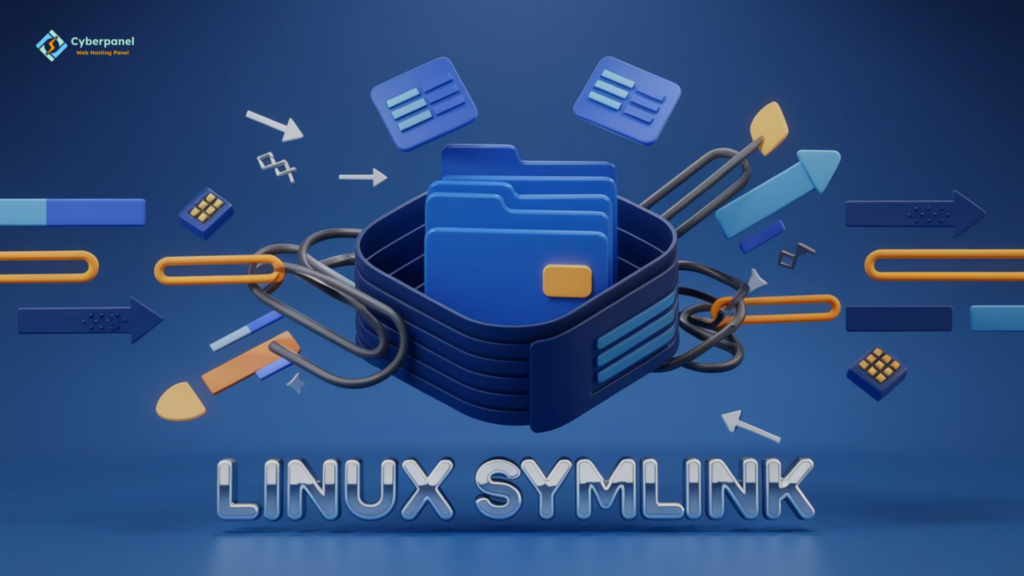
File management is an essential skill in the Linux environment. One particularly useful option that is sometimes misunderstood is the Linux symlink. A symlink allows you to create a pointer from one file or directory to another location without copying the file(s). By creating symlinks, you keep your system clean, flexible, and easier to manage.
This article will guide you through understanding Linux symlinks and how to create and remove them, and when symlinks should be used instead of files.
Let’s get started!
What is a Linux Symlink?
Linux symlinks or symbolic links are special files that point to another file or directory, like shortcuts, but instead of being an actual file, they are pointers that work directly with the file system.
Whenever a program accesses a symlink, it sends the program to its corresponding original target file (wherever it may be located), ultimately giving the user the ability to access that specific target from many locations on the system.
Key Features:
- Symlinks do not duplicate data
- Symlinks can point to another file across file systems
- Symlinks will break if the original target goes away
Types Of Symlinks In Linux
Linux supports two link types.
Symbolic Links
- Point to file paths
- Can cross filesystems
- Most commonly used
- Created using
ln -s
Hard Links
- Point to inode, not path
- Cannot cross filesystems
- Cannot link directories
- Less flexible than symlinks
This article focuses on symlink Linux usage.
Why Symlinks are Useful in Linux?
Symlinks can be used to address many of the issues that every computer user runs into on a day-to-day basis. The following are several examples of how symlinks are commonly used.
- Linking configuration files between environments
- Managing shared libraries
- Organizing project folders
- Redirecting log files or other sources of storage
- Maintaining backward compatibility
Symlinks are widely implemented within the server and dev/ops sectors.
How To Create A Symlink Linux
To create a symlink Linux, use the ln command with the -s option.
Basic Syntax
ln -s target_path symlink_path
Example
ln -s /var/www/project /home/user/project
This creates a symlink named project that points to /var/www/project.
Create A Symlink Linux For Files
Example:
ln -s /etc/nginx/nginx.conf ~/nginx.conf
This is useful for editing config files without navigating system paths.
Create A Symlink Linux For Directories
Example:
ln -s /mnt/storage/media ~/media
Directory symlinks are common for storage management.
How To Verify A Linux Symlink
Use ls -l:
ls -l symlink_name
Output shows:
lat the beginning- Arrow pointing to the target
Example:
lrwxrwxrwx 1 user user 15 media -> /mnt/storage
How To Remove Symlink Linux
To remove symlink Linux, do not use recursive delete.
Correct Way
rm symlink_name
or
unlink symlink_name
Linux Remove Symlink Safely
Important rules:
- Never add trailing slash
- Do not use
rm -r - Always confirm with
ls -l
Wrong command can delete real data if misused.
Remove Symlink Linux Without Affecting Target
This command is safe:
rm symlink_name
The original file or directory remains untouched.
Common Linux Symlink Mistakes
Avoid these errors:
- Using absolute paths incorrectly
- Deleting symlink with
rm -rf - Confusing symlinks with hard links
- Moving target without updating symlink
- Creating circular symlinks
Mistakes often cause broken links.
Broken Symlinks In Linux
A symlink breaks when the target no longer exists.
To find broken symlinks:
find . -xtype l
Broken symlinks should be removed or updated.
Symlink Linux Vs Copying Files
| Feature | Symlink | Copy |
|---|---|---|
| Storage usage | Minimal | Full duplicate |
| Updates | Instant | Manual |
| Risk | Broken link | Data drift |
| Flexibility | High | Low |
Using Symlinks In Linux
There are many instances where symlinks can be used in:
- Deployment scripts
- CI pipelines
- Version switching
- Log rotation
- Container volume mappings
Symlinks allow you to avoid repetition and make upgrading easier.
Symlink Linux and Permissions
The permissions of a symlink are typically not considered. In Linux, permission checking is done on the file the symlink points to, not the symlink itself.
Therefore:
- You are unable to circumvent any access controls.
- You will always have access to the target file’s permissions.
Role of CyberPanel in Symlink Management
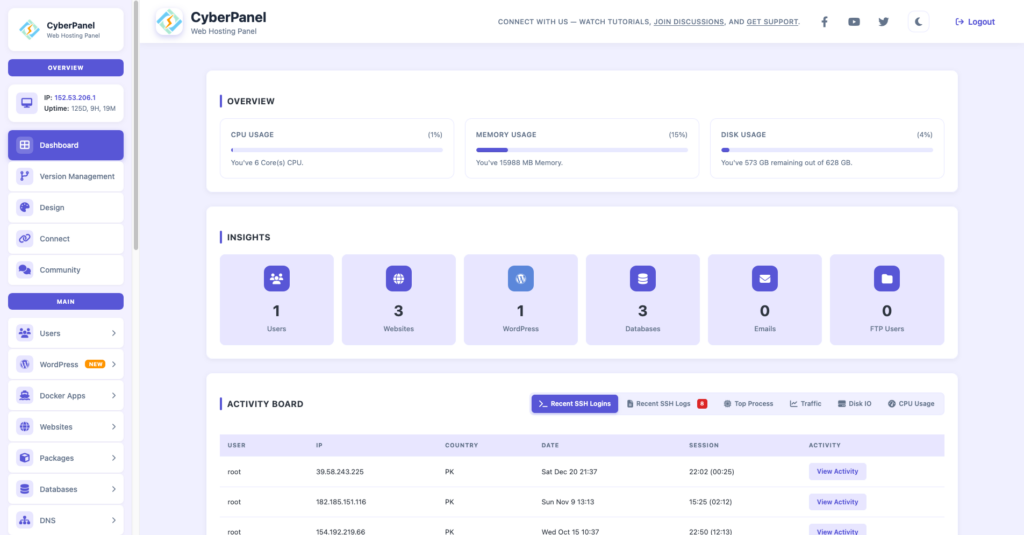
CyberPanel is your next-gen and free web hosting control panel. You often rely on symlinks for website roots, logs, and SSL paths. Symlinks help you organize hosting directories while keeping deployments fast and clean.
Final Thoughts!
In conclusion, a Linux symlink is not only simple in its creation, but also powerful in its ability to decrease duplication of configuration files across your distributions, and enhance organization for easier system management. It also enables you to create faster and cleaner workflows by creating synergistic relationships between various components in the system.
By utilizing Symlinks in your everyday operations, you will replace copied config files with symlinks, making your Linux environment cleaner, less cluttered, and more efficient!
People Also Ask
Can symlinks be used inside Docker containers?
Yes, but host and container paths must align correctly.
Are symlinks preserved during backups?
Most Linux backup tools preserve symlinks unless configured otherwise.
How many symlinks can Linux follow at once?
Linux limits symlink resolution depth to prevent infinite loops.