On this page
Linux desktops are getting a makeover. One major trend is replacing X11 with Wayland Linux. If you use Arch Linux Wayland or Linux Mint Wayland, you might already have a Wayland option on your login screen. Still, a lot of users wonder what it really is and if it is ready for everyday use.
This article breaks down Linux Wayland in simple terms. You will discover what Wayland is, how it functions, and the user experience on Arch Linux and Linux Mint. In the end, you will be able to decide if Wayland Linux suits your system.
What Is Wayland Linux?
Wayland Linux is a new display server system for Linux desktops. It determines how windows are displayed on the screen and how applications communicate with your graphics hardware.
Legacy Linux systems still run X11. X11 is quite old and complicated, but it still works. Wayland Linux came into being to replace it with a simpler and safer architecture.
How Linux Wayland Diverts from X11?
Wayland on Linux frees the system from carrying many legacy layers of X11. This is why the overall operation becomes faster and maintenance easier.
The main distinguishing features are:
- Applications render windows themselves
- Enhanced security between applications
- Animations run more smoothly
- Tearing of the image is greatly reduced
- System load decreased
Unlike X11, which grants apps the privilege of being able to see each other, Wayland blocks such detection by default. This attribute contributes to making Wayland Linux a much safer environment for up-to-date systems.
Arch Linux Wayland Experience
Wayland support on Arch Linux is robust and versatile. It is common among Arch users to gravitate towards Wayland because its nature harmonizes with the rolling release paradigm.
Among the most widely used Wayland compositors on Arch Linux are:
- GNOME Wayland
- KDE Plasma Wayland
- Sway for minimal systems
- Hyprland for modern setups
Arch Linux Wayland provides power to the users. If you are not afraid of tinkering with configuration files, you have at your disposal almost limitless customization possibilities.
Linux Mint Wayland Status
Linux Mint Wayland support is improving but still cautious. Linux Mint focuses on stability, so X11 remains the default.
Current Wayland situation in Linux Mint:
- Wayland is optional
- Cinnamon Wayland is under development
- GNOME sessions support Wayland better
- X11 is still recommended for older apps
Linux Mint Wayland is usable for testing, but not yet the default choice.
Wayland Linux Mint vs Arch Linux Wayland
| Feature | Arch Linux Wayland | Linux Mint Wayland |
|---|---|---|
| Default session | Often Wayland | X11 |
| Customization | Very high | Limited |
| Stability focus | User controlled | Conservative |
| App compatibility | Strong | Improving |
| Target users | Advanced users | Beginners |
App Compatibility on Wayland Linux
Most apps made in the last few years run perfectly on Wayland Linux. Browsers, file managers, and editors are among the apps that operate efficiently.
Some older applications still depend on X11. Wayland achieves this through XWayland, a method of running X11 applications within a Wayland session.
Usually supported apps are:
- Firefox
- Chrome
- VS Code
- LibreOffice
- Terminal emulators
Performance and Security Benefits
Among other things, Wayland Linux enhances the desktop working environment by:
- Faster window drawing
- Able to better handle high refresh rate displays
- Greatly improved touchpad and touchscreen support
The following are some security benefits of Wayland:
- Apps cannot be watchful of each other’s activities
- Screen recording has to be granted
- Clipboard access is restricted
All of these changes result in Linux Wayland being very suitable for laptops and powerful desktops.
When You Should Use Wayland Linux
Wayland Linux can be a very wise decision in the following cases:
You have the latest technology
- You crave for more fluid graphics
- You really want desktop security
- Your apps are capable of running on Wayland
Role of CyberPanel with Wayland Linux
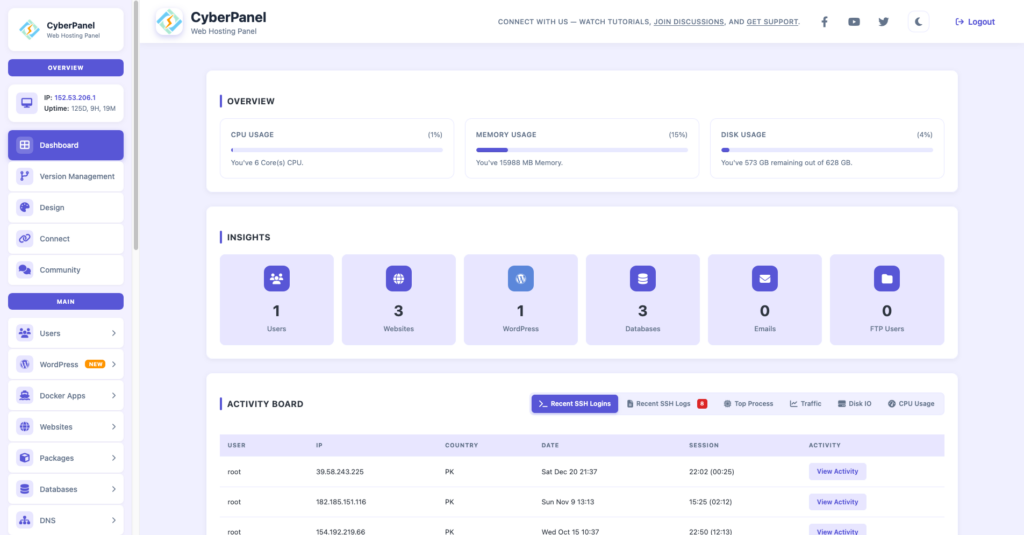
Wayland Linux is great for desktops, and CyberPanel can be a big help for the server part. Thus, CyberPanel is a web hosting control panel that simplifies the management of websites and servers.
You get the combination of:
Wayland Linux for development, CyberPanel for hosting, giving you:
- Smooth desktop workflow
- Easy server control
- Secure and fast website management
This configuration is perfect for developers who perform local development and online deployment.
Conclusion
Wayland Linux is not the future. It is the present. Arch Linux Wayland already provides a powerful and flexible desktop. Linux Mint Wayland is gradually catching up.
If your hardware supports it, you should really consider giving Wayland Linux a try. Besides better performance, it also offers a cleaner design and more robust security.
Make a switch to Wayland Linux at once. Try it first on Arch Linux or Linux Mint, check how it works, and then decide if it goes well with your everyday routine.
People Also Ask
Does Wayland Linux support remote desktop tools?
Wayland supports remote desktop. But it depends on the desktop environment and tool used.
Is Wayland good for gaming?
Yes. Many games run well on Wayland, especially with modern drivers and compositors.
Does Wayland use less battery?
In many cases, yes. Wayland reduces background processes and screen redraws.