On this page
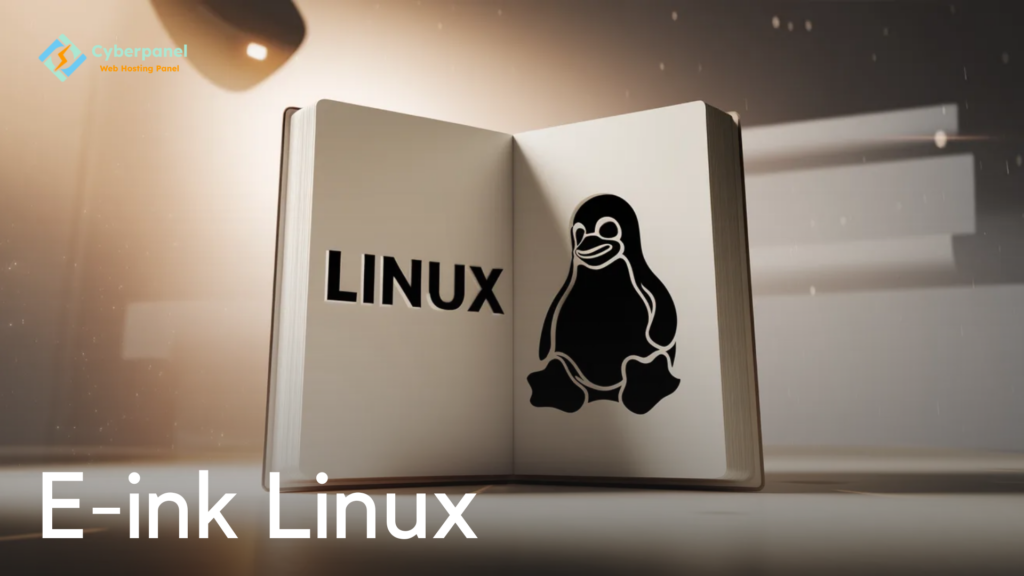
E-Ink technology has revolutionized the way we read but can do so many more things beyond electronic readers. Merging Linux with E-Ink displays offers a super interesting computer experience: very low power consumption, highly readable, and ideal for long working or reading periods. Be it a Linux laptop with E-Ink display or a standalone E-Ink Linux tablet, the amalgamation is becoming popular among coders, authors, and productivity lovers.
We discuss in detail: the concept of Linux on E-Ink devices, working principle of Linux E-Ink tablets, pros and cons, device selection, and practical usage scenarios.
What Is Linux on E-Ink?
Linux E-Ink means operating a Linux OS on a device that features an E-Ink display. In contrast to normal LCD or OLED screens, E-Ink displays are reflective, highly power, efficient, and easy on the eyes, hence perfect for lengthy reading or writing sessions.
Linux serves as the operating system and provides the applications:
- E-Ink display shows the content with very little eye fatigue
- Devices may be tablets, laptops, or hybrid computers
- Such a combo is the main thing for authors, coders, and any person wanting to have a distraction, free computer experience.
How Linux E-Ink Devices Work
A Linux computer with E-Ink screen works like any other Linux machine but with a few differences due to the display technology:
- The Linux OS runs normally in the background
- Applications are displayed on the E-Ink screen, which refreshes differently than LCD
- Some devices offer hybrid modes, with part of the screen in E-Ink and part in LCD for faster interactions
- Input methods vary: touchscreen, keyboard, or stylus
The result is a Linux E-Ink table setup that prioritizes readability and battery efficiency over graphics-intensive applications.
Supported Devices for Linux on E-Ink
Currently, the choices are not many but are increasing:
E-Ink Linux Tablets
- Onyx Boox models that come with Linux support
- Dasung Paperlike e-paper displays hooked up to Linux computers
Linux Computers with E-Ink Screens
Laptops or desktops using external E-Ink monitors
Raspberry Pi or other small boards combined with E-Ink displays
Hardware considerations:
- Make sure that Linux drivers are available for the E-Ink display
- Touchscreen support may be minimal
- The refresh rate is much slower than LCD, so gaming or video is not practical
Advantages of Linux on E-Ink
Ultra-Low Power Consumption
E-Ink screens only use power when refreshing, so Linux E-Ink tablets are perfect for long sessions.
Eye-Friendly Display
Without backlight means less eye strain, very suitable for reading, coding or writing.
Distraction-Free Computing
No flashy notifications or bright colors, just Linux and your programs.
Portability
Lightweight E-Ink Linux tablets can substitute notebooks for taking notes, reading and coding while travelling.
Limitations of Linux E-Ink Devices
Slow Refresh Rate
The major drawback of E-Ink displays is their inability to run fast animations and videos.
Limited Application Support
Linux apps that require high performance may really slow down on some E-Ink devices.
Hybrid Functionality Required
For intensive workflows, some users have to resort to a dual, screen setup combining E-Ink and LCD.
Niche Market
Linux laptops with E-Ink screens are very limited and much more expensive than the regular ones.
Use Cases for Linux E-Ink
- Writing & Note-taking: providing writers and students with a distraction, free environment
- Reading & Research: enjoy PDF, e, books, and documentation without straining your eyes
- Development: short coding sessions with very low battery consumption
- Remote Server Monitoring: perfect for text, based SSH sessions
How to Set Up Linux on an E-Ink Device
- Choose your device: E-Ink tablet with Linux support or a Linux computer with an external E-Ink monitor
- Install Linux distribution: Ubuntu, Debian, or lightweight distros work best
- Install display drivers: Make sure the E-Ink screen works with Linux refresh control
- Optimize desktop environment: Use minimal UI to reduce screen refresh overhead
- Install apps: Text editors, terminal tools, reading software
Future of Linux E-Ink Devices
The union of Linux and E-Ink keeps on improving:
- More E-Ink tablets with Linux compatibility out of the box
- Quicker refresh rates and partial screen updates
- Better software compatibility
- At the same time, higher education and enterprise are targeted for reading, research, and coding
How CyberPanel Fits with Linux E-Ink Devices
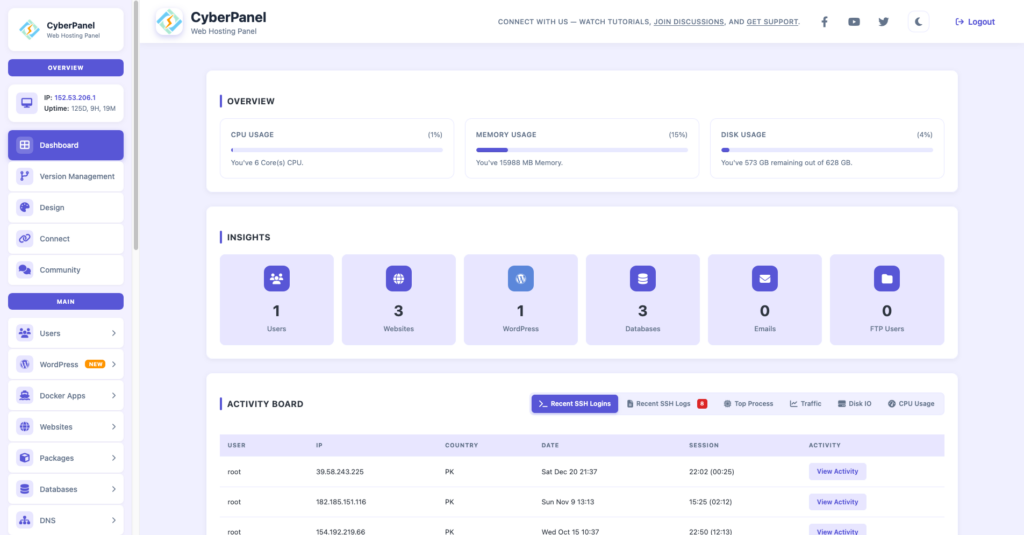
Linux on E-Ink tablets and laptops is mostly about reading, coding, and doing some light work, but CyberPanel can be a good addition in the form of a remote server management tool.
Imagine you have a Linux E-Ink device, then you can:
- Use CyberPanel through any web browser to work with WordPress sites, databases, and DNSKeep an eye on the servers remotely without using much local resources
- Develop or do server maintenance while on the move, relying on the E-Ink screen for monitoring with minimum stress on the eyes
Simply put, CyberPanel, a web hosting control panel, converts a Linux E-Ink tablet or laptop into a lightweight server admin workstation, allowing you to manage web infrastructure efficiently from wherever you are.
Final Verdict
Linux on E-Ink devices offer an amazing environment for distraction, free work, programming, and reading. They aren’t designed for games or heavyweight graphics, however, with their low power consumption and eye-friendly displays, they are the perfect devices to get focused work done.
If you happen to be a developer, writer, or tech geek, integrating a Linux E-Ink tablet with CyberPanel can really change the way you work, as it would allow you to manage servers, do code editing, or go through your paperwork without the discomfort that comes with traditional displays.
Step into the realm of E-Ink Linux and CyberPanel today:
- Experiment with running a Linux E-Ink tablet or connecting an E-Ink monitor to your Linux setup
- Put CyberPanel on a server somewhere and log in through your E-Ink device
- Experience portable, low-strain productivity and see how E-Ink Linux can enhance your workflow
People Also Ask
Can you connect a standard Linux computer to an E-Ink monitor?
Yes. Many E-Ink monitors, like Dasung Paperlike, support HDMI or USB connections with Linux computers, turning them into low-power, eye-friendly secondary screens.
Can Linux E-Ink devices run all Linux apps?
Most text-based and lightweight Linux apps run fine, but GPU-intensive apps or fast animations are impractical due to the slow E-Ink refresh rate.
Are E-Ink Linux tablets better than regular LCD laptops for reading?
Yes. E-Ink screens reduce eye strain, last longer on battery, and provide a paper-like reading experience, making them superior for prolonged reading sessions.