On this page
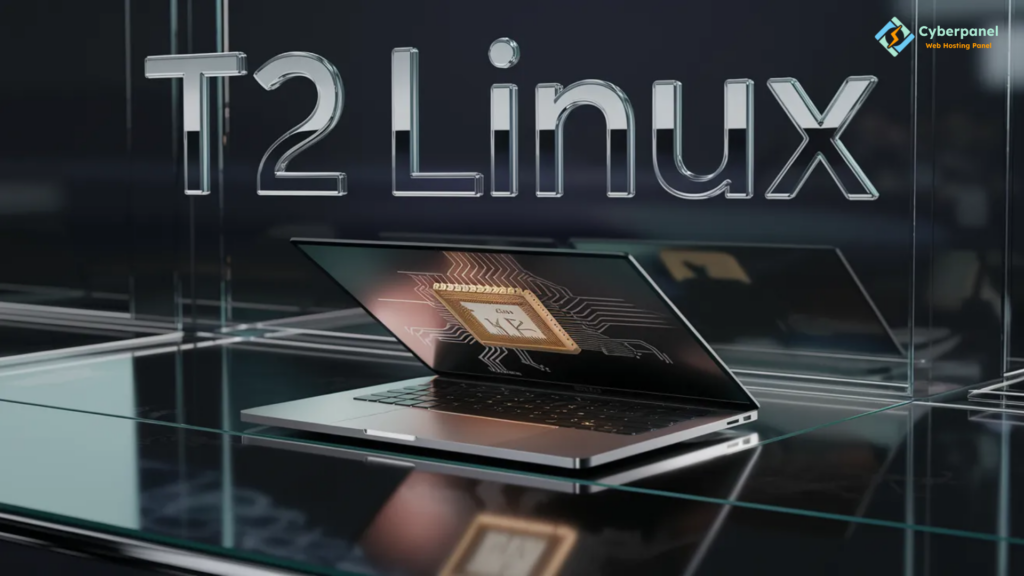
Purchasing a Mac was basically a one-way ticket to the world of macOS. This was particularly true if your computer was equipped with the Apple T2 security chip. A lot of folks who tried to give Linux a try wound up with nothing but boot errors, nonworking keyboards, or no Wi-Fi. That is why T2 Linux really is a game-changer here.
It is now very much a reality and a stable and practical situation running Linux on T2 Mac devices. This is largely due to Linux T2 Mac setups benefiting from community drivers, patched kernels, and enhanced hardware support, to the extent that these systems can run quite smoothly on a variety of Apple laptops and desktops. Apart from Wi, Fi, keyboard, trackpad, and audio that you can use without any problems, you can even get graphics acceleration with very little adjustment.
If you happen to be a developer, student, or power user whose preferred OS is Linux but you have a newer Intel Mac that features the Apple T2 chip, there’s no need to get a different machine. Solutions for Apple T2 Linux let you install and run Linux on your hardware with good performance.
This guide covers the T2 chip and how it works with Linux, installing Linux on a T2 Mac from scratch, troubleshooting, and how CyberPanel, among other utilities, can empower you to turn your Mac (now running Linux) into an efficient workstation or server.
What Is T2 Linux?
T2 Linux is the term used for the Linux OS on Apple devices that integrate the Apple T2 security chip. The T2 chip handles the control of storage encryption, secure boot, keyboard, trackpad, and various other hardware components.
Since this additional control layer is present, most regular Linux installers will not work without the aid of specific drivers. T2 Linux methods offer custom kernels and patches that enable Linux to interface correctly with the hardware.
Basically, it is Linux tweaked exclusively for T2 Macs.
What is the Apple T2 Chip and Why Does it Cause Problems?
The Apple T2 chip is a security controller. It manages boot security, storage encryption, and many internal devices. It was designed for macOS. This causes issues for Linux because:
- Secure Boot blocks unknown systems
- Storage may not be detected
- The keyboard and trackpad may not work
- Wi-Fi & audio drivers fail
Hence, without patches, Linux cannot fully use the hardware. This is why Apple T2 Linux requires special support packages.
Can You Install Linux on T2 Mac Devices?
Yes, definitely.
Contemporary Linux on T2 Mac setup works well with patched distributions and community drivers. After the configuration, most hardware works as usual, e.g., keyboard, trackpad, sound, and networking.
A lot of developers nowadays even run Linux T2 Mac laptops as their everyday computers.
The point is to use the right installation method instead of the standard ISO.
How Does Linux T2 Work Technically?
Linux T2 is operating through:
- Patched Linux kernels
- Apple hardware-specific drivers
- Secure boot tweaks
- Custom bootloaders
Such features allow Linux to remove limitations and communicate correctly with the T2 chipset and managed devices.
Once everything is set up, the system works like any other Linux laptop.
How to Install Linux on T2 Mac?
Installing Linux on T2 Mac requires a few extra steps compared to normal PCs, but it’s still straightforward.
Step 1: Disable Secure Boot
- Boot into macOS Recovery
- Open Startup Security Utility
- Set:
- No Secure Boot
- Allow external boot
Without this step, Linux won’t boot.
Step 2: Create Bootable Linux USB
Example using Ubuntu:
sudo dd if=ubuntu.iso of=/dev/sdX bs=4M status=progress
Replace sdX with your USB device.
Step 3: Boot from USB
Hold Option (Alt) during startup and choose the USB device.
Step 4: Install T2 Linux Drivers After Installation
Install required packages:
Ubuntu/Debian:
sudo apt install linux-t2 linux-firmware
Arch Linux:
sudo pacman -S linux-t2 linux-t2-headers
These drivers enable keyboard, audio, Wi-Fi, and other hardware.
Step 5: Reboot and Verify
After reboot:
uname -r
You should see a T2 kernel version.
T2 Linux Compatibility Table
| Distribution | Stability | Ease of Setup | Best For | Notes |
|---|---|---|---|---|
| Ubuntu | Very High | Easy | Beginners | Strong driver support |
| Arch Linux | High | Medium | Advanced users | Flexible and lightweight |
| Fedora | High | Easy | Developers | Modern kernel support |
| Debian | Medium | Medium | Stable setups | May need manual tweaks |
This helps you choose the right Linux T2 Mac setup based on your skill level.
What Hardware Works After Installing Apple T2 Linux?
With proper drivers, most features work as they should.
You should be able to use:
- Keyboard and trackpad
- Wi-Fi and Bluetooth
- Audio
- Brightness control
- Battery monitoring
- GPU acceleration
Some features might require minor adjustments, but it is a smooth experience for the most part.
Why Use Linux on T2 Mac Instead of macOS?
Many people install Linux on T2 Mac because it offers more flexibility and control.
They point to:
- Better environment for developers
- More options to customize
- Less resource-intensive system
- Privacy management
- Interface to open-source ecosystem
If you happen to be a developer or sysadmin, Linux is generally perceived as more efficient and productive.
The Role of CyberPanel in a Linux T2 Workflow
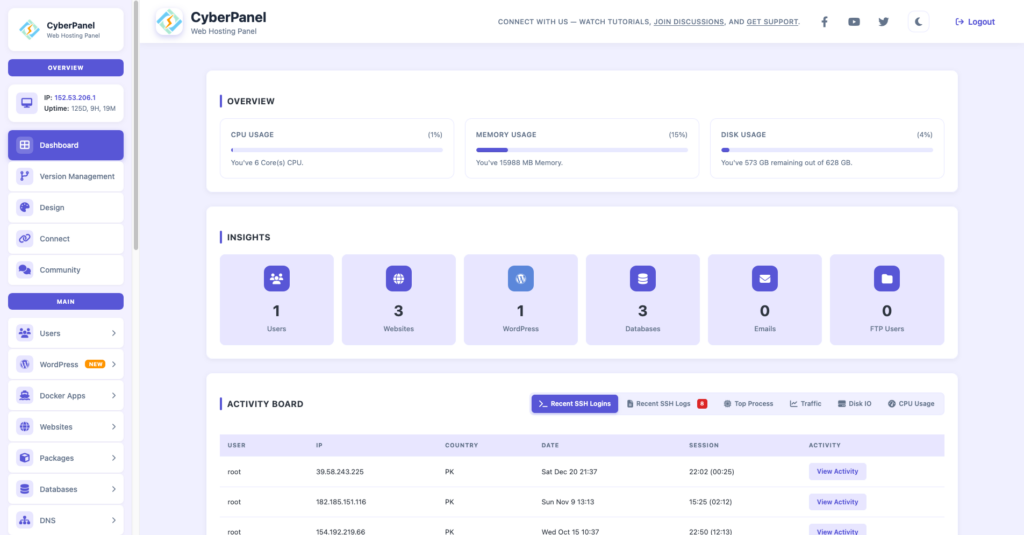
CyberPanel is a free and open-source web hosting control panel powered by OpenLiteSpeed. After installing Linux T2, your Mac is no longer just a Mac; it is a Linux powerhouse. And here’s where CyberPanel steps in.
CyberPanel gives you the ability to:
- Run websites and applications locally or remotely
- Carry out server management with ease
- Operate development environments
- Launch projects swiftly
- Have control over domains and databases
Just as a matter of example, with the Linux T2 Mac, you can integrate it with CyberPanel to run staging, client, or testing environments locally.
This way, your Mac transforms into a fully-fledged development and hosting powerhouse.
Common Issues and Quick Fixes
There are cases when minor issues creep up during setup.
The most common remedies:
- No Wi-Fi → install firmware packages
- No sound → reload audio modules
- Boot fails → recheck secure boot settings
- Keyboard not detected → use external USB once, then install drivers
After initial setup, these problems rarely return.
Conclusion: T2 Linux Makes Your Mac More Powerful
The Apple T2 chip was a serious blocker for Linux users. Not anymore. With modern T2 Linux kits, you can have a full Linux installation on a T2 Mac and get your performance, freedom, and control.
There isn’t a point in buying new hardware when you already have a T2 Mac. Just put Linux on your machine, get CyberPanel for hosting or development, and make your hardware a powerful Linux workstation.
Easy installation. Total control.
People Also Ask
Which distro is best for Linux on T2 Mac?
Ubuntu is easiest for beginners, while Arch is great for advanced users wanting full control.
Is Linux T2 Mac good for development work?
Yes. Many developers prefer it because Linux offers better tools and performance for coding and server tasks.
Can I run Linux on T2 Mac safely?
Yes. After disabling secure boot and installing proper drivers, Linux runs smoothly and safely on T2 Macs.