On this page
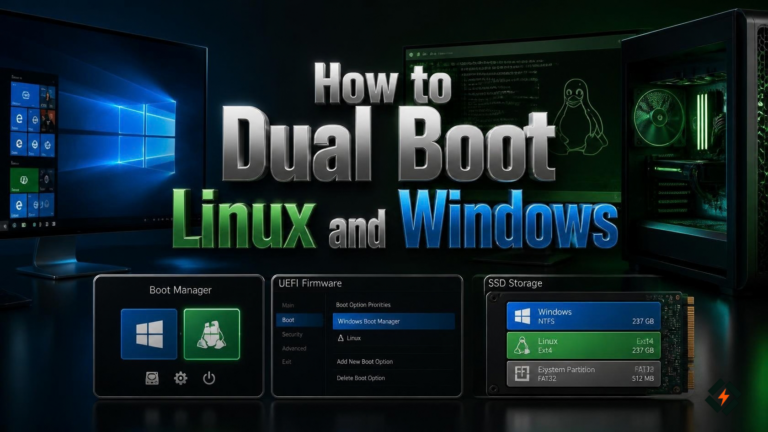
If you have ever installed Linux alongside another operating system, you are at least partially familiar with GRUB, even though you might not be sure about it. It is the moment your computer powers on, and you see a menu asking which operating system to boot, that interface is usually the one controlled by GRUB Linux.
To many newbies, GRUB only seems to be there when things go awry. It could be that the system starts up straight in Windows. It could be that the menu vanishes. Or sometimes, especially after installing Arch Linux, users have an annoying problem that the GRUB bootloader is missing in the dual boot arch linux setups.
Knowing what GRUB is all about is crucial because it is the one that decides how your system will start. In fact, Linux will never be able to load the system kernel properly if it doesn’t have GRUB. The best part is that once you figure out what GRUB is all about, it will be a lot easier for you to get through the troubles.
Here is what this guide is going to show you:
- what is GRUB and why it matters
- how GNU GRUB Linux works
- installation and configuration basics
- common dual boot issues and fixes
- Arch Linux specific troubleshooting
- and how CyberPanel fits into Linux workflows where stability matters
What is GRUB Linux?
GRUB (Grand Unified Bootloader) refers to a bootloader for Linux that handles the startup procedure and permits the user to choose the operating system to start.
When you switch on your computer:
- First, BIOS or UEFI powers up
- Second, GRUB gets loaded
- Third, GRUB loads the Linux kernel
- Finally, the OS boots up
Thus, GRUB can be considered as a link connecting your hardware firmware and your Linux computer.
What Is GNU GRUB Linux?
GNU GRUB Linux is the official open-source bootloader of the GNU project that supports multiple operating systems and various boot configurations.
Its highlighting features:
- dual or multi- boot menus
- kernel selection
- recovery options
- configuration customization
Since it is an open-source project, it is the common choice for most Linux distributions.
Why Is GRUB Important in Linux?
GRUB is basically the program that runs when a Linux computer is switched on and it decides what the computer actually starts with and
When GRUB is not there:
- the Linux system may not be able to boot at all
- the dual boot set-ups get crashed
- the kernel might not be updated properly
It is a way of giving you control over what to boot and even after trouble, a free boot, the recovery modes which is very important if you are fixing a system.
GRUB Linux in a Nutshell
Things may seem very straightforward at the surface but the inner workings are quite different.
The steps of the boot sequence:
- The firmware (BIOS/UEFI) sets up the hardware
- The GRUB bootloader is fetched from the disk
- GRUB examines configuration files
- The menu is displayed
Main configuration file:
/boot/grub/grub.cfg
This file is generated automatically and should not be edited manually.
How to Install GRUB on Linux
Installing GRUB Linux depends on your distribution, but the general process is similar.
Debian / Ubuntu
sudo apt install grub2
sudo grub-install /dev/sda
sudo update-grub
Arch Linux
sudo pacman -S grub
sudo grub-install --target=x86_64-efi --efi-directory=/boot --bootloader-id=GRUB
sudo grub-mkconfig -o /boot/grub/grub.cfg
This installs GRUB and generates the boot menu.
GNU GRUB Linux Configuration Basics
GRUB settings are controlled by:
/etc/default/grub
Common settings:
- default boot entry
- timeout duration
- splash screen
- kernel parameters
After editing, always run:
sudo update-grub
or on Arch:
sudo grub-mkconfig -o /boot/grub/grub.cfgWhy GRUB Bootloader Doesn’t Show Up on Dual Boot Arch Linux?
This issue happens very often.
Generally, if the grub bootloader fails to appear on a dual boot arch linux system, it implies that the boot order or the configuration was not updated properly.
Some of the reasons:
- Windows boot manager set as default
- GRUB not installed in EFI partition
- OS detection disabled
- missing update after installation
Fix: GRUB Menu Not Showing in Dual Boot (Arch Linux)
Step 1: Check EFI boot entries
sudo efibootmgr
Ensure GRUB appears in the list.
Step 2: Reinstall GRUB
sudo grub-install --target=x86_64-efi --efi-directory=/boot --bootloader-id=GRUBStep 3: Enable OS detection
Install os-prober:
sudo pacman -S os-prober
Edit config:
GRUB_DISABLE_OS_PROBER=false
Then regenerate:
sudo grub-mkconfig -o /boot/grub/grub.cfg
Reboot.
The dual boot menu should appear.
GRUB Linux vs Other Bootloaders
| Bootloader | Ease of Use | Dual Boot Support | Customization | Popularity |
|---|---|---|---|---|
| GNU GRUB | High | Excellent | Very High | Most common |
| systemd-boot | Medium | Good | Medium | Growing |
| rEFInd | Easy | Good | Medium | UEFI-focused |
| LILO | Low | Limited | Low | Legacy |
The Role of CyberPanel in Linux System Stability
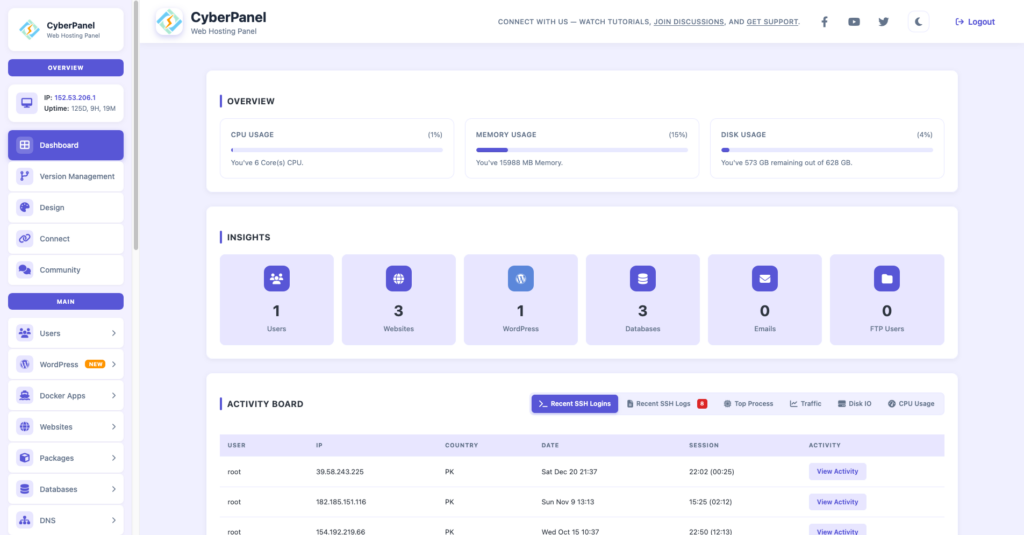
CyberPanel is a free and open-source web hosting control panel. GRUB is responsible for the reliability of the boot process, whereas CyberPanel is a tool that assists you in managing server-level stability after the Linux OS has been loaded.
For developers and administrators:
- GRUB guarantees a reliable startup
- CyberPanel takes care of websites and services
Both of them contribute to:
- uptime
- server management
- backup workflows
- system consistency
If your Linux computer hosts projects or web apps, it is very important to keep both boot stability and server management at the highest levels.
Best Practices for Linux GRUB
Adhere to the following behaviors:
- always update GRUB after kernel changes
- keep a live USB for recovery
- backup EFI partitions
- test dual boot after updates
- avoid manual edits to grub.cfg
By following these simple steps, you can avoid the majority of the issues related to startup.
Common GRUB Problems and Quick Fixes
Black screen after update
Rebuild config:
sudo update-grub
Missing Windows entry
Install os-prober and regenerate config.
Boot loop
Check BIOS boot order.
Small corrections usually fix most issues.
Final Thoughts!
In fact, when you get the hang of GRUB Linux, it makes the whole Linux ecosystem less scary. Basically, GRUB is just the software that tells your computer which operating system to start and how to start it.
It doesn’t matter if you have a clean, simple configuration or if you are trying to figure out why the grub bootloader doesnt show up on dual boot arch linux, getting to know the basics will make you feel more empowered.
Besides, GNU GRUB is still the most dependable and versatile bootloader out there for the Linux community. A well, established boot environment, teaming up with server control solutions such as CyberPanel, will get you a pretty reliable system from the time it boots to the time your applications become live.
People Also Ask
Can I customize the GRUB menu appearance?
Yes. You can change themes, background images, and menu style through GRUB configuration files.
Is GNU GRUB safe to update?
Yes, but always regenerate the configuration after updates to avoid missing entries.
What happens if GRUB gets deleted?
The system may fail to boot until GRUB is reinstalled from a live Linux environment.