
On this page
Rust for Linux is no longer a topic only a few of us really know about. In 2026, Rust is one of the most popular and most trusted system-level programming languages among Linux developers. Whether it is kernel modules or cloud, native tools, Rust has become a first-class citizen in the Linux ecosystem. Developers go for Rust for Linux as it gives them memory safety, top performance, and modern tooling without compromising on control.
Linux enthusiasts frequently ask which Linux distro is the best for Rust development, how to install Rust on Linux, and whether building Rust for Windows on Linux is feasible. Some are also looking for pointers on how to effectively compile Rust for Linux in the production environment.
This article covers all these questions. It’s geared towards developers, system engineers, DevOps professionals, and students who want a simple, practical, and future-proof Rust workflow on Linux.
What is Rust for Linux?
Rust for Linux means creating, building, and executing Rust applications on Linux platforms. Besides, it covers the incorporation of Rust in the Linux kernel and using it to develop system tools, CLI applications, servers, and cross-platform software.
Rust is created to avoid:
- Memory leaks
- Null pointer errors
- Data races
These features are perfect for Linux system-level development in Rust.
Why use Rust on Linux?
The combination of Linux and Rust is very synergistic.
Key Benefits
- Strong memory safety without garbage collection
- High performance on par with C and C++
- Modern package management by Cargo
- Direct integration and support for Linux systems
- Increasing use in kernel development
Traditionally, Linux system software has been very error-prone, but Rust effectively cuts down these bugs.
Best Linux Distro for Rust Development
| Distro | Why it’s good for Rust |
|---|---|
| Ubuntu LTS | Stable, excellent Rust tool support |
| Fedora | Latest Rust versions, developer-friendly |
| Arch Linux | Bleeding-edge Rust toolchain |
| Debian | Stable builds for production |
| Pop!_OS | Good desktop experience for devs |
Ubuntu and Fedora are considered the best Linux distros for Rust development in professional environments.
How to install Rust for Linux
Installing Rust on Linux is simple and officially supported.
Install Rust for Linux Using Rustup
Run the following command:
curl --proto '=https' --tlsv1.2 -sSf https://sh.rustup.rs | sh
After installation, reload your shell:
source $HOME/.cargo/env
Verify installation:
rustc --version
cargo --version
Understanding Rust toolchain on Linux
Rust uses a unified toolchain.
Core Components
rustc– Rust compilercargo– Package manager and build toolrustfmt– Code formattingclippy– Linting and code analysis
Cargo handles dependencies, builds, and testing automatically.
Rust Compile for Linux
Compiling Rust for Linux is straightforward.
Compile a Rust Program
Create a new project:
cargo new hello_linux
cd hello_linux
Build the project:
cargo build
For optimized release builds:
cargo build --release
The compiled binary will be available in:
target/release/
This is the standard Rust compile process for Linux.
Rust Compile Targets for Linux
Rust supports multiple Linux architectures.
Common Linux targets include:
x86_64-unknown-linux-gnuaarch64-unknown-linux-gnuarmv7-unknown-linux-gnueabihf
To add a target:
rustup target add x86_64-unknown-linux-gnu
This makes Rust suitable for servers, desktops, and embedded Linux systems.
Rust Build for Windows on Linux (cross-compilation)
Yes, you can build Rust for Windows on Linux.
Add Windows target
rustup target add x86_64-pc-windows-gnu
Install MinGW toolchain
On Ubuntu:
sudo apt install mingw-w64
Build Rust for Windows on Linux
cargo build --target x86_64-pc-windows-gnu --release
This produces a .exe file that runs on Windows.
Rust’s cross-compilation support is one of its biggest strengths.
Rust Cross-Compilation Best Practices
Here are a few tips to help you plan your Rust cross-compilation:
- Only use targets officially supported by Rust
- Ensure compatibility of linker tools and target OS
- Generally, production builds should be done with –release
- Always test your binaries in target environments
Cross-platform Rust builds are reliable as long as you have the right configuration.
Using Rust for Linux System Programming
Rust is gaining popularity as a programming language in Linux system-level projects.
Here are a few common examples of where Rust is used in Linux systems:
- Linux kernel modules
- CLI tools
- System daemons
- Network services
- Embedded Linux apps
Rust allows developers to avoid bugs through its safety features while still remaining close to the hardware. This growing interest is also influencing areas such as Linux driver development, where Rust’s memory safety and concurrency features can help reduce common low-level programming errors.
Rust and Linux Kernel Development
The use of Rust in the Linux kernel is now supported officially.
Among the benefits are:
- The number of kernel bugs is decreased
- There is safer handling of memory
- The abstraction is more elegant
Rust will work alongside C in the kernel rather than replacing it.
Performance of Rust on Linux
Rust achieves performance levels that are pretty much identical to those of C.
Some reasons include:
- Zero-cost abstractions
- Absence of garbage collection
- Low-level access to the system
The output of Rust on Linux is high-speed, lightweight, and ready for deployment in production.
Debugging Rust on Linux
Rust works well with Linux debugging tools.
Common Tools
gdblldbcargo testcargo bench
Error messages in Rust are detailed and beginner-friendly.
Rust package management on Linux
Cargo handles everything.
Cargo can:
- Download dependencies
- Resolve versions
- Build projects
- Run tests
- Publish packages
This removes dependency chaos common in C and C++ projects.
Security Advantages of Rust for Linux
Rust prevents:
- Buffer overflows
- Use-after-free bugs
- Data races
These security benefits make Rust ideal for Linux servers and infrastructure software.
CyberPanel & Rust Linux
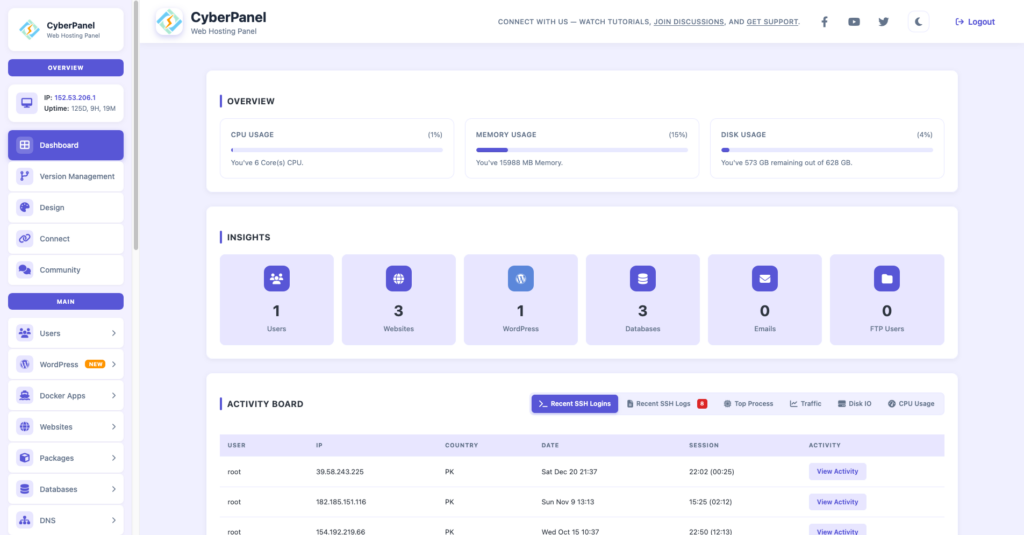
CyberPanel is a web hosting control panel. The benefits of CyberPanel for a Rust environment are the following:
- Rust powered web services management
- Server access control
- Performance monitoring
- Securing deployment environments
- Reducing manual errors on the server
Rust applications on Linux with the help of CyberPanel are more secure and stable.
Common Mistakes When Using Rust on Linux
Here are some errors you should avoid:
- Not using release builds
- The target architecture was not considered
- Using a very old toolchain version
- System paths have been hardcoded
Complying with the best Rust practices results in a hassle, free Linux development.
Future of Rust for Linux
The pace of Rust incorporation on Linux is hastening.
Some of the possible trends could be:
- More kernel parts written in Rust
- Growing enterprise adoption
- Improved cross, platform tooling
Final Thoughts!
Rust for Linux is no longer optional. It is becoming essential. If you want safe system code, fast performance, and modern tooling, Rust is the right choice. Whether you are compiling Rust for Linux, cross-building for Windows, or deploying servers with CyberPanel, Rust offers a reliable and future-proof development path.
If Linux is your platform, Rust should be in your toolkit.
People Also Ask
Is Rust faster than Python on Linux?
Yes, it is significantly faster than Python and suitable for performance-criitcal Linux applications.
Can I build Rust for Windows on Linux?
Yes. Rust supports cross-compilation, allowing you to build Windows binaries on Linux.
Which is the best Linux distro for Rust development?
Ubuntu and Fedora are considered the best Linux distros for Rust development due to stability and tooling.